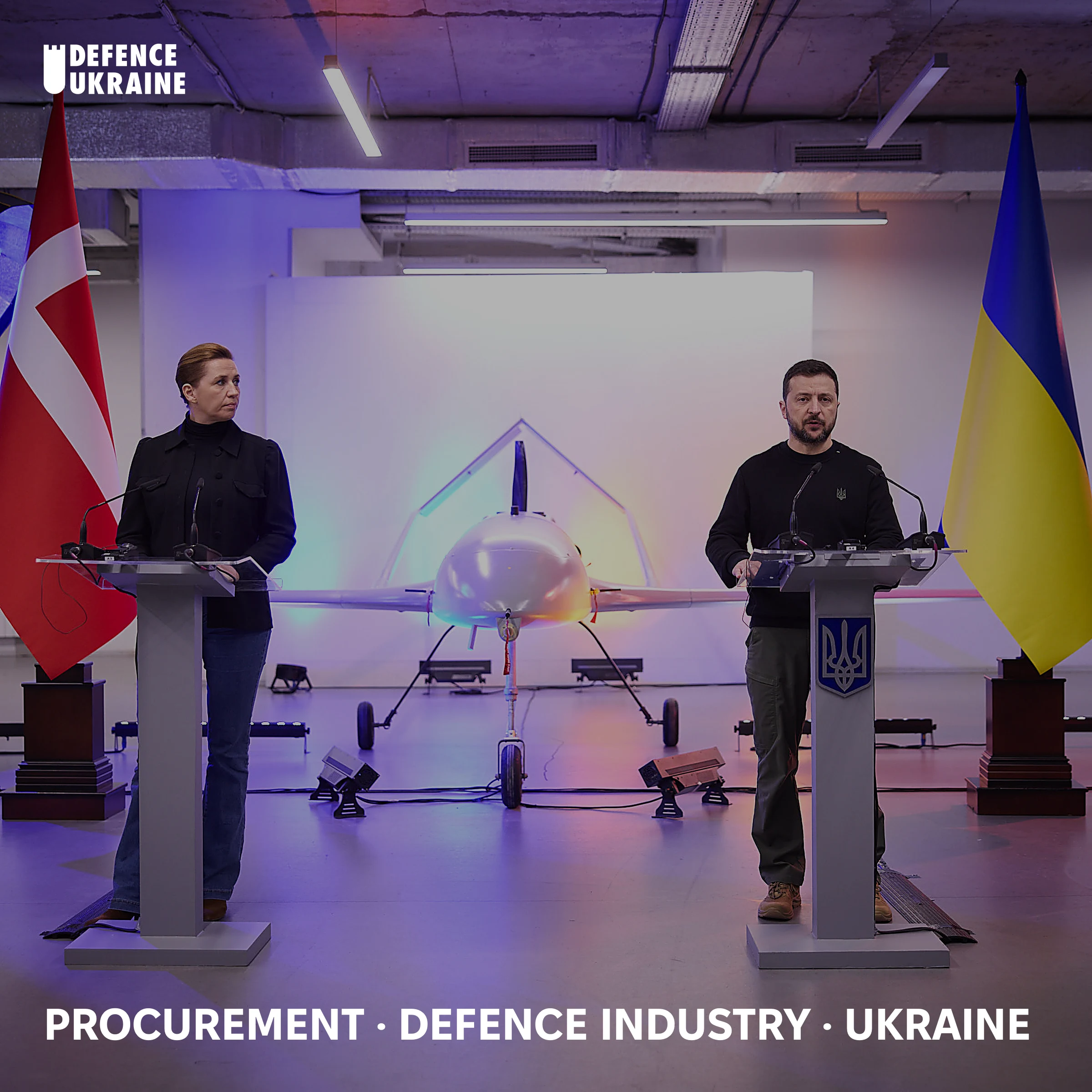
The Danish Model of Ukrainian defence financing has moved from a Nordic novelty in early 2024 to a structural pillar of European procurement in late July 2026. What began as a €590 million bilateral experiment run through the Danish Ministry of Defence and the European Peace Facility is now a €1.3 billion 2025-26 cycle projected by the Ukrainian Ministry of Strategic Industries and validated by Danish MoD reporting. Alongside its emerging national variants in the Netherlands, Norway, Sweden, Iceland, Lithuania and Canada, the mechanism moved approximately $6 billion into Ukrainian production lines during 2025, expanding Ukraine's own $10 billion state weapons procurement budget by roughly 60 per cent, per December 2025 CSIS analysis.
The mechanism has a simple animating idea and a complex plumbing. Instead of donating stockpiles from national reserves or contracting Western primes, an allied government wires capital to the Ukrainian Ministry of Defence, which matches the requirement to a certified domestic supplier, and the Danish Defence Acquisition and Logistics Organisation (DALO) executes due diligence and signs the contract on behalf of the funder. Weapons roll out of Ukrainian factories weeks later. The plumbing is what makes it work at scale, and what would be at risk if any of its load-bearing legal instruments fractured.
How the Pipeline Works
The government-to-government-to-business framework is deliberately three-legged. Ukraine's MoD Department of International Projects maintains a prioritised catalogue of combat-ready platforms mapped to domestic suppliers with spare capacity. The Coordination Council approves each match. DALO then dispatches auditors to physically inspect the Ukrainian manufacturer's facility, ownership structure, financial position and contract-fulfilment history before signing on behalf of the partner nation. Only after that pass does capital move.
Contracts typically feature 50 to 70 per cent pre-payment, which lets Ukrainian firms secure raw materials and microelectronics in a war-disrupted supply chain rather than waiting on delivery milestones. Funds flow into segregated accounts, often on the U24 platform, rather than co-mingling with the general Ukrainian state budget. A joint Deloitte Denmark and Ukrainian MoD internal audit validated the anti-corruption architecture, which is why the European Commission was willing to designate Denmark as implementing actor for €830 million of frozen-Russian-asset windfall profits from May 2025 onward.
Quality assurance is bifurcated. State primes including Antonov, the Luch Design Bureau and Ukroboronprom subsidiaries operate at NATO Allied Quality Assurance Publications standards and EU Part-21 aviation compliance. Brave1 small and medium enterprises, whose multi-year AQAP certification timelines would otherwise exclude them from allied procurement, are admitted on combat-validation metrics as a pragmatic substitute. This bifurcation is the specific reason a $2,500 counter-Shahed interceptor from a Brave1 startup can be financed alongside a Bohdana howitzer from a legacy state prime under the same framework.
The Legal Architecture
The mechanism routes through five interlocking EU instruments and one durable domestic Danish foundation. Council Decision (CFSP) 2024/577 of February 2024 requires EU Central Securities Depositories holding over €1 million in immobilised Russian Central Bank assets to separately account for the extraordinary cash balances generated. Council Decision (CFSP) 2024/1470 and Regulation (EU) 2024/1469 of May 2024 authorise the appropriation of 99.7 per cent of the net windfall profits after corporate taxation. The allocation key sends 90 per cent through the European Peace Facility, established by Council Decision (CFSP) 2021/509 with a ceiling exceeding €17 billion for 2021-2027, and 10 per cent through the Ukraine Facility under Regulation (EU) 2024/792.
On top of this, the Security Action for Europe programme adopted 27 May 2025 mobilises €150 billion in EU-borrowed capital. The Ukraine Support Loan of €90 billion, unblocked by the Council on 23 April 2026, sits inside SAFE with €60 billion ring-fenced for military procurement and €28.3 billion accessible during 2026. The Danish Model serves as one of the pre-audited contracting conduits by which portions of the €28.3 billion tranche reach Ukrainian primes rather than European or American ones. The Ukraine Loan Cooperation Mechanism captures 95 per cent of future Russian windfall proceeds to amortise the €90 billion loan through 2027-2028.
Common Foreign and Security Policy actions require Council unanimity, which creates persistent veto risk from Hungary and Slovakia. The EU has bypassed this through two mechanisms: constructive abstention under Article 31(1) TEU, which lets dissenting states step aside without vetoing, and enhanced cooperation under Articles 20 TEU and 332 TFEU, under which 24 member states unblocked the Ukraine Support Loan in April 2026. Domestically, Denmark's participation rests on the Danish Accession Act of 1972 and the Folketing European Affairs Committee's scrutiny powers, with the underlying appropriation coming from the DKK 70.5 billion (approximately €9.4 billion) National Ukraine Fund that runs through 2028.
What It Finances
The Danish Model's platform catalogue is deliberately asymmetric, favouring capabilities where Ukrainian domestic content and combat innovation generate higher return on investment than imported Western equivalents. The 2S22 Bohdana self-propelled howitzer is the foundational case: Denmark allocated €174.6 million (DKK 1.2 billion) in July 2024 to finance 18 units, all delivered to the Armed Forces of Ukraine by September 2024. Sector-wide Bohdana production has since scaled to approximately 40 units per month.
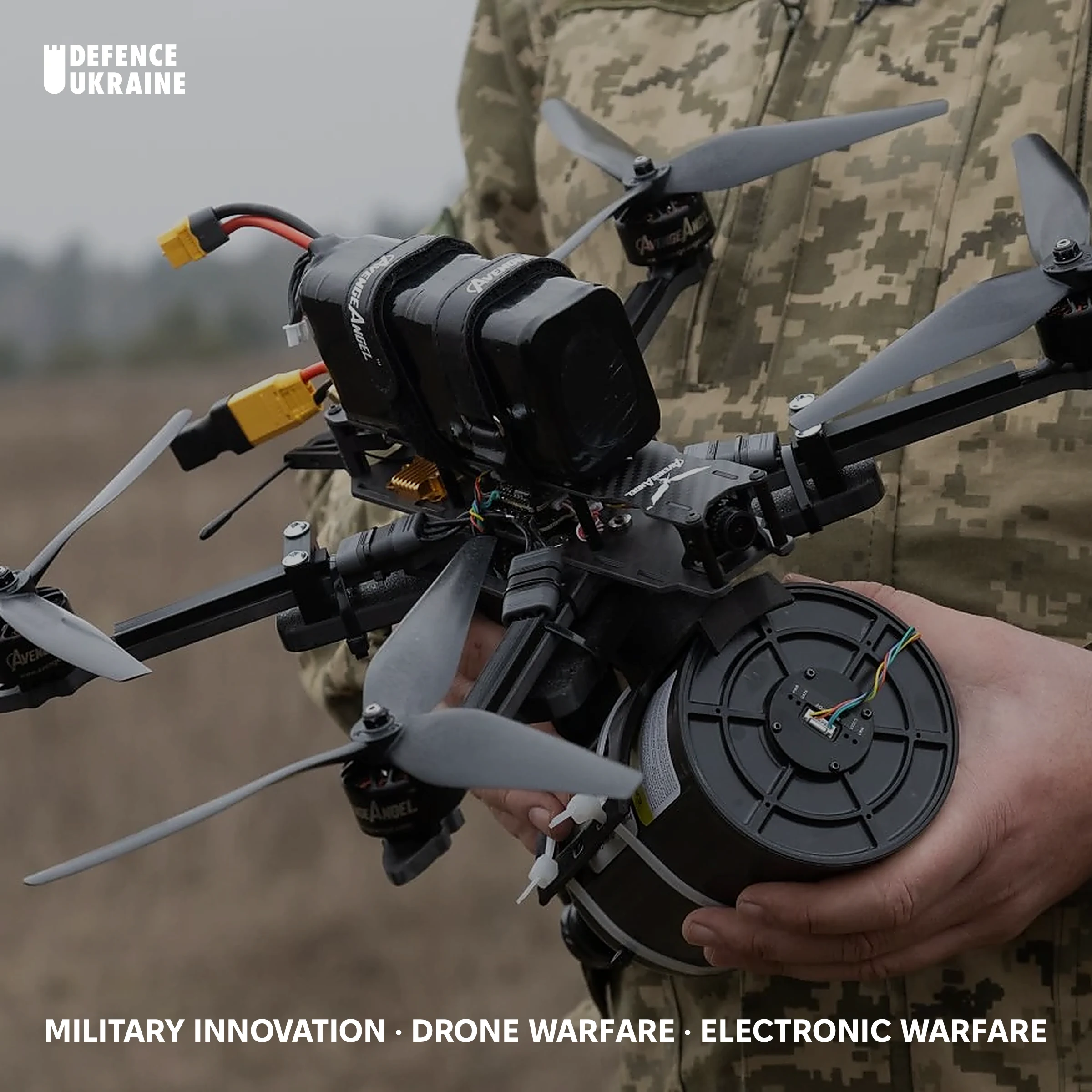
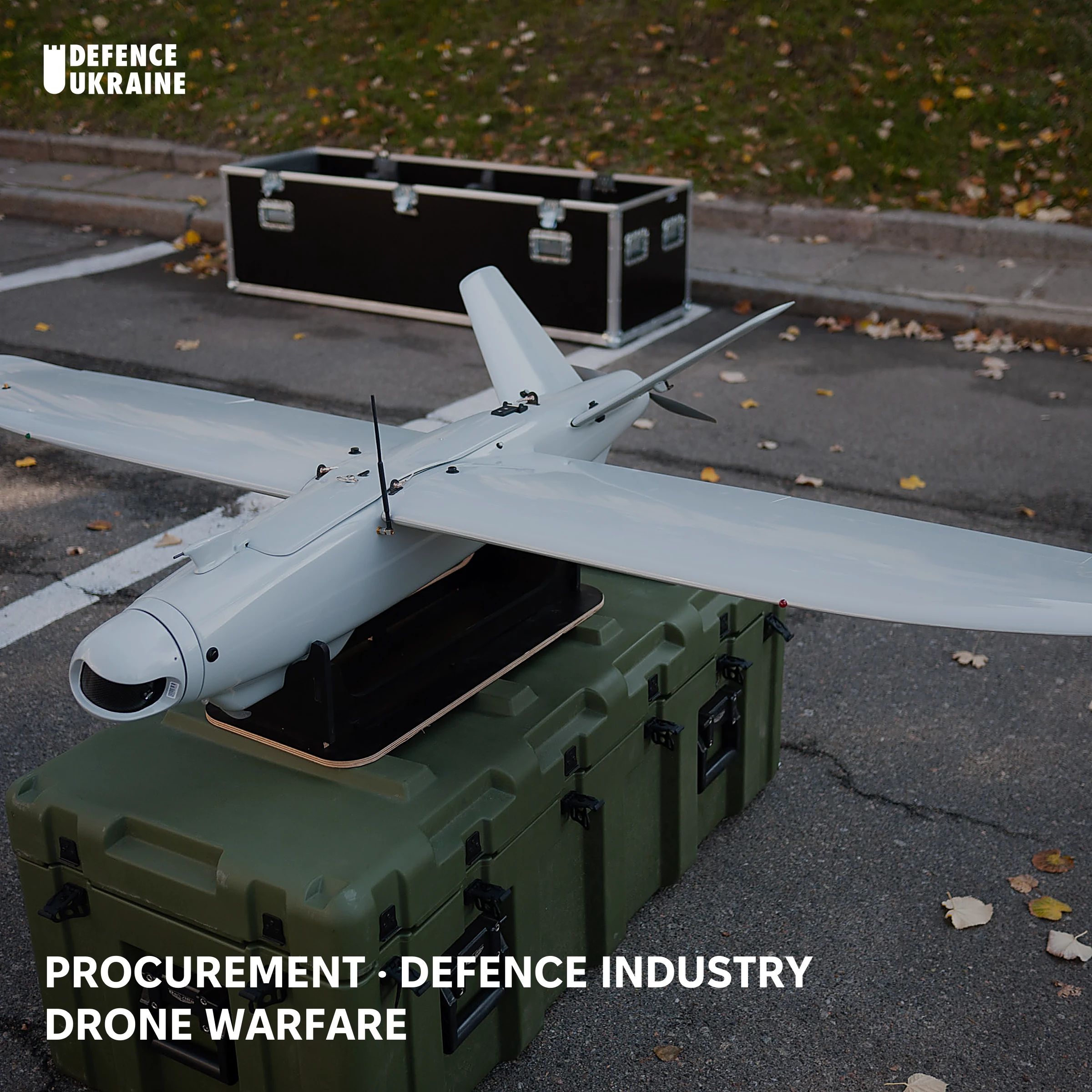
The Antonov AN-196 Liutyi long-range strike drone anchors the deep-strike category, with a 1,000 to 2,000 kilometre range, a 75 kilogram payload and a unit cost of approximately $200,000. Liutyi variants have struck Russian oil refineries and defence plants as far as 1,700 kilometres from the border. The Fire Point and Diehl Defence Freya (FP-7.x) anti-ballistic interceptor, unveiled in May 2026, reaches Mach 4.4 to 5.9 with a Diehl-supplied imaging infrared seeker at a unit cost of approximately $700,000 per shot, roughly one-fifth the cost of a PAC-3 Patriot interceptor. Project Octopus, a UK-Ukraine joint venture producing a drone-to-drone counter-Shahed interceptor with autonomous terminal guidance, prices individual units at roughly $2,500. Kongsberg-Ukraine NASAMS effectors are financed via Norwegian capital following the May 2026 Oslo Declaration, and Milrem THeMIS unmanned ground vehicles are financed by the Netherlands. Lithuania has funded a €10 million tranche for the Luch Design Bureau's Palianytsia turbojet drone-missile.
The 15 July Signing as Capstone
The Danish Model's logic reached bloc scale on 15 July 2026, when European Commission President Ursula von der Leyen and outgoing Ukrainian Defence Minister Mykhailo Fedorov signed the EU-Ukraine Defence Industrial Partnership in Kyiv. The agreement disbursed an immediate €1 billion drone-capability tranche from the €90 billion Ukraine Support Loan and committed the signatories to expanding the partnership to joint anti-ballistic missile production by 2028. That 2028 mandate is the institutional bedrock for the Fire Point Freya programme's continent-wide scaling.
The partnership formalised named joint ventures between European primes including Fincantieri, Quantum Systems, and TERMA, and Ukrainian entities including Skyfall Industries and Athlon Avia. It was preceded on 13 July by the UK-EU defence deal that lets British defence companies bid for procurement contracts funded by the €90 billion Ukraine Support Loan. Norway's May 2026 Oslo Declaration parallelised the effort by explicitly linking Nansen Support Programme capital to Ukrainian operational requirements. Together these agreements have mutated the Danish Model from a bilateral emergency stopgap into a hybrid bloc-scale industrial strategy. Defence Ukraine's coverage of the Ukraine-Tested procurement architecture documented the earlier phase of this transition in June, when BraveTech EU Phase 2 formalised combat validation as a European procurement standard.
Constraints and Forward Risks
Four structural constraints cap the trajectory. First, the windfall stream's lifespan is contested. On 23 July the EU adopted its 21st sanctions package, which paused the automatic adjustment of the Russian oil price cap mechanism until 15 July 2027, reflecting anxieties over global market volatility and Russia's shadow fleet. If Russian asset yields decline, or if capital flight materialises out of concerns over the euro's politicisation, the Ukraine Loan Cooperation Mechanism servicing the €90 billion loan could fracture. The confiscation-versus-windfall debate between EU and G7 positions remains unresolved.
Second, unanimity in the Foreign Affairs Council remains the mechanism's procedural weakest link, and the legal gymnastics required to route around Hungarian or Slovakian vetoes introduce unreliability into multi-year industrial planning even when the vetoes are ultimately bypassed. Third, Ukrainian absorption capacity is constrained physically and bureaucratically. AQAP certification for Brave1 SMEs remains a multi-year bottleneck. The Rheinmetall Ukraine 155mm plant delay illustrates the physical dimension: without guaranteed multi-year framework contracts from NATO governments, defence primes hesitate to commit capital in a warzone, and when physical dispersal protocols were belatedly enacted to protect the nascent factory from Russian targeting, the timeline slipped further.
Fourth, and most immediately, the Fedorov-to-Klymenko handover at Ukraine's Ministry of Defence creates a live variable that the Danish Model was designed to be structurally insulated from but is not entirely immune to. Fedorov's tenure institutionalised the Brave1 Marketplace, e-Points and DOT-Chain rails that give the Danish Model its tactical-edge velocity. Ihor Klymenko arrives from the Interior portfolio with a background in the National Police, and analytical reception in Kyiv Post, Defence24 and the Financial Times has read the appointment as a return to centralised, hierarchical management. Whether Klymenko preserves the decentralised tactical procurement pipeline or consolidates back toward legacy control is a variable Danish, Norwegian, Dutch and Lithuanian defence ministries will now watch through the second half of 2026.
Strategic Implications for Ukraine
- The Danish Model fills the load-bearing $45 billion delta. Ukrainian domestic Defence Industrial Base capacity is assessed at approximately $55 billion, with roughly $35 billion in long and medium-range strike systems, per prior Defence Ukraine reporting on the Ukrainian missile industry. Ukrainian state weapons procurement is capped at approximately $10 billion. The Danish Model, alongside the Ukraine Support Loan and bilateral variants, is the mechanism through which allied capital fills the $45 billion foreign-financed delta. Its constraint is not manufacturing capability, which is largely idle awaiting capital, but liquidity.
- The mechanism is now the primary disbursement conduit for the €140 billion Ankara envelope. Political pledges do not become production until a signed contract lands on a factory floor. The Danish Model provides the specific pre-audited contracting architecture through which the tactically-relevant portion of the €140 billion pledged at the 7-8 July NATO Summit will actually reach Ukrainian primes at wartime cadence. The DALO auditing pipeline is what unlocks liquidity that would otherwise sit in slower European procurement channels.
- The 2028 anti-ballistic commitment turns the pipeline into a European air-defence programme. The 15 July signing's expansion of the partnership to joint anti-ballistic missile production by 2028 fuses Ukrainian airframe and composite manufacturing with Diehl Defence's imaging-infrared seeker and NATO Link-16 architecture from SAAB, Hensoldt and Thales. The Freya FP-7.x's approximately $700,000 unit cost against a PAC-3's approximately $3.8 million is the arithmetic that turns a Ukrainian battlefield capability into a continent-wide procurement standard, provided the AQAP bottleneck resolves in time.
- The model outlasts the war it was designed for. The Danish Model was built as a wartime emergency stopgap and has developed into a template for allied-capital-into-partner-sovereign-production financing that analysts are already studying for Indo-Pacific application. The February 2026 announcement of ten European defence export centres, and the export pathway the EU-Ukraine Defence Industrial Partnership formalises, indicate a clear post-conflict trajectory: Ukraine transitioning from a consumer of European security to a primary arsenal for it. Whether the trajectory holds depends on the windfall stream, the veto architecture, absorption capacity, and whether the Ukrainian MoD leadership preserves the procurement velocity that made the model work in the first place.