Ukraine's Ministry of Defence has tabled an unfunded requirement of roughly $27 billion, identifying five distinct channels to carry it. These routes are not interchangeable. Each runs through a separate decision-maker, requires a separate clearance timeline, and excludes a distinct set of costs. Two of the five can realistically move capital at the requested scale before 2026 ends. The other three cannot, for reasons that have little to do with political will.
Two Numbers, Two Different Asks
Defence Minister Yevhenii Khmara did not first float the figure. President Volodymyr Zelensky put $27 billion into circulation on 24 August 2026 at a Coalition of the Willing meeting in Kyiv. He described a deficit opened when the Ministry of Defence spent its second-half 2026 allocation across the first six months of the year on urgent procurement and drone production, according to Brussels Signal.
Zelensky broke down the sum by function rather than institution. Roughly $20 billion covers military pay, payments to the families of the dead, and operational running costs. Between $8 billion and $10 billion is advance capital for weapons and supplies contracted for delivery in January 2027.
Together, those two components add up to between $28 billion and $30 billion. The headline stands at $27 billion. The discrepancy is small, and it is revealing: this total is a rounded political figure, not a line-item sum reconciled against a budget schedule.
Khmara's version, in remarks carried by The New Voice of Ukraine and UNITED24 Media on 30 August, framed the same total as an upcoming defence funding shortfall rather than a retrospective budget hole. He said Ukraine planned to close it by bringing forward part of the European Union loan tranche scheduled for 2027 and by seeking contributions from governments outside the existing financing framework. Several aggregators later indexed the same material to 1 or 2 September, which is where most secondary coverage now places it.
The distinction between the two framings dictates which funding tools can qualify. Zelensky described a treasury problem: salaries and death benefits, payable out of macro-financial budget support in any currency. Khmara described a procurement problem: contracts for interceptors and drones, payable only through channels that clear the specific article being bought. Capital that closes the first gap cannot close the second, yet reports have merged both asks into one figure since late August.
Ukraine's own contribution to the arithmetic is small. Around 1 September the government identified UAH 65 billion, roughly $1.6 billion, in budget savings to redirect to defence. That covers under six per cent of the total. More than 94 per cent of the funding must arrive through the five external channels, and Defence Ukraine's tracking of pledged against delivered capital under SAFE and the Ukraine Support Loan has shown how far apart those two benchmarks sit in practice.
The Two American Channels
PURL and JUMPSTART are routinely reported together, and they share one core reality that matters more than their differences: both end in a decision taken in Washington.
PURL: A Cheque Written on Washington's Shelf
The Prioritised Ukraine Requirements List pools allied sovereign funds so that NATO members and partners can buy American defence articles for Ukraine without negotiating separate bilateral transfers. The pooling works. The purchases do not always follow.
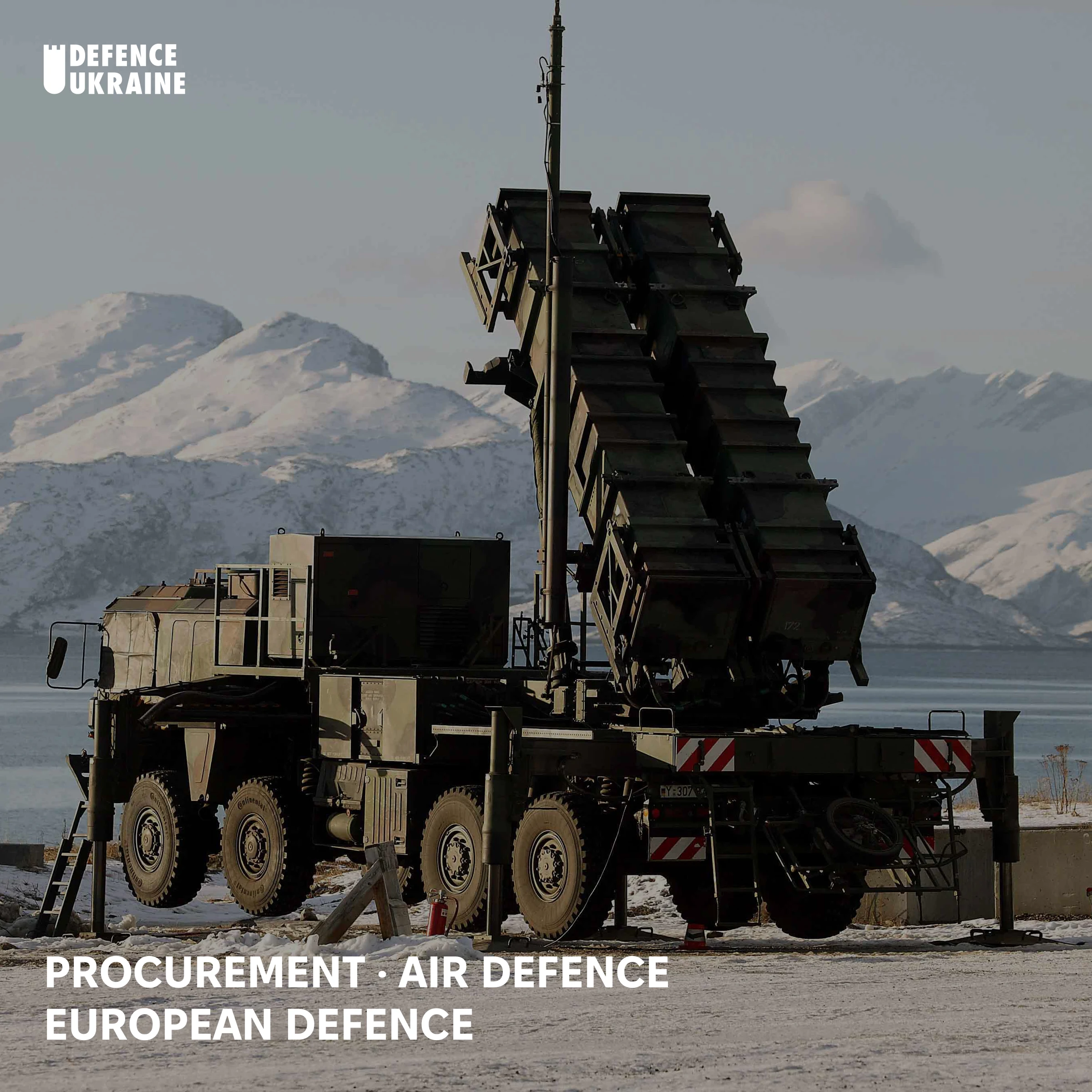
Around 95 per cent of the Patriot interceptors reaching Ukraine arrive through PURL, according to the Ukrainian Ministry of Defence. That single statistic defines the tool. PURL is not a diversified funding mechanism; it operates as a waitlist for United States stockpile drawdowns, moving only when the US Department of War is willing to release the articles and physically holds them. European contributors can raise the money. They cannot authorise the export. Ukraine's own push to route around that bottleneck by manufacturing rounds domestically yielded a Patriot production licence that was announced and then withdrawn, leaving the drawdown queue as the only path.
The headline total tied to PURL merits far more scrutiny than it has received. Reporting across 2026 has settled on roughly $6.7 billion raised from 29 contributing countries by the mechanism's twelve-month mark in July 2026. That figure does not trace back to any published NATO total. The traceable sum of comparable scale is Norwegian and denominated in kroner: NOK 6.7 billion, or between $600 million and $650 million depending on the exchange rate applied, allocated by Oslo across the Ukraine Maritime Coalition and PURL. Whether the dollar figure now in broad circulation is a currency conversion that dropped its unit or a genuine separate aggregate cannot be settled on the public record. Either way, no consolidated PURL total has been published, and planning against a number that may be an order of magnitude out is a poor foundation for a winter air-defence budget.
The release process has also grown less predictable. Pete Hegseth, confirmed as US Secretary of War after the department was renamed on 5 September 2025, has presided over an extended series of senior departures, including Army Secretary Dan Driscoll, General Randy George, and General Christopher Donahue. Senator Jack Reed, ranking member of the Senate Armed Services Committee, and Representative Jason Crow have both publicly characterised the resulting management picture as disordered. Whatever the merits of that description, the practical consequence for Ukraine is procedural: stockpile drawdowns demand a functioning authorisation chain, and allied money sitting in a NATO clearing account cannot substitute for one.
JUMPSTART: Paying for Missiles Not Yet Built
JUMPSTART, the Joint Ukraine Multinational Program: Services, Training, and Articles Rapid Timeline, is frequently treated as an offshoot of PURL. It is a different legal object. PURL buys what already sits on an American shelf. JUMPSTART compresses the administrative timeline for United States Foreign Military Sales, funding new production rather than transferring existing stock.
That distinction matters because European stocks have dried up. NATO Secretary General Mark Rutte said at the July 2026 Ankara summit that "there is a limit to the amount of interceptors that are in NATO territory". Once that limit is reached, the only remaining supply is a factory, and the factories that build PAC-3 Missile Segment Enhancement rounds operate entirely in the United States.
The single public quantification of JUMPSTART comes from Berlin. German Defence Minister Boris Pistorius allocated $200 million through the mechanism for PAC-3 guided missiles, buying roughly 40 to 50 rounds. The implied unit cost runs from $4 million to $5 million per interceptor. No aggregate figure for the mechanism has been published, and the six reported contributing allies have not disclosed their individual commitments.
Test that math against the ask. If the entire $8 billion to $10 billion procurement advance Zelensky described were spent on PAC-3 MSE rounds at the German unit price, it would buy somewhere between 1,600 and 2,500 interceptors, set against a global production line that also supplies US forces, Gulf customers, and NATO stockpile replenishment. The hard limit on JUMPSTART is not the size of the European cheque. It is the number of rounds Lockheed Martin can build and the order in which Washington chooses to allocate them.
The Night That Priced the Ask
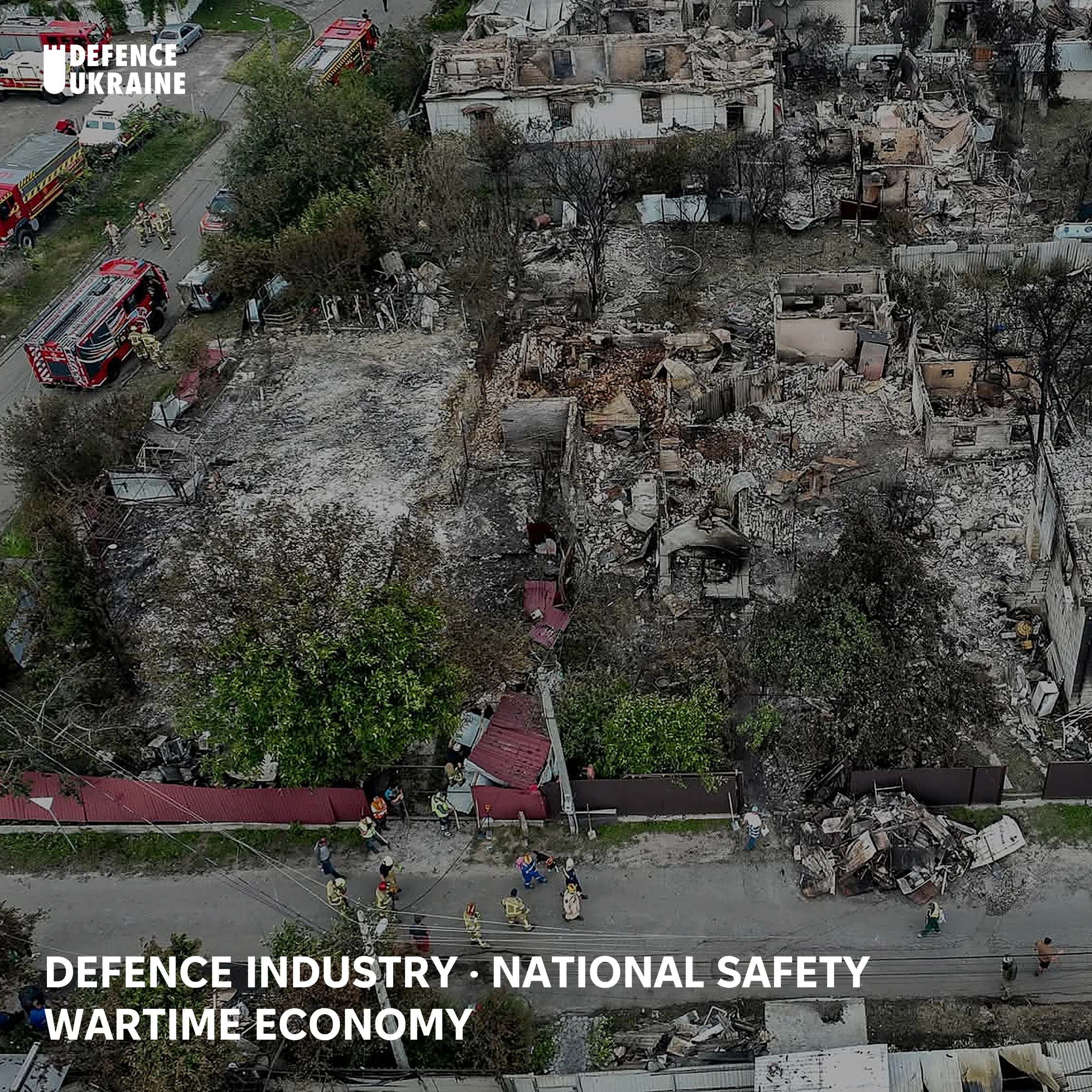
Between the evening of 6 September and the morning of 7 September 2026, Russian forces launched what Ukrainian officials and Kyiv Post described as the largest combined aerial attack of the war. The Ukrainian Air Force's detailed tally put the strike package at 823 projectiles: 810 Shahed-type drones and decoys, nine Iskander-K cruise missiles, and four Iskander-M or KN-23 ballistic missiles. Initial statements from Zelensky and the Air Force that morning reported 818, a figure that circulated widely before staff published the complete count.
Ukrainian air-defence crews shot down or jammed 747 of the drones, about 92 per cent of the drone package.
All four ballistic missiles broke through.
That is the number the $27 billion is priced against. Ukraine's layered defence deals with mass cheaply and handles cruise profiles adequately. Against a terminal-phase ballistic trajectory it has no domestic answer, and the only interceptor that provides one is built exclusively in the United States. On 7 September the Cabinet of Ministers building in Kyiv's Pechersk district was hit and damaged by fire, reported as the first strike on a primary government headquarters during the full-scale war. Prime Minister Yulia Svyrydenko said the world must respond "not only with words, but with actions", and named weapons as the requirement.
The strike also explains why Khmara's list combines categories that look unrelated. PAC-3 rounds, air-to-air interceptors for cruise missiles, and MANPADS munitions represent three answers to one saturation problem, and each has to be bought through a different channel.
The Only European Balance Sheet Left Standing
The EU Ukraine Support Loan, adopted in February 2026 as Regulation (EU) 2026/467, provides €90 billion across 2026 and 2027 in two annual envelopes of €45 billion. Around €60 billion of the total funds defence procurement and the Ukrainian defence industry, with €30 billion for macro-financial budget support. For 2026 the split allows up to €28.3 billion for defence and €16.7 billion for budget support.
On the numbers, this remains the only European instrument with a balance sheet large enough to absorb a $27 billion shock. It also imposes the most restrictive shopping list.
Loan-backed purchases cannot draw more than 35 per cent of an item's value from outside the EU and the European Economic Area, with Ukrainian production counted as European for the purpose. A PAC-3 MSE round fails that test completely, which is why Ukraine's first formal request under the loan, submitted on 5 September, carried an attached derogation application. European Commission President Ursula von der Leyen indicated the exemption review was progressing, with a decision expected on Monday 7 September. Neither the reported €2 billion valuation of that request nor the granting of the derogation had appeared on the public record as of the close of 7 September. The origin rule and the French push to time-limit these waivers define where that argument now sits.
The loan has become the sole European channel partly because the alternative fell apart. The European Peace Facility, which reimburses member states retrospectively for kit they donate, spent over two years frozen by a Hungarian veto under Viktor Orbán, accumulating a backlog of over €40 billion in unpaid claims. Prime Minister Péter Magyar lifted the veto on 2 June 2026, releasing €6.6 billion on paper. The paper is the catch. Donor states stopped paying into the facility during the blockade, and Slovak Defence Minister Robert Kaliňák has been among the EU figures warning that the fund lacks the cash to settle what it now owes. An unblocked instrument with no money in it reimburses nobody.
The frozen-asset track sits behind the loan rather than beside it. Roughly €200 billion of Russian central bank reserves immobilised at Euroclear underwrite interest on the €90 billion, with Ukraine expected to repay the principal only if it receives reparations from Russia. Converting the principal itself into fresh capital remains stalled on Belgian legal objections, and the Russian Central Bank has filed a $230 billion claim against Euroclear in Moscow. That litigation keeps the assets as a repayment mechanism for money already borrowed, not a sixth channel for capital Ukraine needs this winter.
Buying Ukrainian With Someone Else's Budget
The fastest-clearing instrument on the list is also the smallest. Under the Danish Model, an allied government transfers its own national budget funds directly to Ukraine's Defence Procurement Agency, which contracts Ukrainian manufacturers to build weapons that never cross an international border. There is no export licence, no end-use audit trail spanning three jurisdictions, and no origin rule to meet, because the origin is Ukrainian. The model has grown into a €1.3 billion cycle, and Denmark, Sweden and Norway have all validated the mechanics.
Ukrainian industrial capacity now stands at roughly $55 billion a year, against roughly $1 billion in 2022. Drone output climbed from about 300,000 units in 2023 to 2.2 million in 2024, with a stated 2026 target of 7 million. Ukraine's own budget pays for a fraction of that capacity, which is what recurring reports of idle production lines actually describe: not an engineering limit, but a liquidity one. Mid-range strike FPV lines, ground robotics, and interceptor drone production consolidate or halt when contracts dry up, regardless of how urgently front-line troops need them.
When Khmara asks partners to allocate national budget money for Ukrainian-made drones, the request is to syndicate the Danish Model across more capitals. The obstacle is domestic rather than technical. A finance ministry approving this line item spends its own taxpayers' money in a foreign industrial base with no return flow to its own defence sector, which makes for a harder vote in Rome or Madrid than in Copenhagen. Audit concerns persist but have narrowed as DALO-style pre-vetting has proved out in practice.
Whether Kyiv Can Absorb the Money
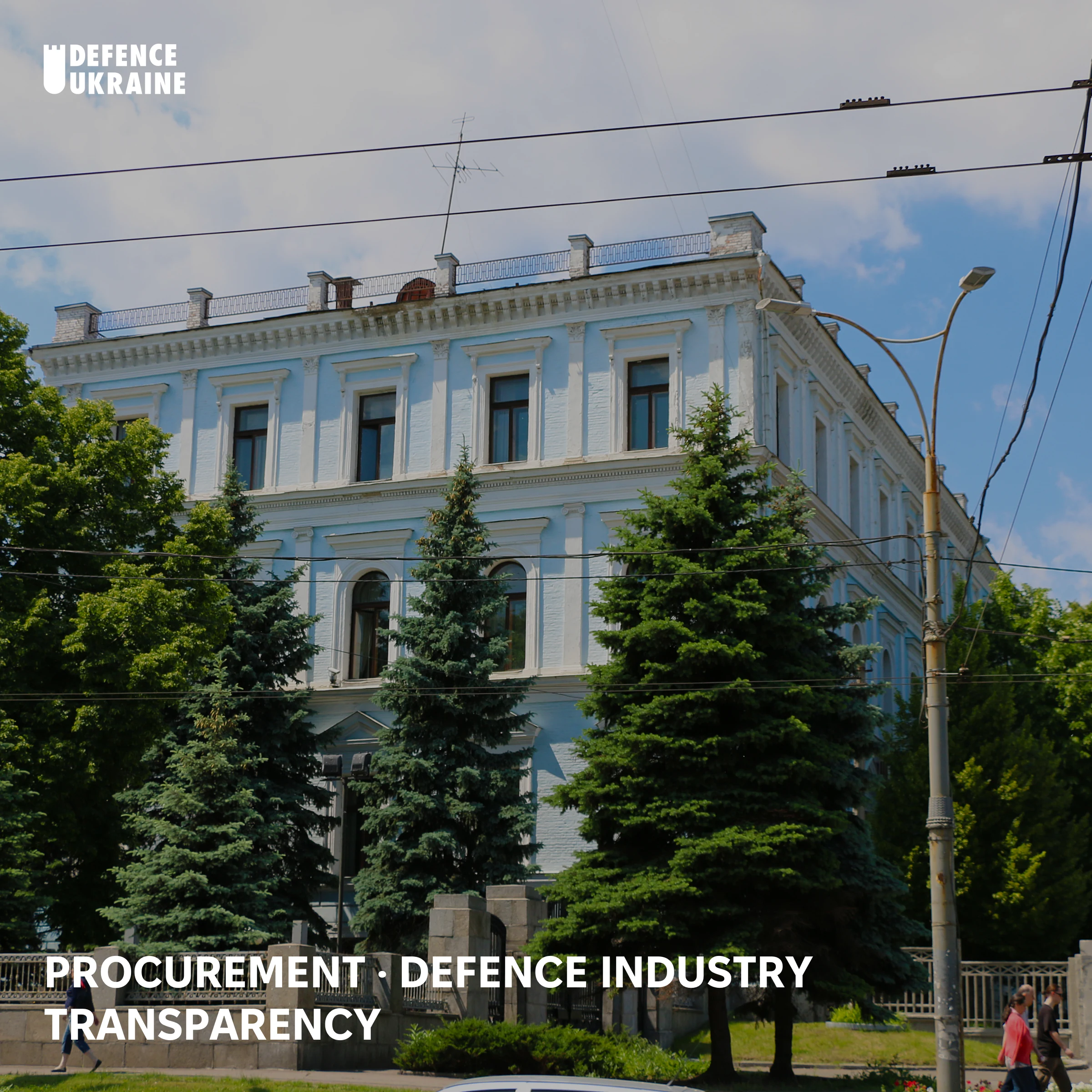
Every instrument above leads to the same desk: the Defence Procurement Agency, which contracts the money into equipment. The agency changed hands eight days before the $27 billion request became public.
Arsen Zhumadilov resigned on 31 August 2026 after three years during which the DPA moved most armaments procurement onto competitive Prozorro tendering and built the DOT-Chain logistics rails. Artem Romaniukov, previously the agency's Director of Development and an officer who served with the 15th Separate Artillery Reconnaissance Brigade, took the chair as acting director on 1 September, appointed by the Supervisory Board with the Ministry of Defence's consent. Several outlets initially named Oleh Klots before the ministry confirmed Romaniukov. The succession itself carries a governance question about whether the board held the seats to make the appointment.
Romaniukov's qualification for the moment is specific: he worked directly on the channels designed to absorb EU loan funds. He inherits an agency that codified 1,526 new equipment models in the first eight months of 2026, around 91 per cent of them Ukrainian.
The throughput bottleneck sits on the tendering side. The shift from negotiated contracts to open competition has stalled on thin technical specifications and understaffed competence centres, delaying second-half 2026 contracting. Kyiv routed UAH 10 billion of the identified domestic savings to the DPA to ease that. Against a $55 billion capacity base, UAH 10 billion is a rounding adjustment.
Strategic Implications for Ukraine
The five channels do not compete on generosity. They compete on clearance time, and the resulting hierarchy is not the one diplomatic language implies.
- Two instruments carry the load, and neither is American. The EU Support Loan holds the balance sheet and the Danish Model delivers clearance speed. PURL and JUMPSTART both terminate in a US export authorisation that European money cannot compel, and the European Peace Facility is unblocked but empty. Ukrainian planning that treats all five as parallel options will over-forecast the winter. The realistic 2026 arithmetic runs on €28.3 billion of loan defence money and whatever additional capitals can be persuaded to open national budget lines for Ukrainian production.
- The origin rule and the ballistic gap point in opposite directions. The 35 per cent cap exists to build European industrial capacity, and it works as intended for drones, ground robotics, and ammunition, where Ukrainian production counts as European. It fails precisely where the 7 September strike showed the capability hole. No European line builds a hit-to-kill interceptor, so every euro Ukraine wants to spend on the one thing that stops an Iskander-M needs an individual waiver, renewed for each purchase. That is a structural clash rather than a procedural delay, and it will recur with every payment request.
- The single number should be split before it is negotiated. Presenting salaries and interceptor contracts as one $27 billion ask invites partners to answer with whichever component is cheapest for them, which is budget support. Budget support does not buy PAC-3 rounds. Ukrainian negotiators arriving at the October Contact Group with two separately-costed asks, each tagged to the channels that can legally carry it, will get a cleaner answer than one headline figure allows.
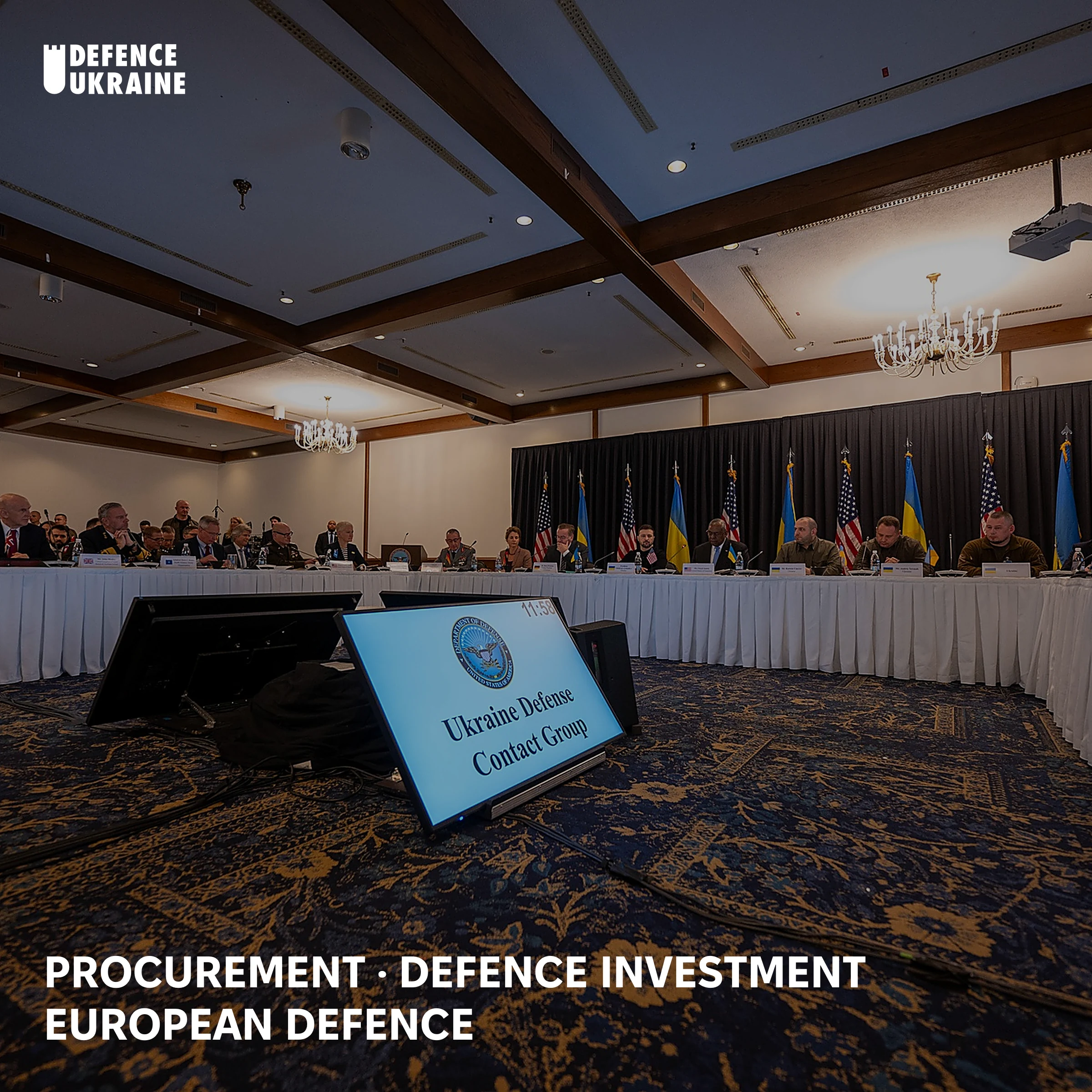
- Absorption capacity is the constraint nobody is funding. An acting DPA director, understaffed competence centres, and unfinished technical specifications are what stands between a disbursed euro and a delivered drone. Ukraine's 2027 draft state budget goes to Cabinet on 8 September and to the Verkhovna Rada by 15 September, and it will show whether Kyiv has funded the contracting machinery or only the contracts. The 36th Ukraine Defence Contact Group, convened online on 7 September and due to reconvene in early October, is the first test of whether partners read the ask the way it was written.