At the 7-8 July 2026 Ankara NATO summit, President Donald Trump publicly promised Ukraine a licence to manufacture Patriot interceptors at home. On 23 July in Kyiv, President Volodymyr Zelensky met a Raytheon delegation led by company vice-president Joseph DeAntona and announced that Ukraine and the American prime would "jointly produce with Raytheon one of the most critical air defense systems, interceptors for the Patriot system," as Ukrinform reported. On 31 July at Camp David, Trump reversed. Speaking during a Cabinet meeting, he said the US "has not agreed to" grant the licence, called the technology "a hard thing to give away," and warned that a licensee "could someday turn on you." Congressman Don Bacon of Nebraska, a Republican air-defence hawk, publicly criticised the reversal within days.
The three-week arc, promise to announcement to retraction, is now the story. Kyiv is holding an agreement that assumes a licence Washington now says it has not granted. Even if the licence is eventually restated, the corporate and US government stakeholders describe an industrial ramp measured in years, not months. Tom Laliberty, who runs RTX's land and air-defence business, told the Farnborough airshow the same month that the process "has just started" and that the company was conducting feasibility studies while following the US government's lead on licensing. The distance between Kyiv's framing and Washington's execution was the story even before the reversal. The reversal added a prior question: whether the execution happens at all.
What follows surveys what the reversal changes and what it does not, for Ukraine's air defence, for Poland's rival hosting bid, for Fire Point's Freyja alternative, and for the €28.3 billion of EU financing that would underwrite either path. Ukraine's air defence still runs on imported interceptors through a coalition funding mechanism, and it will keep running on them for years while any co-production line is built, or not built. The announcement matters. It is not the same thing as a missile, and it may not now be the same thing as a licence.
What "Licensed Production" Actually Commits To
Licensed joint production is not a single manufacturing event. It is a phased industrial ramp that begins with local assembly of imported "knock-down" kits, moves to sub-assembly integration, and only later reaches the domestic manufacture of components. Each phase clears a different regulatory gate.
The gates are American. Any transfer of Patriot manufacturing know-how must pass the US State Department's Directorate of Defense Trade Controls and comply with the International Traffic in Arms Regulations. That pathway is sequenced. A Technical Assistance Agreement comes first, permitting RTX and Lockheed Martin to share controlled technical data and processes with Ukrainian engineers. A separate and more demanding Manufacturing Licence Agreement is required before anyone assembles an interceptor. Neither had been signed when the announcement was made.
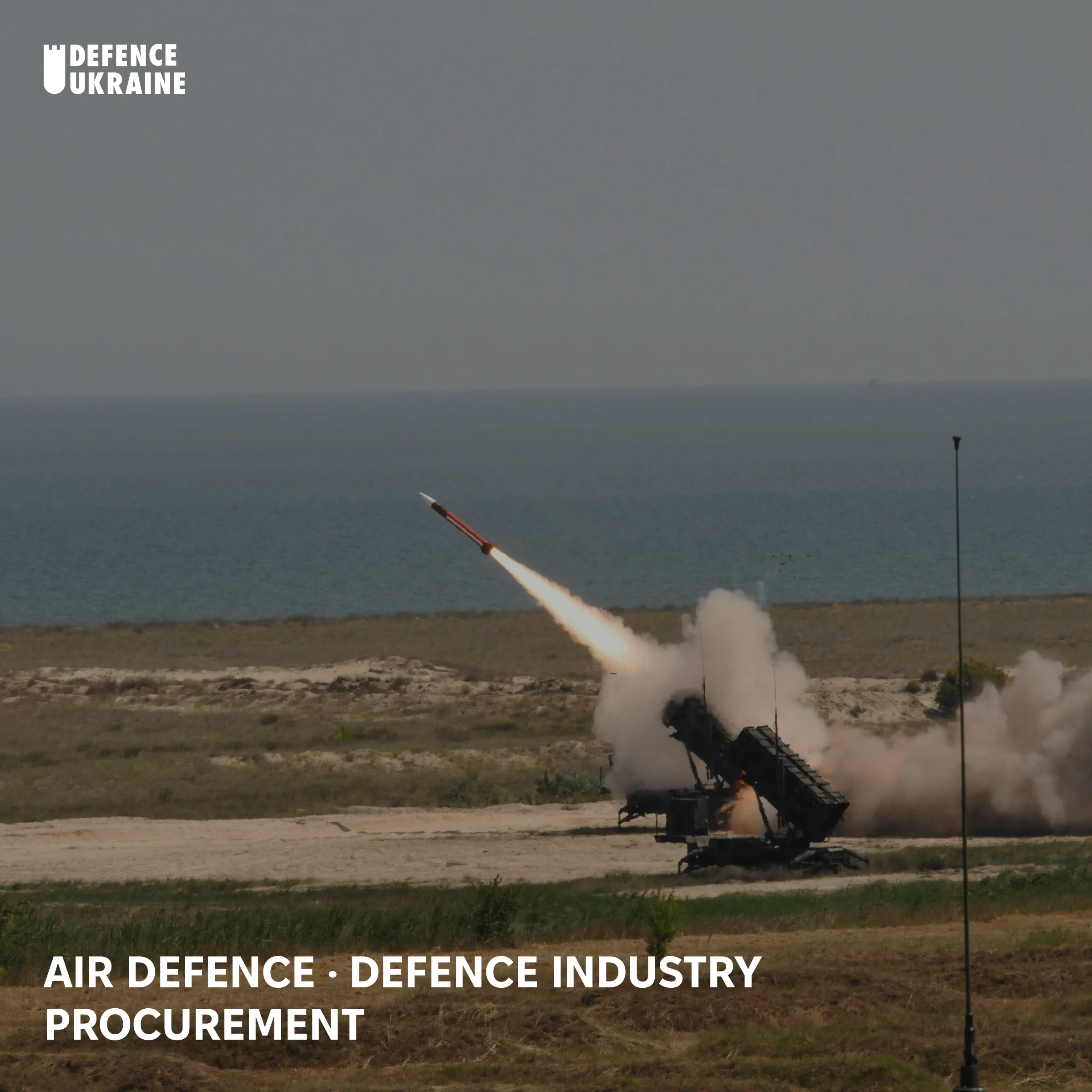
The variant question complicates everything. Raytheon builds the PAC-2 GEM-T, a blast-fragmentation round tuned for aircraft and cruise missiles. Lockheed Martin builds the PAC-3 CRI and PAC-3 MSE, the hit-to-kill interceptors that stop ballistic and hypersonic threats. Michael Cadenazzi, the US assistant secretary of defense for industrial policy, told Breaking Defense that the Pentagon was still weighing which variant to license. He flagged an engineering paradox worth keeping in mind: licensing a cheaper, less capable PAC-3 would complicate certification rather than simplify it, because substituting cheaper components forces re-engineering to hold the reliability the Patriot network depends on.
Even a fully licensed Ukrainian line would inherit the constraints of the American one. The PAC-3 needs solid rocket motors from L3Harris's Aerojet Rocketdyne and guidance seekers from Boeing, both of which already choke US output. A Ukrainian assembly hall would draw on the same sub-tier suppliers, which is why independent estimates put the first Ukrainian-built interceptor well over a year away. There is a domestic precedent for onshoring an allied prime's production during the war: Rheinmetall's air-defence and ammunition plants now standing up on Ukrainian soil show that the model works for 35mm airburst rounds. A Mach-5 hit-to-kill interceptor is a different order of difficulty.
The Warsaw Alternative
Poland has put a competing proposal on the table. On 23 and 24 July, Deputy Defence Minister Magdalena Sobkowiak-Czarnecka went to Washington and met Pentagon and State Department officials, including Under Secretary of Defense Michael Duffey and Under Secretary of State Thomas DiNanno. Her pitch: a trilateral US-Ukraine-Poland arrangement that would site Patriot interceptor production on Polish territory.
The logic is physical security. A Patriot plant inside Ukraine would sit under the threat of Russian deep strikes that already target the country's defence-industrial base and power grid. Build the sensitive nodes in Poland, the argument runs, and the tooling, the intellectual property, and the specialist workforce stay out of missile range while Ukraine still gets dedicated interceptor supply. The proposal leans on infrastructure Poland already has. Through the WISŁA programme Warsaw has integrated PAC-3 MSE, and the state-owned Polish Armaments Group and its munitions arm Mesko give it an industrial base. Sobkowiak-Czarnecka also lobbied for Poland to host a regional PAC-3 maintenance and service centre, and paired the proposal with talks on a pending $4 billion US Foreign Military Financing loan.
Washington has been cautiously receptive and has set up a Pentagon working group to assess the idea. Kyiv is less enthusiastic. Zelensky's 23 July meeting with Raytheon stressed production inside Ukraine, both to hold sovereign control of the supply chain and to feed the wartime economy. That is the unresolved tension. Polish siting buys safety at the cost of dependency, and dependency is precisely what the sovereign-production push exists to end. The likely settlement is layered rather than binary: the most volatile items, seekers and rocket motors, made or stored in Poland, feeding final assembly hidden in hardened or underground sites inside Ukraine.
Khmara's Arithmetic and the Domestic Interceptor
The pivot arrives during a leadership rupture at the Ukrainian defence ministry. Mykhailo Fedorov was dismissed on 15 July after a public clash with then-Commander-in-Chief General Oleksandr Syrskyi over control of procurement. Major-General Yevhenii Khmara took over as acting minister on 20 July, with a Verkhovna Rada confirmation vote set for 18 August. His pronouncements are those of a caretaker, not a confirmed minister, a caveat that matters given how much doctrine he has already set out. Defence Ukraine has examined what Khmara's security-services background means for the ministry in detail.
That background reframes the whole air-defence question. Khmara spent his career in the Security Service of Ukraine, latterly commanding the Alpha special-operations centre, and he thinks in terms of asymmetric attrition rather than force-on-force matching. "We cannot go punch for punch. We have to be asymmetric," he told interviewers in late July. His benchmark is arithmetic: the cost of a Ukrainian strike, offensive or defensive, should run at roughly 2 per cent of the damage it inflicts. Firing a PAC-3 MSE that costs about $3.9 million at a mass-produced Shahed or a cheap Russian ballistic missile fails that test badly. Khmara cites his old command of Operation Cobweb, the drone campaign that gutted Russian strategic aviation, as the template.
Under that doctrine, domestic interceptor production is not an industrial vanity project. It is the only way to change the unit economics of survival. The implication is a layered magazine: scarce, expensive PAC-3 MSEs held for the highest-end threats such as the Kinzhal, and cheaper indigenous interceptors taking the rest. Ukraine already has a candidate. Fire Point, a firm that has scaled to 6,000 staff on the back of its FP-1 strike drones and FP-5 Flamingo cruise missile, is developing the FP-7.x anti-ballistic interceptor under the pan-European Freyja project, part of the domestic missile build-out that Defence Ukraine has mapped across the wider industry. Launched with 13 European partners in Paris on 13 July, the FP-7.x targets Mach 4.4 to 5.9, altitudes of 20 to 25 kilometres, and a unit cost near €1 million, roughly a fifth to a sixth of a PAC-3 MSE. Chief executive Iryna Terekh has set a first ballistic intercept for mid-2027.
Two risks shadow the domestic route. The licensed PAC-3 line and the Freyja programme will compete for the same scarce pool of Ukrainian aerospace engineers, propellant, and capital, and strict ITAR firewalls will keep US technology from crossing into the sovereign effort. Fire Point also carries reputational damage from the "Mindich tapes" scandal, in which wiretaps released by the National Anti-Corruption Bureau during Operation Midas implicated the sanctioned businessman Tymur Mindich in kickback schemes touching former defence minister Rustem Umerov. The fallout led Denmark to freeze a 2025 agreement to supply Fire Point with NATO-standard solid rocket fuel, which threatens the propellant supply the whole coalition depends on.
The Import Channel That Keeps the Lights On
Whatever gets built in 2028, Ukraine survives 2026 on imports. The channel is the Prioritised Ukraine Requirements List, and on 23 July the defence ministry published a year-one stocktake that shows how central it has become. PURL works as a multilateral clearing house: Ukraine names a battlefield requirement that European stocks cannot meet, Ukraine, the US and NATO agree a US weapons package worth around $500 million, and allied states pool the cash to buy it. Over its first year the mechanism mobilised $6.7 billion from 29 countries and funded more than ten packages. Norway led with $1.36 billion, ahead of the Netherlands at $1.163 billion, Germany at $900 million, Canada at $834 million and Sweden at $546 million.
For the Patriot force specifically, PURL is not one channel among several. The defence ministry says it carries roughly 95 per cent of all Patriot interceptors, PAC-3 variants included, that reach Ukrainian units. Zelensky has told the US envoy to NATO that raising interceptor deliveries through PURL is the "key priority" against massed Russian strikes. This is the same air-defence squeeze that forced Ukraine's earlier pivot as the Patriot magazine ran low.
The dependence is also the vulnerability. PURL runs on voluntary, ad hoc contributions rather than a standing budget, and it competes for the same allied money now being pulled toward co-production. If European capitals redirect liquidity into factory lines in Kyiv and Warsaw, the cash sustaining ready-made PAC-3 imports could thin out during the very years the domestic line is still being built. The sequencing has to be exact, because the alternative is an interceptor drought between the last reliable import and the first dependable domestic round.
Supply is the harder ceiling. In ordinary weeks Ukraine burns 60 to 70 Patriot interceptors a month; under saturation strikes that spikes to 150 to 180. Total Western production across every customer runs near 2,000 a year, about 167 a month, and that output must also cover depleted US stocks and Gulf, Indo-Pacific and European buyers. The strain showed in mid-July, when NATO and the EU pressed Greece to release up to 200 ageing PAC-2 missiles, some in Hellenic service for 23 years, with Norway floated as the financier that would buy and forward them. Athens refused, pointing to its own Patriot deployment guarding Saudi refineries. When the alliance is lobbying for two-decade-old rounds, the ready reserve is empty, and a Ukrainian assembly line that draws on the same Boeing seekers and Aerojet motors relocates the shortage rather than removing it.
Where the Money Comes From
Standing up interceptor production takes capital, and the capital now runs through a European architecture rather than direct US appropriations. Ankara set the headline. Allies committed a €140 billion two-year envelope for equipment and training, and Defence Ukraine has set out what that number actually binds allies to. The working money, though, flows through EU windows.
The main vehicle is the €90 billion Ukraine Support Loan for 2026-27, approved by the European Parliament, of which €30 billion is budget support and €60 billion is ring-fenced for defence. Within the defence share, €28.3 billion is directed in 2026 alone at Ukraine's own defence-industrial capacity, which makes domestic co-production an eligible and favoured use of the funds. Buying finished American rounds instead requires a derogation from the loan's origin rules. The bridge from macro-loan to factory floor is the Danish Model of routing allied money straight to Ukrainian manufacturers, the government-to-government-to-business conduit under which Denmark's DALO audits a supplier and signs on a donor's behalf. It ran at about €1.3 billion in the 2025-26 cycle.
The design has an edge to it. By steering money through EU windows and the Danish Model, the architecture rewards European and Ukrainian joint ventures, which means a licensed US Patriot line has to compete for tranches of EU-centric money and navigate European compliance to fund its Ukrainian assembly. And a summit pledge is not a delivered missile. The €140 billion is committed on paper; a domestically assembled PAC-3 still has to clear DALO due diligence and ITAR before it exists.
Strategic Implications for Ukraine
Five consequences follow from the promise-announcement-reversal arc, ordered by how much the 31 July Camp David reversal changed them.
- The licence itself is the primary variable now. Trump's 31 July reversal turns a slow-execution problem into a whether-execution problem. Until the White House restates the commitment in writing or lets the reversal stand, the Raytheon agreement functions as a political marker without a legal foundation. Everything below assumes a licence is eventually issued. Without one, the Warsaw hosting bid becomes the only path to a European PAC-3 line, Fire Point's Freyja becomes Ukraine's primary sovereign anti-ballistic programme, and Ukrainian air defence stays dependent on PURL imports for the full €90 billion Ukraine Support Loan cycle. The most valuable near-term move is not choosing between co-production and imports. It is establishing which is actually available.
- The near term stays an import fight. Nothing about the RTX agreement changes what defends Ukrainian cities this winter. Ninety-five per cent of Patriot interceptors arrive through PURL, that channel depends on voluntary contributions, and the co-production line will not deliver during the current war-financing cycle. The immediate task is protecting the import flow while the factory is built, not choosing between the two.
- Site security is the deciding variable, not licensing. The Warsaw proposal exists because a Patriot plant inside Ukraine is a priority target for Kinzhal and Iskander strikes and depends on a grid Russia keeps hitting. If the Pentagon's security review judges Ukrainian siting too exposed, Poland becomes the hub and Kyiv loses the sovereignty it wants. The most likely outcome splits the difference, with volatile sub-components in Poland and hardened final assembly in Ukraine.
- Two interceptor programmes compete for one talent pool. The licensed PAC-3 line and Fire Point's Freyja effort will draw on the same engineers, propellant and capital, separated by ITAR firewalls that stop knowledge flowing between them. The row over whether Denmark froze Fire Point's solid rocket fuel plant contract after the Mindich scandal broke (Fire Point's head Denis Shtilerman told the Financial Times Denmark froze it; Copenhagen's Ministry of Business and Industry denies any suspension) shows how quickly a governance failure can strain the domestic side. Managing that competition, rather than betting on one line, is the real industrial-policy problem.
- The money rewards European joint ventures. The €28.3 billion earmarked for Ukrainian defence-industrial capacity in 2026 flows through EU windows and the Danish Model, structures built to favour European and Ukrainian partners. An American prime that wants a share has to work inside that framework. The financing architecture, as much as the ITAR paperwork, will shape where the interceptors are eventually assembled.
The precedents bound the timeline. Japan builds the PAC-3 under licence and has even exported rounds back to the United States, but it did so over a decade of undisturbed peacetime industry. Israel's Rafael systems were underwritten by US capital across decades of integrated development, with $5.2 billion earmarked by Congress in 2024 alone. A sophisticated arms-export-controlled interceptor typically needs three to five years from first agreement to first delivered article even under pressure. Ukraine is attempting that ramp under daily bombardment, on a battered grid, with a contested workforce. The €140 billion buys time through imports. The first Ukrainian-assembled Patriot is a 2028 question, and the winters in between will still be decided by what allied money can buy off the existing production lines.