Ukraine's Ministry of Defence entered 1,526 new weapon and equipment models into its codification register during the first eight months of 2026. It has not disclosed how many it turned down.
That missing figure is the most consequential fact about the bureaucratic checkpoint every Ukrainian drone must clear before the state can buy it. A tally of approvals without a tally of rejections reveals nothing about how tight the filter actually is. It fits a fast-track that admits only battle-ready kit just as easily as a ledger that stamps every workable prototype, handing frontline troops under fire the burden of sorting out what actually works.
What Codification Actually Buys
Ukrainian reporting routinely conflates three separate procedures. Different legal orders govern them, different authorities decide them, and they trigger entirely different operational results.
Codification (кодифікація) assigns a NATO Stock Number and enters an item in the state catalogue of supply items. It is an administrative step. It confirms that equipment exists, matches the ministry's technical descriptions, and can travel through a logistics pipeline built to allied military standards. It says nothing about whether that gear survives a Russian jamming environment.
Admission to operation (допуск до експлуатації) provides the wartime instrument. Introduced by Cabinet of Ministers resolutions after February 2022, it clears hardware for temporary military use across the Defence Forces under martial law once trials confirm the builder's declared tactical and technical characteristics. The process takes weeks. Adoption into service (прийняття на озброєння) is the peacetime equivalent, demands state trials on designated military ranges, and takes years. Hardly any wartime drone builder bothers with it.
The gate controls the cash. Without codification, hardware does not exist inside the ministry's logistics network: the Defence Procurement Agency cannot contract it, soldiers cannot draw it on the state's account, and neither budget lines nor battlefield points earned by units under the Army of Drones scheme can fund it. A Brave1 marketplace listing is no substitute. Nor does a grant help. Foreign sales pass through this same door, because Ukraine's controlled arms-export regime requires an item to be codified or adopted as an item of supply before a manufacturer can sell it to an allied government. The 565 aerial systems codified this year serve as the catalogue partner states shop from.
Two gates sit in series, and they test different things. Codification tests the hardware. Supplier vetting examines the firm behind it, which is what the YouControl screening memorandum signed on 3 August 2026 added as a precondition of contracting. Clearing one has never guaranteed clearing the other.
1,526 Is Not 413
Across most of 2026, the public figure in circulation was 413 unmanned aerial systems codified since January. The ministry's 3 September announcement replaced that count with a different metric entirely: 1,526 models across all weapons and equipment over eight months, of which 565 were aerial systems. Comparing 413 against 1,526 is a category error, and outside coverage has repeatedly made it. The figure replacing 413 is 565.
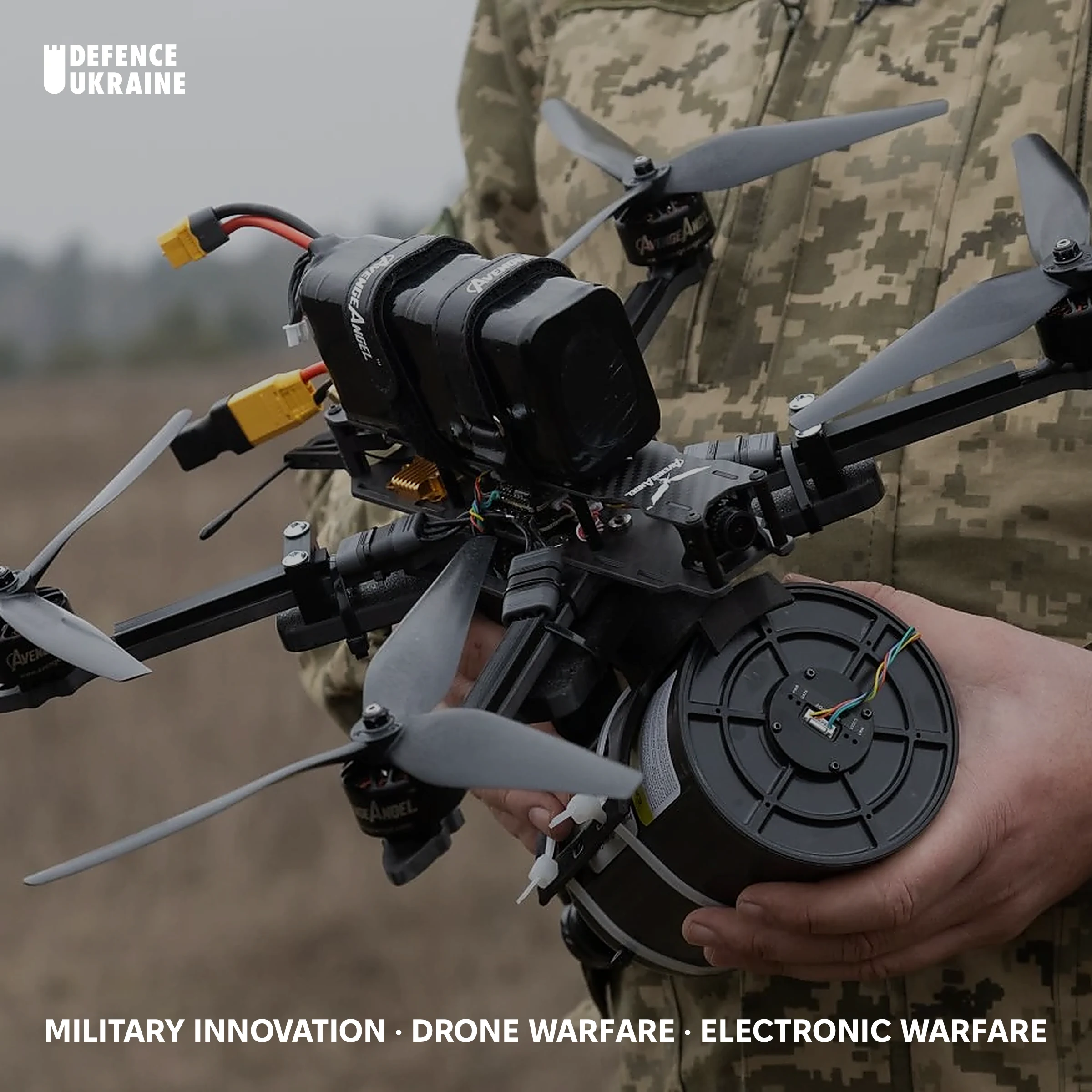
The composition is where the total earns its interest. Aerial systems claim 565 approvals. Ammunition claims 256, which in a drone-dominated procurement system means FPV payloads, modified drop-munitions and custom warheads rather than artillery shells. Communications systems account for 139, ground robotic vehicles take 86, and electronic warfare and signals-intelligence equipment takes 64. Vehicles, armour, optics, engineering gear and rear-support equipment cover the remainder.
The 2025 comparison offers far less solid ground. The ministry logged 983 models across the equivalent eight months of 2025 at an 86% domestic share, making this year a 55% jump in throughput and a five-point increase in domestic content. It published no category breakdown for 2025, so growth inside the aerial and ammunition segments cannot be measured against anything. It published no rejection count for either year.
The domestic share carries the ministry's most load-bearing claim. Nearly 91% of approved models are Ukrainian-made.
Regulations provide no public definition of what "Ukrainian-made" actually means. If hardware assembled in Ukraine under foreign licence counts, the figure tracks where technicians finished assembly rather than who owns the design. That ambiguity matters most at the low end, where standard FPV airframes, motors, optics and batteries remain heavily Chinese in origin. Ukrainian design and Ukrainian integration are real. Component autarky is not, and the 91% figure does not distinguish between them.
The Missing Denominator
No rejection figure exists in the public record for any year. Neither does a revocation tally.
That second void cuts far deeper. A permissive entry gate is defensible if officials strip equipment that fails in combat straight from the catalogue. Ukraine has published no registry of withdrawn codifications, and observers have recorded no mass revocations. An analysis published in mid-2026 by Ukranews criticised the ministry on precisely this point, noting that open deregistrations of poorly performing drones are entirely absent from the record despite repeated claims about new oversight tools. NAKO and Transparency International Ukraine have made the broader argument: peacetime procurement procedure breaks down under wartime need, leaving a vast area of bureaucratic discretion behind.
The case for the fast gate is not rhetorical. The Unmanned Systems Forces under Vadym Sukharevskyi reported striking 58,465 Russian targets in August 2026, averaging 1,886 a day and rising 8.7% above July, including 54 vessels of Russia's shadow fleet. No procurement system built around multi-year qualification can supply attrition at that tempo. The implicit doctrine is that survival in contact provides the real test, and that anything slower costs more than it saves.
The case against it carries a documented price. On 2 August 2026 NABU and SAPO closed an investigation into a racket codenamed Forest Gump, covering DJI Mavic 3T, Mavic 3 Pro and Matrice M30T purchases made by the State Service of Special Communications and Information Protection in 2023 at prices inflated 60 to 90% above market. Estimated losses to the state climbed from 90 million hryvnia to 254 million by mid-August 2026, with winners predetermined and competition simulated through controlled companies. Investigators seized more than $4 million in assets abroad and 17 million hryvnia domestically. That case involved imported commercial hardware rather than codified Ukrainian designs, so it does not indict the codification gate directly. It shows what a high-volume, high-speed purchasing environment costs when integrity checks lag the throughput.
The Dovbush T40, Codified and Uncontracted
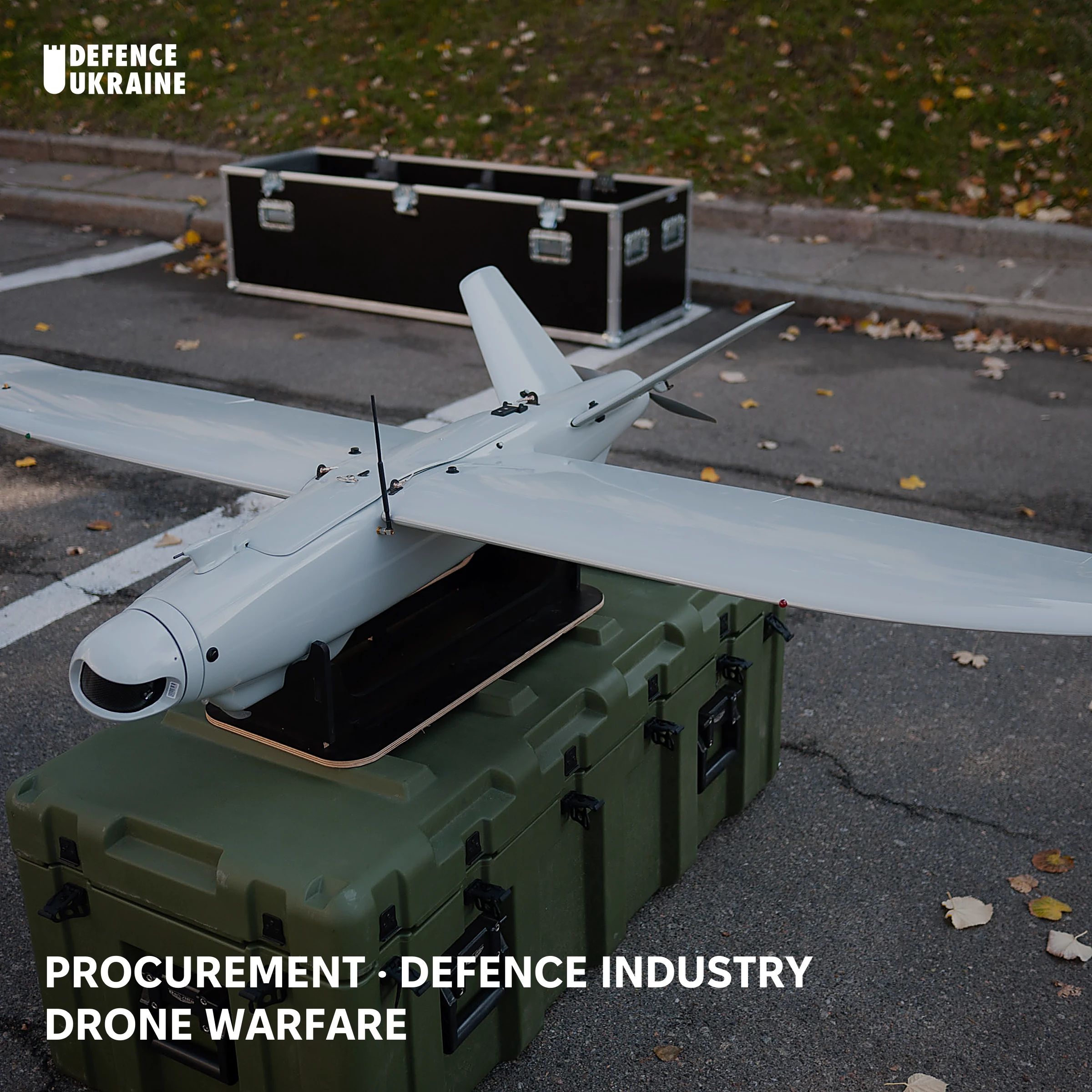
On 17 August 2026 the ministry codified the Dovbush T40, a long-range strike and reconnaissance aircraft with a reported range above 2,000 km, endurance beyond 24 hours and a wingspan close to five metres. The manufacturer also claims a very low radar signature and resistance to electronic warfare. Every one of those parameters is self-reported and none has been independently verified.
The announcement circulated under the framing that the aircraft puts Siberia in range. Paper range is not demonstrated reach, and the Armed Forces have attributed no strikes at that distance to the T40.
What the T40 illustrates is the sequencing. It descends from the Dovbush T20 and the Kotyhoroshko, systems reported in combat use since 2022, which means frontline crews refined the design lineage across years of war before administrative approval ever arrived. Combat use preceded codification rather than following it. That is the normal order in Ukraine, inverting the assumption built into every allied qualification regime.
Codification shifted the drone's commercial standing, not its physical capability. Before 17 August it could be bought with volunteer money. Now it holds a stock number and can appear as a line item in agency contracting, in unit-level ordering, and in specification-based tenders. Three weeks on, the state has announced no contract or order volume for it. The gap between codified and contracted is where the whole system's selectivity actually lives.
Where the Filter Actually Sits
The ministry says almost 91% of approved models are Ukrainian. The Defence Procurement Agency reports Ukrainian manufacturers took 82% of contracted procurement value in 2025, rising to a reported 87% in 2026, up from a 2024 baseline the agency itself states inconsistently at either 44% or 46% depending on which publication is read. For unmanned aerial systems specifically the agency puts domestic content at 95%.
Those are different metrics and the gap between them is informative. A larger share of approved designs is domestic than the share of money that reaches domestic firms, which means a long tail of Ukrainian companies holds codifications and wins nothing. The gate admits hundreds. The budget funds a few dozen. Consolidation pressure at the top of the market follows directly from that arithmetic.
The mechanism doing the filtering is DOT-Chain Defence, the marketplace run jointly by the State Logistics Operator and the agency, through which units order codified equipment directly with state funds. Reported performance is more than 1.2 million items delivered to 486 units from 252 suppliers, with an average nine days from order to receipt for stocked items. Arsen Zhumadilov, then the agency's director, described the platform as giving manufacturers a faster read on real demand from combat units. That is the filter. Commanders order what works and ignore what does not, starving underperforming codified systems of money without anyone having to revoke anything.
A second filter arrived in late August, when the agency stopped buying by model name and began tendering against ministry-set specifications, splitting each class into lots and capping any single winner at half the volume. Defence Ukraine covered that shift in its analysis of Ukraine's move to specification-based, anti-monopoly tendering. The consequence for the gate is precise: holding a codified system in the relevant class became a condition of bidding. Codification now qualifies a manufacturer to compete. It no longer points at a contract.
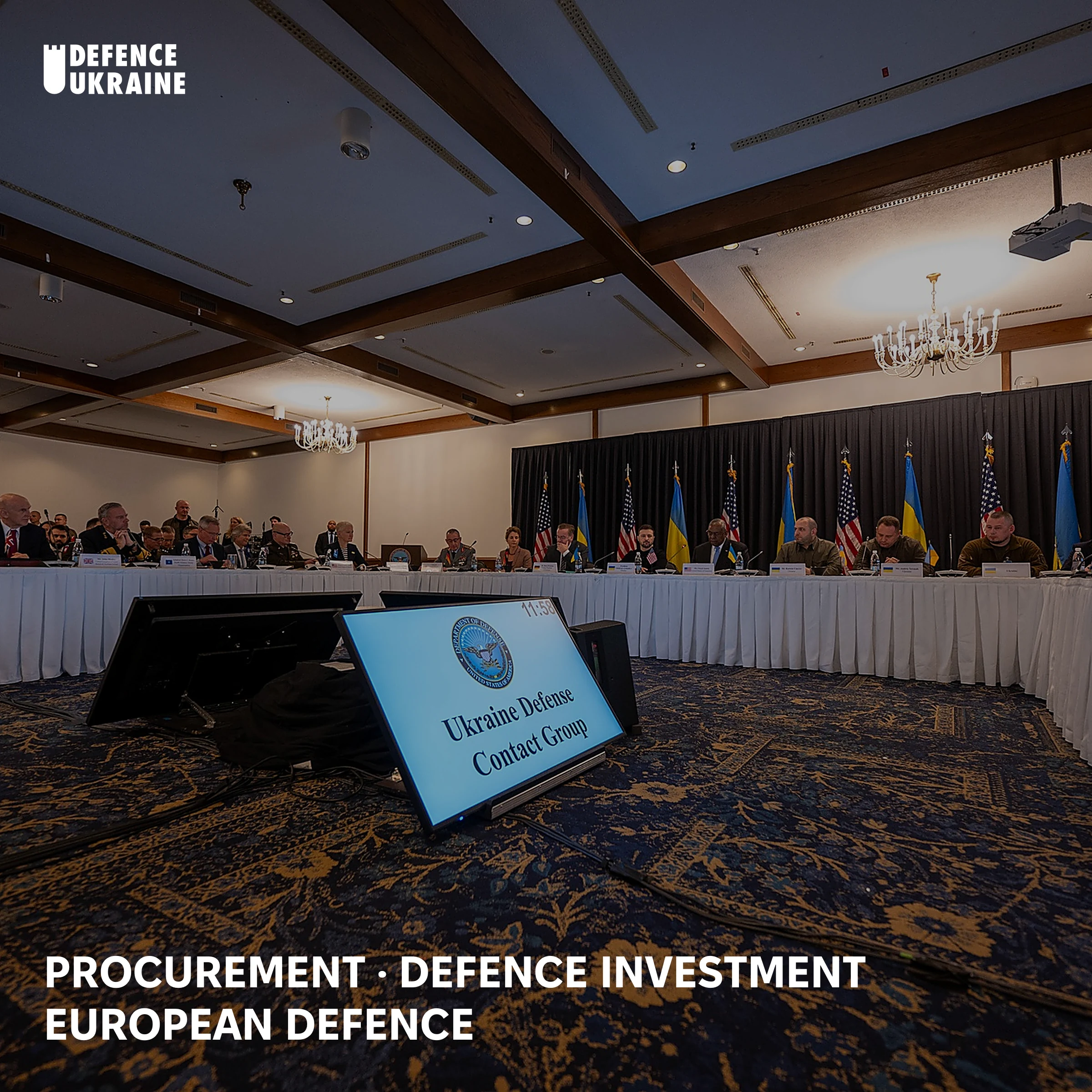
Available cash bounds everything here. At the 36th Ukraine Defense Contact Group meeting in Ramstein on 8 September 2026, Defence Minister Yevhenii Khmara put Ukraine's defence budget shortfall at €23 billion, with partners having delivered €62 billion against €70 billion pledged, and said the missing funds were what would keep drone deliveries stable into early 2027. That offers a narrower, later framing of the identical crisis raised in the $27 billion ask Kyiv tabled in late August. A reported supplementary 10 billion hryvnia allocation to the agency does not close it. Hundreds of codified systems will never be built at scale because that capital does not exist, whatever the gate decides.
Leadership churn has left the intake gate untouched. Khmara took over the ministry on 19 August 2026; Zhumadilov stepped down from the agency on 31 August and Artem Romaniukov took over as acting director on 1 September. Codification remains with the ministry's cataloguing directorates throughout. The agency controls the capital, the ministry holds the catalogue, and no announced change to the permissive regime has followed either handover.
What Europe Is Copying, and What It Cannot
The comparison making Ukraine's throughput legible comes from the United States. The US Department of Defense launched Replicator in August 2023 to field thousands of attritable autonomous systems within 18 to 24 months, working through its established Planning, Programming, Budgeting and Execution cycle. Independent analysts put the average interval from solicitation to first-article delivery at roughly 19 months by mid-2026, while mature commercial models like the Altius-600 and Ghost-X ran to the full 24. Replicator 2, aimed at countering small drones, carries that same 24-month expectation once Congress approves funding. Germany's BAAINBw and the United Kingdom's DE&S measure small-UAS qualification in years. Ukraine measures it in weeks.
European institutions have begun importing the testing logic rather than the speed. The EU-Ukraine Drone Deal launched on 16 July 2026 disbursed €1 billion for drone capability under the Ukraine Support Loan. The European Defence Agency's €35 million BraveTech EU Phase 2 goes further, testing candidate systems against combat scenarios drawn from the war, a shift Defence Ukraine examined in its analysis of how Ukrainian combat data became a European procurement standard.
The transfer halts there for structural reasons. Ukraine's gate works because a captive user base of hundreds of thousands of soldiers in continuous contact produces the failure data that peacetime laboratory trials exist to simulate. Take away the war and this fast-track has no evidence engine driving it, only an abbreviated queue. European governments can copy the paperwork. They cannot copy the feedback loop, and adopting the first without the second creates an open gate stripped of its compensating filter.
Strategic Implications for Ukraine
The gate remains settled policy, and the real limits on it now operate downstream rather than in administrative offices. Four consequences follow across the coming two quarters.
- The catalogue will keep outrunning the budget. At current throughput Ukraine will clear 2,200 codified models for 2026, colliding with a €23 billion shortfall that strictly limits what can be contracted. The practical outcome is a rising tally of cleared systems without a route into series manufacturing. Drone builders reading codification as a commercial milestone misread it, while suppliers already battling for lot shares under the specification regime understood the shift first.
- Fragmentation presents a concrete logistics bill, not an abstraction. Admitting 565 aerial models in eight months forces frontline brigades to juggle incompatible ground control stations, separate spare-part stocks, and disconnected training pipelines for operators. No published Ukrainian standardisation programme currently counters this across small unmanned systems. That toll is real and lands on combat units, exactly where a permissive gate tends to deposit friction.
- The missing revocation mechanism is the readily fixable flaw. Releasing rejection numbers would cost the ministry nothing operationally while proving whether officials filter submissions or simply register them. Publishing withdrawals would accomplish more: it would turn unit-level demand signals into a recognised quality feedback loop instead of leaving DOT-Chain purchase numbers to quietly squeeze failing kit. Neither has occurred, and that absence remains the single biggest unresolved question hanging over the system.
- Component dependency undercuts the 91% claim from below. Domestic design does not equal sovereign supply. The motors, camera optics, and battery cells powering the dominant FPV category are still bought overwhelmingly from China, placing a public headline about self-reliance over supply chains the state cannot control. Any interruption at that foundational tier will strand codified systems no matter how many designs the catalogue holds.
The next observable test is narrow and dated. If the ministry releases a rejection or revocation figure alongside its upcoming quarterly codification announcement, the gate is tightening. If total approvals cross 2,000 amid that same silence over failed gear, then codification acts as a clerical register, specification tenders provide the genuine filter, and that 1,526 tally was never a quality claim at all.