On the morning of 9 July 2026, one day after the Ankara NATO Summit closed and one day after President Donald Trump publicly promised President Volodymyr Zelensky a licence to produce Patriot interceptors in Ukraine, a Russian ballistic and drone salvo struck Kyiv and killed 31 people, the deadliest single attack on the Ukrainian capital this year. The timing was deliberate. Russia had already demonstrated on 6 July, the eve of the summit, that Ukraine could not intercept 29 ballistic and hypersonic missiles because Ukrainian PAC-3 stockpiles were exhausted. Moscow used the intervening days to make the same point in kinetic form. The Ankara Summit Declaration commits 31 Allies to €140 billion of Ukraine support over 2026 and 2027, endorses over $50 billion of new Allied procurement announced at the NATO Summit Defence Industry Forum on 7 July, launches NATO's Drone Edge with a $40 billion five-year budget for counter-drone capabilities, and formally designates Ukraine a "security contributor" to Euro-Atlantic security. In the T+2 analytical window, three substantive critiques have settled. Defence Ukraine's pre-summit primer named the question that Ankara was going to answer: whether the Alliance would convert political commitment into signed procurement. This piece traces what the summit actually converted, what it repackaged, and what it deferred.
The €140 Billion Breakdown
The declaration's fourth operative clause commits 31 Allies (all European member states plus Canada) to €70 billion of military equipment, assistance, and training for Ukraine in 2026, with sovereign commitments to at least equivalent levels in 2027. The United States is structurally excluded from the funding formula, which formalises the Trump administration's demand for European burden-shifting. Two-year total: €140 billion.
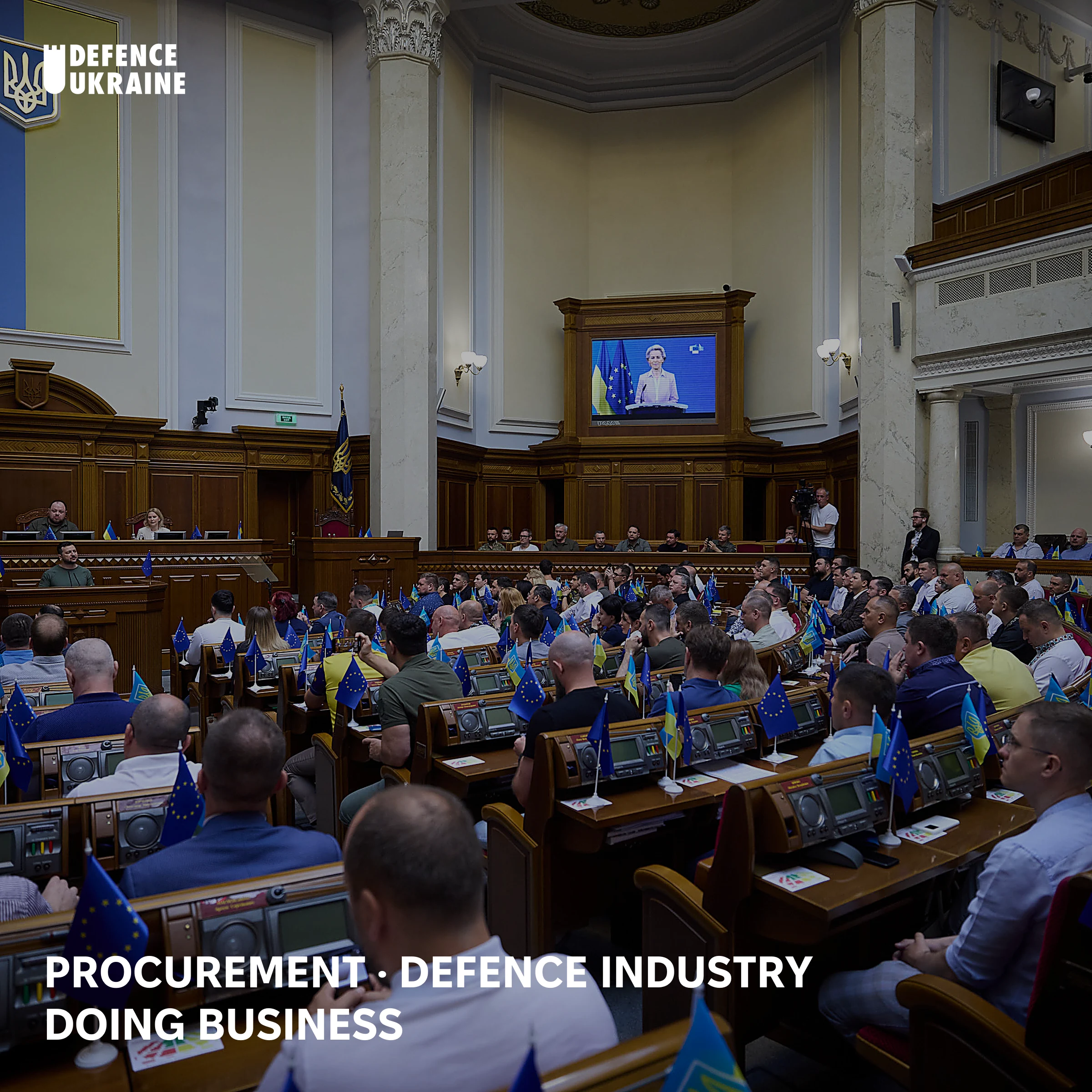
Analytical readouts from Kyiv Post, Ukrainska Pravda, and European Pravda have uniformly critiqued the composition. Approximately €90 billion of the total is the EU Ukraine Support Loan, a pre-existing multi-year facility backed by frozen Russian assets, of which roughly €28.3 billion is allocated to defence procurement in 2026. Approximately €48 billion is a roll-forward of existing bilateral commitments and pre-scheduled national deliveries from European NATO members and Canada, not new appropriations. Genuinely new capital generated during the Ankara negotiations, routed principally through the NATO Comprehensive Assistance Package, amounts to approximately €2 billion of the €140 billion headline.
The European Policy Centre reads this repackaging as diplomatic craft: it satisfies the US administration's demand for European burden-shifting while allowing European capitals to project unity without pushing new appropriations through domestic parliaments. The Foreign Policy Research Institute reads it as structural signal: American financial disengagement from the Ukrainian theatre is now institutionalised rather than campaigning rhetoric. Both readings can be correct.
The declaration also defers explicit burden-sharing coordination among the 31 Allies. The €70 billion annual tranche will flow through a fractured mix of NATO procurement instruments, the Ukraine Defence Contact Group framework, the EU loan mechanism, and bilateral channels. President Zelensky's Ankara press conference framed the commitment as a guaranteed funding floor that prevents state-budget collapse, then hedged: political declarations of future funding cannot intercept current ballistic missiles.
The Patriot Licence: Substantive Shift, 2027-2028 Timeline
Trump's 8 July Ankara statement was highly transactional: "We're going to give a license to you to make Patriots. That's pretty cool. This way, you can't complain that we're not giving 'em enough. It's a defensive weapon, which I like better than an offensive weapon." The announcement followed a formal licence request Ukraine submitted in May 2026. On 9 July, Ukraine's Foreign Ministry and Defence Ministry began negotiating the technical matters. Zelensky publicly urged that "our technical teams, all our representatives from different ministries, representatives of the executive branch, start working on this without delay, so that we can get licences very quickly and start production in Ukraine as soon as possible."
Industry reality is harder. Serhii Beskrestnov, adviser to Ukraine's defence minister, has publicly noted that a Patriot Advanced Capability-3 Missile Segment Enhancement interceptor requires up to 24 months to produce under optimal conditions, and that critical components, particularly the solid rocket motor, require approximately 30 months due to global supply chain constraints. Meaningful operational volumes of Ukrainian-produced Patriots are not expected until 2027 or 2028 at earliest.
The realistic path is phased. Initial production will involve importation of US-manufactured components for local assembly and testing in Ukraine under Lockheed Martin and Boeing supervision. European industrial participation will address specific US bottlenecks. Sovereign Ukrainian component manufacturing will follow in subsequent years. This structure mirrors the Israeli Iron Dome licensing to Rafael Advanced Defense Systems and the South Korean KF-21 co-production model: sovereign final assembly with deep reliance on imported critical sub-systems and foreign technical oversight.
Zelensky's post-summit communications emphasised a parallel track that does not depend on US export licensing. Ukraine is collaborating with eight European nations on the Diehl Defence / Fire Point Freya interceptor programme covered in Defence Ukraine's analysis of the Ukrainian missile and long-range strike industry, targeting mass production of a cheaper European anti-ballistic system that operates outside International Traffic in Arms Regulations. The Freya track is the strategic hedge against US domestic political volatility.
NSDIF26 and the Drone Edge
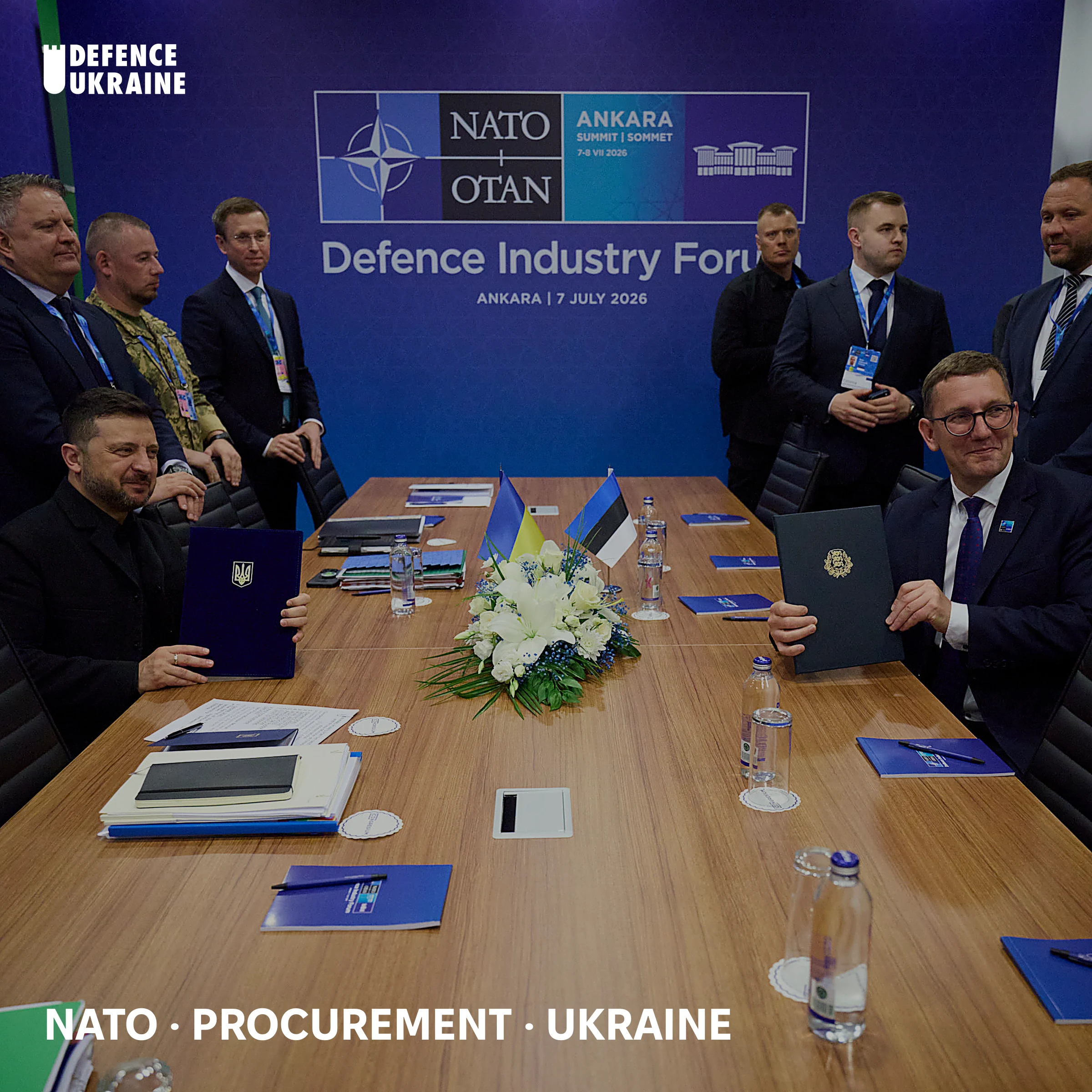
The NATO Summit Defence Industry Forum on 7 July delivered signed procurement across five capability areas: deep precision strike, integrated air and missile defence, uncrewed systems, cutting-edge technologies, and intelligence capabilities. Total volume was more than $50 billion. Named contracts included joint procurement of ten Saab GlobalEye aircraft valued at $5 billion across eleven countries, replacing the ageing Boeing E-3A Sentry AWACS fleet, procurement of Northrop Grumman Triton uncrewed maritime surveillance aircraft valued at approximately $2.7 billion, and delivery of the tenth Airbus A330 Multi-Role Tanker Transport within a broader $4.3 billion transport-plane commitment. The NATO Front Door for Industry platform was launched to provide defence companies with a single point of access to Allied procurement, and the NATO Innovation Scale-Up Package was endorsed to accelerate maturation of dual-use technology.
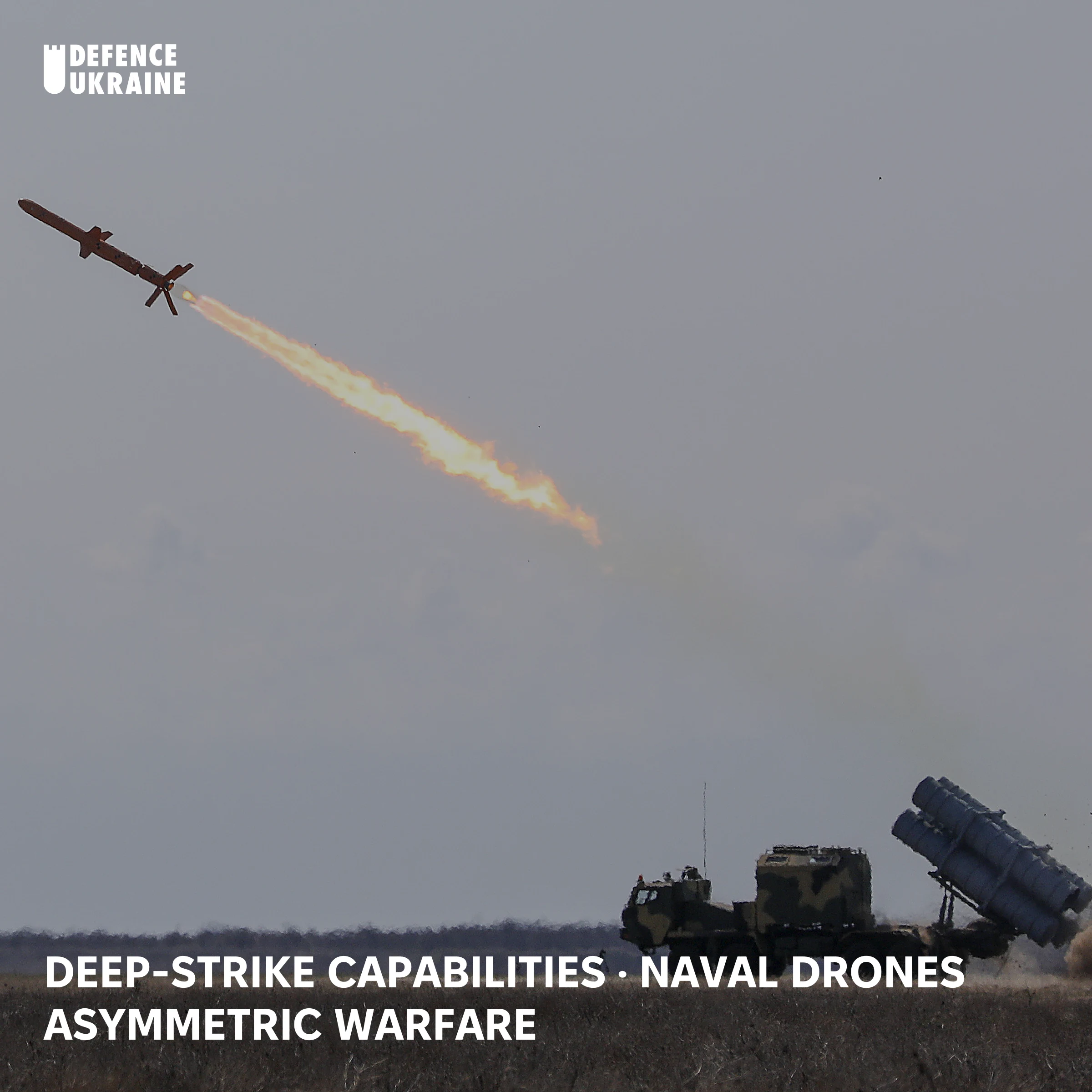
NATO's Drone Edge, launched as a distinct initiative, commits over $40 billion across five years to counter-drone capabilities. The mandate is layered defence: interceptor drones and kinetic counter-drone systems for lower-tier threats, directed-energy weapons and electronic warfare systems for non-kinetic swarm defeat. A specific programme line addresses air-defence capabilities against threats operating below 150 metres, the vulnerability Russian loitering munitions have exposed. A NATO counter-drone marketplace will allow member states to procure interoperable systems bypassing national acquisition cycles. Alliance-wide military drone operator numbers are committed to a five-fold increase by end 2027, facilitated through the NATO Flight Training Europe initiative that Finland, France, and Sweden joined at Ankara.
Ukrainian battlefield-derived capabilities are the operational backbone of the Drone Edge. The BraveTech EU Phase 2 initiative, backed by a €100 million joint fund (€50 million from the EU, matched by Ukraine), integrates Brave1 catalogue prototypes at Technology Readiness Level 4 or above into NATO procurement pipelines through the DefTech Forges Operational Experimentation campaign in Portugal from 28 September to 13 October 2026. Defence Ukraine's analysis of the European procurement standard built around Ukraine-tested combat data covered the architecture; the Drone Edge is that architecture applied at NATO scale.
The Security Contributor Language
The declaration's second operative clause designates Ukraine a "security contributor" to Euro-Atlantic security. The phrasing is codified in binding text: "Ukraine contributes to transatlantic security, and Allies stand united in our unwavering support for Ukraine." Historic NATO doctrine treats the demonstrated ability to be a security contributor rather than a security consumer as a foundational criterion for membership eligibility.
Ukrainian Foreign Minister Andrii Sybiha's public interpretation was maximalist: "Ukraine is no longer a country simply seeking protection; Ukraine is a security partner and contributor. We are capable of bringing our unique strength, experience, and innovation to collective security. NATO 3.0 will not be complete without Ukraine." Sybiha noted that Ukraine is actively assisting 11 countries with defence against aerial attacks, transferring combat experience with electronic warfare and drone interception to Allied nations.
Analytical readouts converge on double-edged reading. Al Jazeera, Kyiv Post, Ukrainska Pravda, and the Foreign Policy Research Institute treat the language as a substantive political victory that shifts the analytical logic of accession from charity for Kyiv toward strategic necessity for Europe. The Public International Law and Policy Group notes the language alters the operational-military-asset logic underlying both EU and NATO accession pathways. But the language advances theoretical justification for membership while practically deferring the "irreversible path" formulation Kyiv sought in previous communiqués. Consensus remains blocked, principally by the Trump administration's steadfast refusal to endorse Article 5 guarantees for Ukraine and by several European capitals wary of direct conflict with Russia. Zelensky's public reading was pragmatic: the language enhances Ukrainian leverage in bilateral security compacts and advanced-technology access even if full membership is deferred to a post-conflict environment.
The US Step-Back and Internal Friction
Ankara's diplomatic choreography was repeatedly fractured by the US administration's posture. NATO Secretary General Mark Rutte, whom European commentary has begun calling "the Trump whisperer," spent visible summit time managing US pronouncements. President Trump reopened the Denmark-Greenland dispute publicly, prompting Prime Minister Mette Frederiksen to respond in Ankara that "Greenland is not for sale" and that Denmark is "ready to defend every inch of NATO, including our own territory." Trump attacked Spain as a "terrible partner" in NATO for failing to support the US position on Iran, and announced he had ordered Treasury Secretary Scott Bessent to cut off all trade with Spain in retaliation.
The declaration's Iran clauses (Iran must never have a nuclear weapon; freedom of navigation in the Strait of Hormuz) codify Alliance language European capitals largely support. European resentment of the economic fallout from the US-led war with Iran, and of the total lack of Allied consultation prior to hostilities, is a separate matter public readouts have flagged consistently.
The structural US position remains what US Secretary of War Pete Hegseth articulated on 18 June 2026: NATO 3.0. The framework treats Europe as leading its own conventional defence with the US as partner rather than leader. Hegseth's six-month force-posture review concludes in late December 2026 and may recommend material US troop withdrawals from continental Europe if Allied capability targets are not met. The €140 billion Ukraine commitment structurally excluding the United States is not a diplomatic accident. It is the Trump administration's demand for European burden-shifting executed.
Strategic Implications for Ukraine
The Ankara Summit converted political commitment to signed procurement asymmetrically. Three implications follow.
- The €2 billion of genuinely new capital defines the summit's substantive floor. The €140 billion headline is not fresh money at scale. The €90 billion EU loan, the €48 billion bilateral roll-forward, and the €2 billion NATO Comprehensive Assistance Package top-up existed as separate commitments; Ankara aggregated them under one political frame. What Ukraine actually received in new capital is small. What Ukraine received in political architecture is real: a structural commitment mechanism that will constrain future EU and Allied national appropriations even if it does not add new capital immediately. Kyiv's operational calculus over the next six months depends on which reading Allied capitals internalise.
- The Patriot licence is a 2027-2028 story, not a 2026 delivery. The 24-month PAC-3 production timeline and 30-month solid rocket motor bottleneck are hard physical constraints not amenable to political acceleration. The Freya interceptor programme with Diehl Defence, mass production targeted for August 2026 per Fire Point's public roadmap covered in Defence Ukraine's missile industry analysis, is the Ukrainian air-defence bridge across the Patriot production timeline gap. The strategic question is whether Freya can hit the anti-ballistic coalition's winter delivery commitment. Failure would leave Ukrainian cities exposed through the 2026-2027 heating campaign against Russian air-launched ballistic salvos.
- The Drone Edge and BraveTech Phase 2 are the pathway that Ukrainian battlefield-tested industry actually scales through. The $40 billion counter-drone envelope combined with the BraveTech Phase 2 OPEX campaign in Portugal (28 September to 13 October) is the concrete institutional test of whether Ukrainian TRL 4+ prototypes can convert into NATO-scale procurement contracts. Defence Ukraine's analysis of Russian air-defence depletion under Ukraine's deep-strike campaign covered the exchange-cost economics driving why NATO now needs the Ukrainian catalogue. The Portugal campaign is where that need meets contract text. If the €100 million joint fund produces signed procurement by year-end, the model works. If it produces further OPEX and no contracts, Brave1 SMEs remain caught between demonstrated combat capability and multi-year AQAP certification timelines.
Conclusion
Ankara delivered what a summit can deliver: binding declaration language, five procurement categories with named contracts, a headline pledge that aggregates existing commitments under one political frame, a licence promise on the interceptor Ukraine most acutely needs. What it did not deliver, and could not, is immediate hardware or a US commitment structurally different from the six-month force-posture review. Between 7 July and 10 July, Ukrainian long-range drones struck an oil depot in Tver, fuel infrastructure in Ufa 1,500 kilometres from the front, oil reservoirs in the Stavropol region, an oil-loading terminal in the Rostov region, and two Russian oil tankers in the Sea of Azov. Russia responded on 9 July by killing 31 people in Kyiv. Neither side changed its operational calculus in response to the Ankara declaration. The €140 billion architecture is a political envelope that constrains future disbursement decisions. Whether it constrains them at a velocity Ukraine can absorb is the question the autumn 2026 NATO Defence Ministers meeting, the December 2026 European Council, and the conclusion of the Hegseth force-posture review together answer.