The 36th NATO Summit convenes at the Beştepe Presidential Compound in Ankara on 7-8 July 2026 with two competing framings already public. Internationale Politik Quarterly characterised the gathering as a "Damage Limitation Summit" given the political friction inside the Alliance over the US force-posture review and the 5 per cent GDP defence-spending target. NATO Secretary General Mark Rutte's announcement on 25 June that the Alliance will unveil "tens of billions of dollars" in new defence contracts at Ankara, alongside the NATO Summit Defence Industry Forum on 7 July, positioned the summit as a coordinated industrial delivery moment. Both framings can be partly correct. The structural question is whether the Alliance can move from the political pledges made at The Hague 2025 and the 18 June Brussels Defence Ministers meeting into actual procurement signed at Ankara, including the procurement that connects Ukrainian production into the European architecture.
Defence Ukraine's analysis of the European procurement standard built around Ukraine-tested combat data traced how BraveTech EU Phase 2, EDIP USI, the 100-Patriot coalition, and SAFE's first physical disbursement to Poland formalised the architecture during April-June 2026. That piece named Ankara as where the architecture either becomes formal Alliance posture or stays a network of bilateral arrangements. This piece traces what specifically Ankara needs to deliver to clear that bar.
The Force-Posture Background
At the Brussels Defence Ministers meeting on 18 June 2026, US Secretary of War Pete Hegseth announced a six-month review of US force posture in Europe, telling Allied counterparts that "the era of free riding is over". The framing, which Hegseth labelled "NATO 3.0", commits Washington to a transition in which European Allies and Canada assume primary responsibility for conventional territorial defence while the United States prioritises the Indo-Pacific. The Alliance defence-spending baseline used to evaluate Allied performance is the 5 per cent of GDP target carried over from The Hague 2025, a target that European Allies and Canada delivered against by raising defence investment by approximately $90 billion in 2025, a 20 per cent year-on-year increase per Rutte's pre-ministerial briefing.
The six-month US review timeline runs to roughly late December 2026, which means Ankara is the first major Alliance gathering during the review window. Future Warfare Magazine reported that Hegseth has "tied future US NATO commitment to allied performance", which positions the summit as an early checkpoint. The Politico-reported US block on a Tomahawk cruise-missile sale to an unnamed NATO Ally during the same week is the parallel signal that Washington is willing to constrain even friendly Allied procurement when its own assessment frames the deal as escalatory.
For Ukraine, the consequence is straightforward. The longer Hegseth's review runs, the more the European procurement architecture and bilateral Allied financing of Ukrainian production carry the load that direct US transfers cannot. The Ankara summit is the venue where Allies either move from political commitment to signed procurement, or where the consequences of slipping become harder to absorb downstream.
What Ankara Has to Sign
Rutte's "tens of billions" framing was deliberate. Press briefings to Anadolu Agency and Hürriyet Daily News signalled multiple contract categories converging on the summit: NSPA-managed Patriot interceptor procurement (the August 2024 $478 million NSPA-Raytheon GEM-T contract sets the precedent), ammunition co-production through national channels, defence-tech procurement through BraveTech EU Phase 2 and EDIP USI selection rounds, and bilateral Allied-Ukraine arrangements not formally NATO-managed but timed to the summit window.
The European architecture's status going into Ankara is operational rather than aspirational. The first EDIP call, focused on energetic components (propellant powder and explosives), closed on 16 June 2026 with 83 proposals from 23 EU Member States and Norway, anticipated funding €165 million. SAFE released its first physical pre-financing disbursement of €6.56 billion to Poland on 29 May 2026. BraveTech EU Phase 2 DefTech Forges executed first selection rounds in Estonia and France in June, with the European Defence Agency holding the Phase 2 mandate to assess defence solutions "against different operational scenarios drawn from the war in Ukraine".
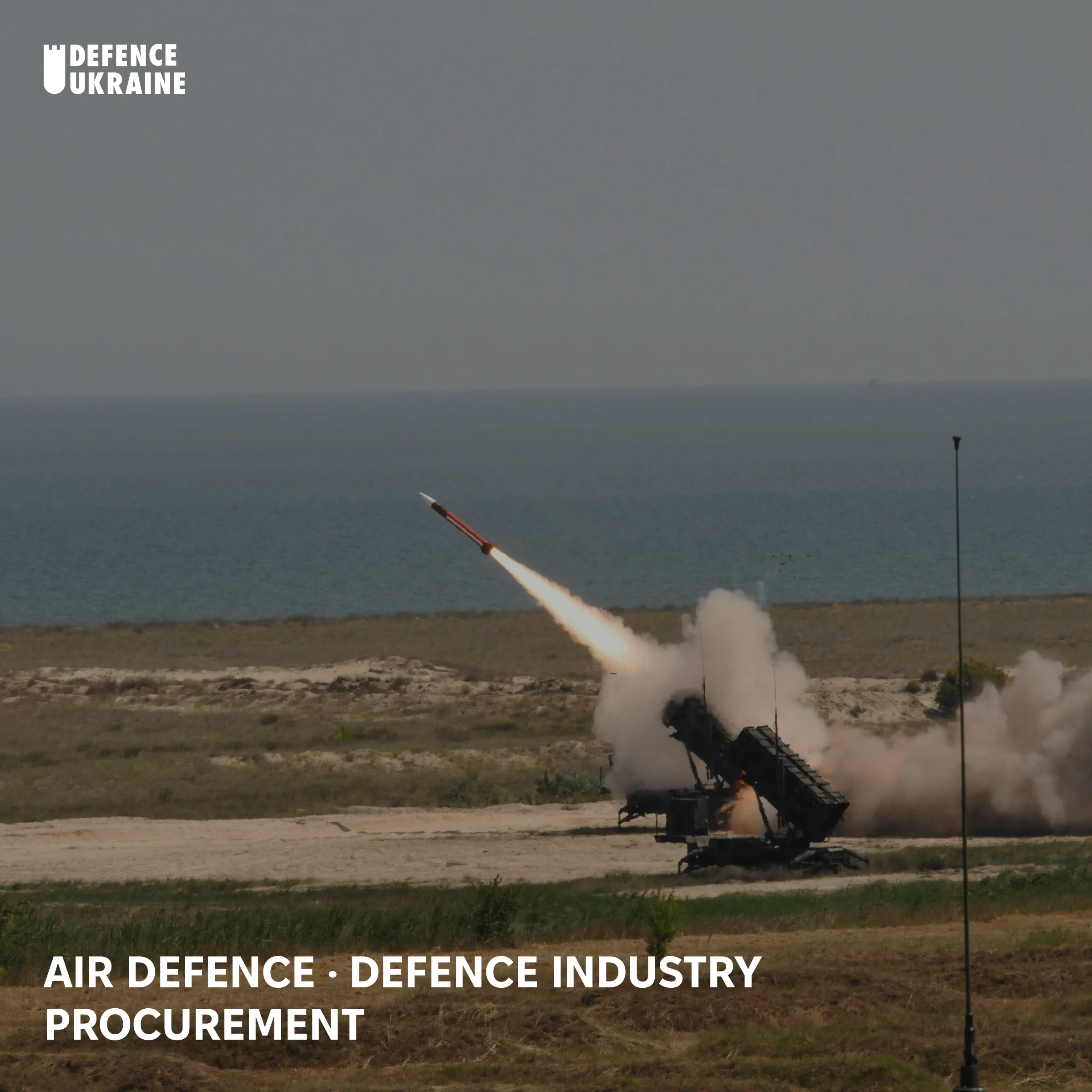
The Patriot interceptor track is what Ukraine has most publicly pushed. The 100-interceptor coalition announced on 11 June 2026 by Boris Pistorius and Volodymyr Zelensky (Germany, Denmark, the Netherlands, Norway) was already delivering by mid-month, with 32 interceptors transferred and 68 to follow. A parallel discussion has Ukraine offering Germany a missile-barter arrangement in which Berlin transfers current Patriot stock in exchange for delivering future Ukrainian-produced interceptors. The German decision is expected before or during Ankara. Pistorius was explicit on 11 June that Germany has exhausted permissible Patriot launcher reserves. The interceptor path is what the bilateral and PURL channels can sustain. The launcher path is not.
The Ukraine Negotiation Heading In
President Zelensky is confirmed attending Ankara. Ukraine's negotiating asks have been signalled publicly across the preceding three weeks. At the 35th Ukraine Defence Contact Group on 18 June 2026, Zelensky stated that the anti-ballistic coalition must "demonstrate full capability and deliver real results" by winter 2026-27. The Germany-Ukraine bilateral anti-ballistic agreement signed in mid-June is the substantive precursor. The Diehl Defence integration of IIR seekers into Fire Point's Freya interceptor programme, covered in Defence Ukraine's analysis of the Ukrainian missile and long-range strike industry, is the case demonstrating the Western-prime to Ukrainian-airframe model that Ukraine wants extended to additional Allied capitals.
Ukraine's second public ask is licensing. The G7 Évian statement of 17 June 2026 committed to "consider extending to Ukraine the benefit of licenses to allow for an increase in Ukraine's military production". The Trump-Zelensky exchange on licensing anti-ballistic air-defence systems for Ukrainian production is the bilateral channel test of that political envelope. What Ankara is expected to formalise is whether the licensing language becomes documented within the Alliance framework rather than left to bilateral implementation. The CORPUS coalition launched on 30 April 2026 by Ukraine's Defence Procurement Agency with Finland, Italy, Norway, Sweden, and the United Kingdom is the procurement-side scaffolding into which the licensing extensions would route.
A third Ukrainian ask, less prominent in public messaging but visible in the Ukraine Recovery Conference proceedings in Gdansk on 25-26 June, is European Investment Bank and EU instruments treating Ukrainian defence production as Recovery-eligible rather than exclusively war-spending. The structural shift would allow long-duration capital to support production capacity that survives ceasefire scenarios.
Where It Could Break
Several friction points are publicly visible heading into Ankara. The 5 per cent GDP defence-spending target is on schedule in aggregate but uneven by member state. Internationale Politik Quarterly's analysis of the summit framing flagged specific Allies behind schedule on the trajectory, and Hegseth's "tied future US commitment to allied performance" language gives Washington a public lever for naming names at Ankara if it chooses. Türkiye's host role is a complicating variable. The Turkish presidency's framing emphasises Southern Flank and multipolarity, which the United States Studies Centre has read as a deliberate widening of the summit beyond the Ukraine track that European Allies would prefer to keep narrow.
Hungary and Slovakia continue to hold positions on the Ukraine track that have repeatedly required workaround mechanisms at previous summits. Whether the Ankara communiqué accommodates or works around those positions is a procedural question that affects what specifically gets signed.
The Brave1 SME Allied Quality Assurance Publications certification timeline remains unaddressed. Defence Ukraine's analysis of the European procurement standard noted that smaller Ukrainian firms still face multi-year AQAP timelines. Without an Ankara-level procedural unblock, the BraveTech EU Phase 2 mandate's promised acceleration of Brave1 ecosystem firms into European procurement risks remaining a paper commitment. The Rheinmetall artillery plant in Ukraine, past its summer 2026 target as Defence Ukraine's coverage of the four-factory programme documented, is the visible operational lag against bilateral political commitment.
Strategic Implications for Ukraine
The June 2026 cycle has set Ankara as the moment when the procurement architecture either consolidates or fractures along the bilateral fault lines. Three implications follow for Ukrainian and Allied planners.
- The interceptor-supply position will be set at Ankara. Whether the Germany-Ukraine missile-barter deal closes, whether the United States releases additional Patriot interceptors under bilateral or NSPA-managed channels, and whether the anti-ballistic coalition formalises a winter delivery commitment together determine the air-defence ceiling Ukraine carries into the autumn 2026 Russian air campaign. The 25-26 June Ukrainian deep-strike wave on the Slavyansk and Yaroslavl refineries, and Putin's 29 June public rejection of limits on long-range strikes, frame the kinetic environment. The Patriot decision is the air-defence side of the same structural test.
- Licensing language must be documented, not merely affirmed. The G7 Évian statement and the Trump-Zelensky bilateral exchange established the political envelope for extending licensing to Ukrainian production. What Ankara needs to deliver is documented procedural language that European prime contractors and Ukrainian primes can use as the basis for contracts, rather than leaving extension to discretion at the bilateral implementation level. CORPUS is the procurement coalition. The licensing text is what gives CORPUS something concrete to procure under.
- The Hegseth review window is the operational deadline. The six-month US force-posture review concludes around late December 2026. Anything not signed at Ankara has to clear in the autumn ministerials and the December European Council. The procurement architecture that Defence Ukraine has tracked since April has approximately five months to convert political commitment into signed contracts, delivered platforms, and qualified Ukrainian primes inside the European procurement pipeline. Ankara is the first deliverables checkpoint inside that window.
Conclusion
The Ankara summit is not a setting-out summit. The institutional machinery for translating Ukrainian combat data into European procurement assessment, for routing Allied capital into Ukrainian production, and for substituting Ukrainian-produced platforms for depleted Allied stockpiles is already operational. What Ankara has to do is convert announcement into procurement. The "tens of billions" Rutte signalled will be evaluated against signed-contract volume and named-contract specificity, not against the headline number. The Ukraine track will be evaluated against the anti-ballistic coalition's winter delivery commitment, against the Patriot interceptor flow rate, and against the documented licensing extensions Ukraine has asked for. The risk Internationale Politik Quarterly's "Damage Limitation" framing captures is that Allies absorb US pressure by performing unity rather than delivering procurement.
Defence Ukraine's T+2 analysis of what Ankara actually committed to traces the summit's answers: the €140 billion pledge is ~€2 billion genuinely new capital wrapped around existing EU loan and bilateral commitments; the Patriot licence is a 2027-2028 story; NATO's Drone Edge and BraveTech Phase 2 are the concrete institutional tests through year-end.