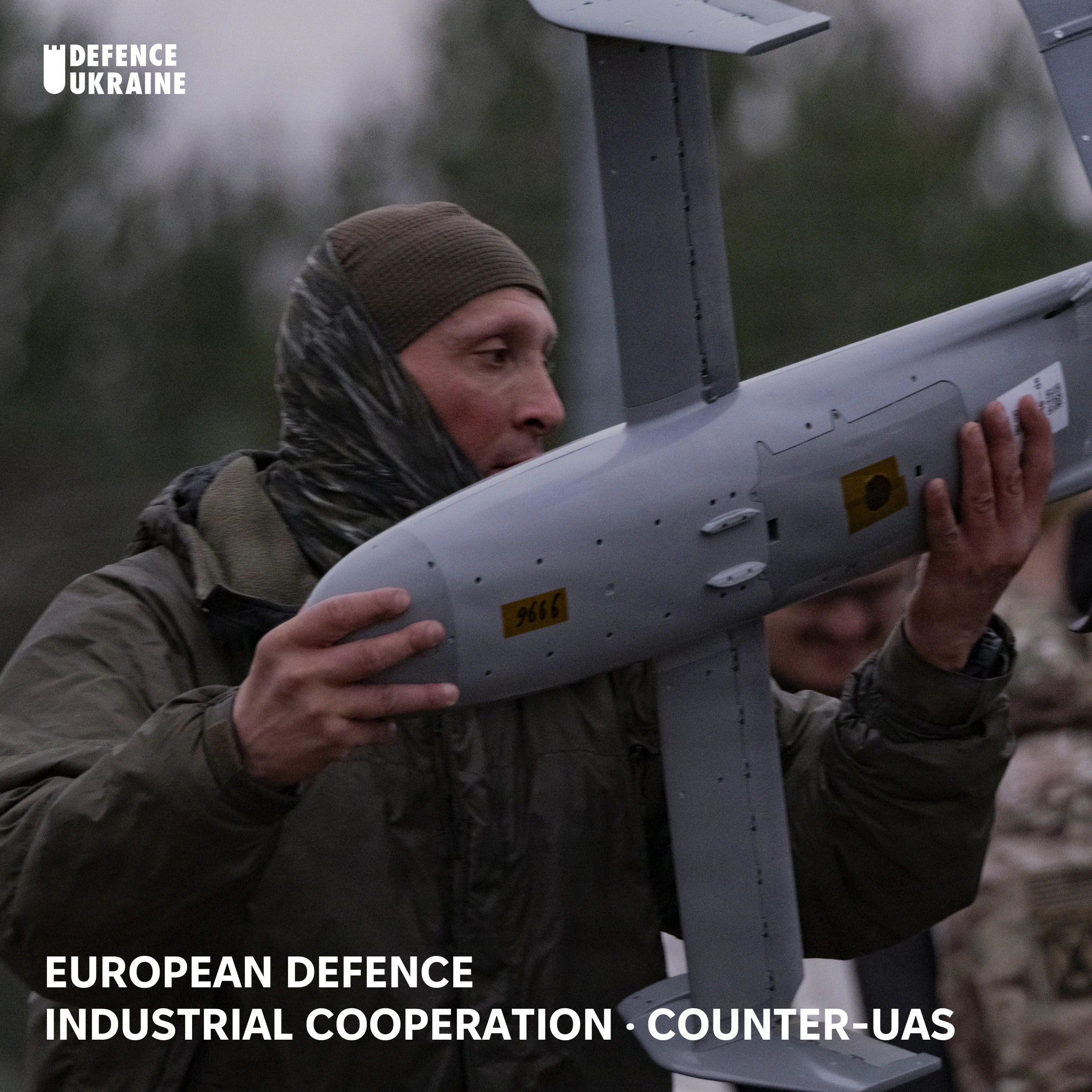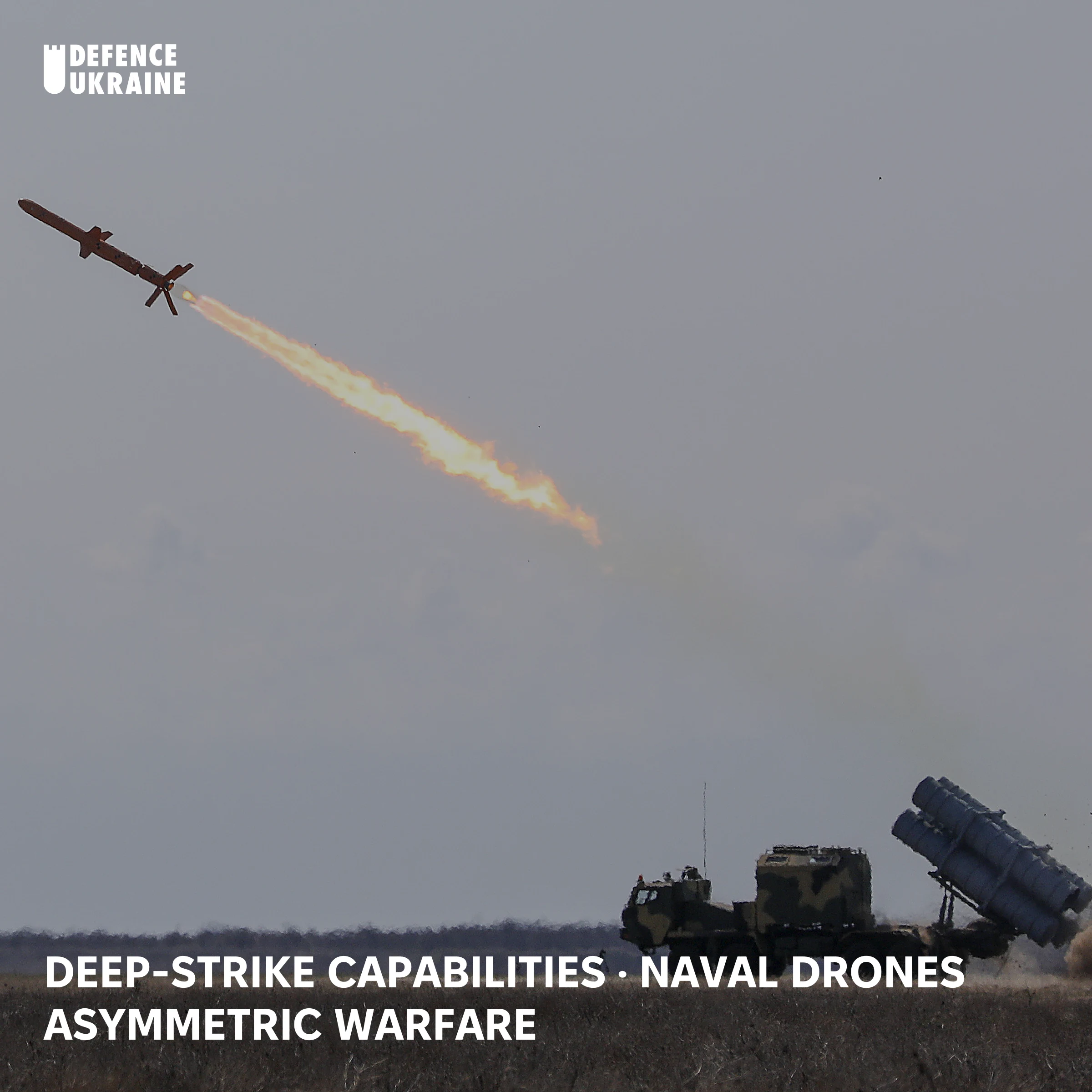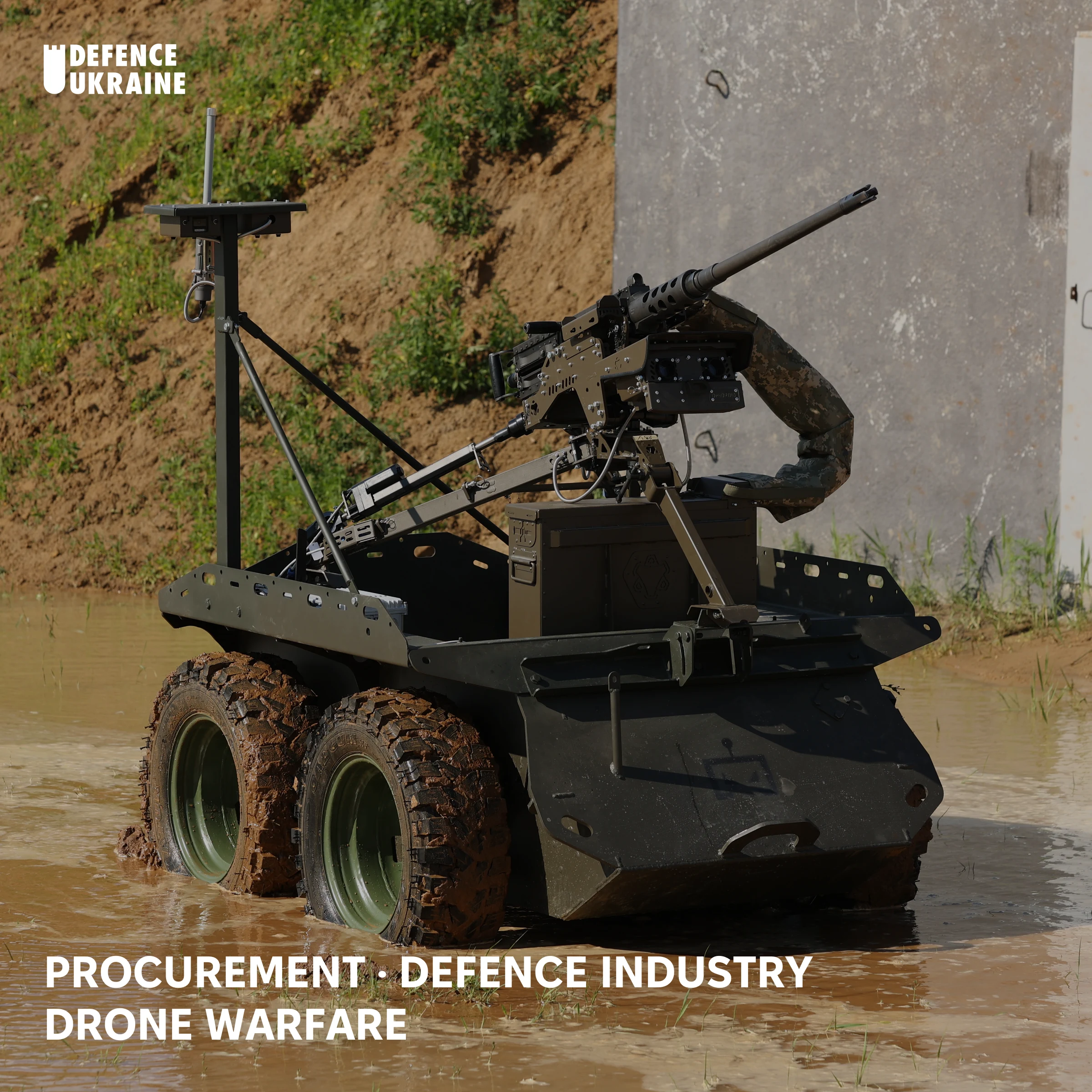
Between 21 and 25 August 2026, Ukraine's Defence Procurement Agency stopped buying drones by brand name. Across five days, the agency issued three tenders covering long-range strike aircraft, fibre-optic FPV drones and ground robotic systems. Not one tender named a manufacturer or a model. Every tender bought strictly against Ministry of Defence technical specifications, split procurement volume into four or five lots per class, and barred any single bidder from taking over half the award.
That final clause demands a close look. Fighting a war and buying kit the front line must never run short of, Ukraine drafted a rule barring its lowest-cost and most capable manufacturer from taking an entire order. Price is not the driving metric here. The state is deliberately engineering the shape of its supplier base, and it chose to fund the industrial spread it wants.
One Technical Specification, Four Lots
The old procurement system revolved around proprietary models rather than standard requirements. A builder designed a platform, put it through state codification, and then secured a supply contract for that specific named platform. State codification confirmed only that a machine worked and was safe. It gave no indication whether the Ministry paid a sensible price, while forcing officials to oversee hundreds of distinct contracts for platforms with barely any shared parameters.
The August tenders reverse that entire sequence. First, the Ministry drafts tactical and technical specifications, groups platforms into classes by measurable parameters, and opens bidding to any firm holding a codified product in that class. Bidders enter through the supplier vetting procedure Defence Ukraine outlined in its guide to Ukraine's defence procurement system, turning codification into a qualifying ticket for a class rather than a direct sales deal.
Technical metrics vary across categories; the operating logic does not. Deep-strike aircraft, tendered on 21 August, are categorised by operational range and warhead weight, with one to three lots per class. Fibre-optic FPVs, tendered over 21 and 22 August, are grouped by cable length and camera type, offering four lots in every class. Ground robotic systems, tendered on 25 August, are sorted first by role (strike or logistics) and then subdivided by operating range and payload capacity, with four to five lots per class.
Each lot represents a volume tranche. It is neither a delivery timeline nor a regional concession. Splitting a class into four tranches allows multiple manufacturers to hold production contracts in the same category at the same time, which is the primary aim of the change.
The public record lacks any formal legal instrument. The government has published neither a Cabinet resolution nor a numbered ministerial order mandating specification-based tenders for unmanned systems, while the agency's own walkthrough for manufacturers reads as internal guidelines rather than statutory legislation. In a framework designed to purchase several hundred thousand units of combat equipment, that missing paperwork tells its own story. The rules rest solely on individual tender conditions and agency practice, creating a much thinner legal footing than a Cabinet resolution and leaving them easy for future leadership to unpick.
The agency runs these tenders on Prozorro in a closed environment. Category definitions and lot structures are published to the market, but bidder identities, production facilities and contracted quantities stay classified to prevent Russian strikes against published addresses. That trade-off is deliberate, yet it carries a lasting penalty: independent monitors cannot verify what the state actually paid per unit as long as secrecy rules hold.
The rollout sequencing shows clear operational logic. Fibre-optic FPV drones went first because they are no longer experimental. Unreeling a glass filament behind the aircraft insulates it from the heavy jamming that blankets the terminal attack phase, and the Ministry had already contracted 374,000 of them by late April 2026 under the old model-by-model framework, backed by tax and customs relief Ukraine legislated for fibre-optic production. A category the military has bought in those numbers is stable enough to write a standard specification around. Ground robots followed on 25 August, after recording more than 100,000 logistics and casualty-evacuation runs across the first half of 2026 under Ministry figures, with class boundaries tracking battlefield use: light platforms for evacuation under fire and heavier haulers for deep trench resupply, a split Defence Ukraine analysed in its report on UGVs on Ukraine's eastern front. Deep-strike aircraft were grouped by range and warhead weight, translating the campaign against Russian refineries and energy infrastructure into a formal procurement metric.
One category stayed out. Multirotor reconnaissance drones are still bought by brand name, because frontline units depend on Mavic, Autel and Matrice ecosystems and no specification can overturn what operators already know how to fly.
Fifty Per Cent of Which Total
The volume ceiling forms the analytical core of the reform, yet the state has not clarified what it applies to.
Official agency guidance for long-range strike UAV manufacturers applies the limit at class level, dictating that a single participant may win no more than 50% of total procurement volume in any given class. Arsen Zhumadilov, then still head of the agency, outlined the fibre-optic tenders in identical terms. Deputy Defence Minister Mstyslav Banik, the political lead on the reform, gave a different account on 25 August. Interfax-Ukraine's English report of his remarks has him referring to several lots in each class, with no more than half of a lot going to a single bidder. Because the Ukrainian original of that statement has not surfaced, the difference may stem from translation error rather than a policy dispute.
The distinction is critical because the two interpretations build different industrial bases. Applying the cap at class level allows a dominant producer to win 100% of two lots in a four-lot class and none of the other two, concentrating its output into fewer, larger production runs. Capping each lot forces every single tranche to be split, requiring concurrent side-by-side manufacturing across multiple firms for every delivery batch. The class ceiling buys resilience cheaply. The lot cap buys greater redundancy and costs more. The weight of primary tender documentation points to a class-level rule, suggesting public statements simplified the mechanism rather than altering it. That inference is sound, but not a legal settlement.
The provision operates as a hard quota rather than a scoring deduction. A supplier able to deliver an entire class at the lowest price is capped at half, with remaining volume rolling to the next compliant bidder offering an acceptable price. What the rules mandate when only one qualified supplier bids in a class, or when the second-place bid is unaffordable, remains unpublished. Officials have released no waiver mechanism.
The official rationale is operational survival, not economic efficiency. A single factory producing most of Ukraine's fibre-optic drones presents an obvious target, a vulnerability Russian deep-strike campaigns have demonstrated to the Ministry. Mandating orders for second and third suppliers creates a state-funded redundancy net, which works precisely because it accepts economic inefficiency. The Ministry counters that competitive bidding still reduces costs overall, pointing to open tenders for 155mm ammunition that generated aggregate savings above 16%.
No equivalent rule exists across EU or NATO defence procurement, blocked by legal constraints rather than strategic doctrine. While the EU Defence and Security Procurement Directive encourages contracting authorities to split contracts into lots so smaller suppliers can compete, a mandatory volume cap applied regardless of bid price clashes directly with the Directive's core principles of non-discrimination and most economically advantageous tender. Any European government seeking to copy the Ukrainian model would have to invoke Article 346 of the Treaty on the Functioning of the European Union, the essential-security-interests derogation, and argue publicly that it plans to pay a second-best supplier on purpose. Few defence ministers want to defend that position on the record. Ukraine made it the default setting.
What the Framework Resolves, and What It Risks Freezing
A criminal case, not a policy paper, drove the argument for specification-based procurement in August 2026. Ukrainian law enforcement opened an investigation into Giorgi Tskhakaia, an adviser to former Defence Minister Mykhailo Fedorov, over alleged embezzlement in purchasing Heavy Shot drones from Gurzuf Defense LLC. The firm secured state contracts worth more than 4.5 billion hryvnias between 2023 and 2025, with detectives alleging roughly 900 million hryvnias in inflated pricing, while military units reported the platforms failed in rain. That entire scandal depended on the state purchasing a specific model from a named vendor at unbenchmarked prices. Specification-based tendering eliminates all three conditions at once, building upon the supplier vetting established under Khmara's YouControl memorandum two weeks earlier.
The counter-argument is about operational speed. Russian electronic warfare units adapt on cycles measured in weeks, yet an August specification binds state purchases until officials formally revise it. The mid-range strike UAV tender mandates jam-resistant communications, a sensible requirement on 25 August that could prove obsolete by November. If a manufacturer builds a frequency-hopping data link that outperforms the written standard but diverges from its wording, the Ministry provides no published route to purchase the superior platform. The tender documents specify neither a timeline nor an authority for revising outdated technical benchmarks.
The unit-cost objection is simpler and harder to dismiss. Mass manufacturing rewards volume, and the 50% cap removes scale from the producer best positioned to deliver it. When the most efficient plant can build a fibre-optic drone for $300 but cannot take more than half the order, the state buys the remaining volume from a less efficient rival at a higher price. That premium is a resilience tax, and the Ministry has published no estimate of what it expects to pay.
Then there is the risk of specification capture. An incumbent manufacturer can lobby ministry drafters to match technical parameters to its own platform, leaving competitors to challenge the tender before the Anti-Monopoly Committee, which can freeze Prozorro proceedings but requires a filing fee of 0.3% of the expected contract value. As of 28 August 2026, no supplier had lodged a complaint against the August drone tenders. Nor has any drone maker publicly endorsed the volume cap without qualification. Industry associations including Tech Force in UA have maintained a cautious line, waiting for initial contract awards.
Wholesale Frameworks, Retail Marketplace
The central tenders do not replace the digital marketplace Ukraine spent two years building. They supply it.
DOT-Chain Defence remains the retail layer: frontline units choose equipment directly, drawing on e-Points earned through confirmed combat performance. By August 2026, the system had delivered more than 1.2 million items to 486 units from 252 verified suppliers, cutting average delivery times to around nine days. When DevDroid codified its TW-40 combat robot in July 2026, the company stated that combat units would be able to purchase the system through DOT-Chain within weeks.
The two layers perform different tasks. Wholesale tenders establish price ceilings and baseline quality standards for each class while guaranteeing that production capacity exists across multiple firms. DOT-Chain then allows combat brigades to pull the specific approved platform their sector requires. That structure resolves a long-standing defect in Ukrainian procurement, where central officials bought single models in bulk and pushed them to units that had not requested them. The state now contracts capability; front-line soldiers choose the machine.
The 2027 Budget Gap
The framework arrived the same week its chief architect resigned. Zhumadilov announced his departure on 20 August, taking effect 31 August, with Oleh Klots appointed interim successor. The Ministry had accused the agency of delaying the transition to specification-based tendering; the agency countered that it was waiting for the Ministry to provide the technical specifications. Both assertions have substance, illustrating the administrative friction involved in the overhaul. Defence Ukraine's assessment of the procurement bench Khmara inherited highlighted the same institutional vulnerability: reforms resting on agency practice rather than Cabinet resolutions leave when their authors depart.
A second gap concerns funding rather than personnel. Fedorov, while minister, set targets of 25,000 ground robots in the first half of 2026 and 50,000 across the full year, announcing that 2027 contracting had started. Since Yevhenii Khmara's confirmation on 19 August, the Ministry has not restated the 50,000-unit figure or confirmed the status of 2027 sovereign-budget allocations. In late August, officials reported contracting more than 22,000 ground robotic systems since January, a total the Ministry described as close to double all of 2025. That is a substantial figure, but it falls short of the six-month target, and contracted orders are not delivered machines.
The tension is structural rather than political. Multi-year contracting gives manufacturers the confidence to invest in tooling, lock in component pricing and recruit workers. Annual re-tendering against revisable specifications under a strict 50% volume ceiling prevents that investment. A firm expanding capacity for a large 2026 contract has no assurance of winning comparable volume in 2027, and the Ministry has not explained how it plans to reconcile those competing forces. Foreign financing will shape much of the answer in any event: international contributions to Ukrainian defence procurement rose sixteenfold over the past year, placing the €1 billion EU drone fund at the heart of the capital stack supporting the 2027 pipeline.
Strategic Implications for Ukraine
Awards from the August tenders will be issued in September, and four questions will determine whether the framework is deliberate market architecture or bureaucratic friction.
- The scope of the volume ceiling must be settled before awards are signed, not after. Having agency documentation define a class-level cap while ministerial statements describe a lot-level limit invites legal challenges from bidders barred from volume they could supply. Aggrieved suppliers can appeal to the Anti-Monopoly Committee to freeze Prozorro tenders, and filing costs are trivial compared to the value of a national drone contract. Publishing the operational rule in a single definitive text would resolve the dispute in an afternoon.
- The speed of specification revisions is the critical variable for innovation. Supporters and critics of the framework agree on its mechanics and dispute only the timeline. If the Ministry can rewrite a fibre-optic class specification within a Russian electronic warfare adaptation cycle, arguments regarding an innovation freeze collapse. If the Ministry fails to release updated specifications before the end of the first quarter of 2027, the critique is validated and the military will be buying last autumn's solutions against this winter's jamming.
- Capital investment requires long-term signals the framework currently fails to provide. Ukrainian drone builders are expected to expand manufacturing capacity for tenders where they can win only half the volume, under specifications subject to revision, without reaffirmed multi-year commitments from the current ministry. The 22,000 ground robots contracted since January demonstrate genuine demand. What factory owners lack is the certainty needed to sustain investment through 2027, and until Khmara's Ministry restates annual targets or publishes a clear procurement horizon, rational manufacturers will under-invest.
- European defence agencies can replicate lot splitting, but not the volume cap, and least of all the frontline feedback loop. Dividing procurement into lots is already encouraged under the EU Defence and Security Procurement Directive without requiring legal exceptions. An absolute volume ceiling requires invoking Article 346, a contentious instrument in peacetime. The deeper constraint is that Ukraine calibrates specifications against battlefield telemetry and e-Points earned during confirmed combat strikes. A procurement body drafting technical requirements without a live front produces static paper standards, which legacy prime contractors are uniquely equipped to capture.
The September Awards Are the Test
Over three years of war, Ukraine built the world's largest unmanned-systems manufacturing base by getting out of industry's way. The August framework represents the first deliberate attempt to structure that market: establish uniform technical standards, force producers of comparable systems to compete on price, and remove the vulnerability that a single dominant supplier creates when an adversary can strike its factory.
Whether the reform succeeds is a question for September. The upcoming awards will reveal whether the 50% cap ever binds in practice, or whether the market is already fragmented enough that no supplier could capture half a class anyway. If the cap never binds, it is a rule written for a problem Ukraine does not face. If it binds tightly, the state will discover the exact financial cost of industrial redundancy, navigated by a new minister, an interim agency director, and a specification-writing bureaucracy whose competence triggered the August dispute in the first place.