Ukraine's defence industry can now build far more than the Ukrainian state can pay for. Officials put annual production capacity above US$55 billion by early 2026, against a state procurement budget of roughly US$10 billion. That gap, close to US$45 billion in idle or underused factory lines, is the entire reason Kyiv has started selling weapons abroad while still fighting for its survival.
The policy is deliberate and contested. On 1 July 2026 the Cabinet of Ministers adopted Resolution No. 875, a wartime procedure that lets registered manufacturers export surplus output to allied states on a compressed timeline. Proponents argue that idle capacity earns nothing and that hard-currency exports can fund the next generation of Ukrainian systems. Critics argue that a country receiving donated air defence has no business selling arms for profit, and that the concept of surplus is a bureaucratic fiction while the front consumes everything the industry can make. Both positions are live, and the regime that has to reconcile them is only weeks old.
The Mismatch Between Capacity and Cash
The numbers behind the export decision come almost entirely from Ukrainian officials and have not been independently audited. They should be read as claims, not verified output, but the direction they describe is consistent across sources.
In November 2025, National Security and Defence Council Secretary Rustem Umerov and Strategic Industries adviser Oleksandr Kamyshin put Ukraine's defence-industrial capacity at around US$35 billion a year, with a potential ceiling near US$60 billion for 2026. By 12 February 2026, Umerov said capacity had already passed US$55 billion. A US$20 billion increase over a single winter is difficult to reconcile with physical manufacturing expansion, and the figure more plausibly reflects theoretical maximum output or messaging aimed at foreign investors than baseline production.
Against that capacity sits a much smaller wallet. Svitlana Dovhalenko, an economist at CASE Ukraine, estimated in June 2026 that roughly 40 per cent of Ukrainian defence-industrial capacity goes unused because the state cannot fund it. The state procurement budget covers on the order of US$10 billion. The difference is the surplus the export regime is designed to monetise, and officials have floated export revenues of up to US$10 billion a year if European markets open fully to Ukrainian products.
No independent institution has confirmed the US$55 billion output figure. SIPRI and the IISS both note steep growth in Ukraine's drone and electronic-warfare sectors, but standard industrial-output metrics break down in a war economy with heavily classified procurement lines. The economic case for exporting rests on numbers only the Ukrainian government can see in full.
From Wartime Freeze to Fast-Track Licensing
Before 2022, Ukrainian arms exports ran through the Law on State Control over International Transfers of Military and Dual-Use Goods, which required case-by-case vetting of every foreign sale. After the full-scale invasion, Kyiv imposed a near-total export ban so that all output flowed to the front.
The thaw was administrative and incremental. President Volodymyr Zelensky directed officials to begin the controlled export of weapons in a directive dated 28 October 2025. On 10 February 2026, he signed Decree No. 109/2026, which approved the membership of the Interagency Commission on Military-Technical Cooperation Policy and Export Control, the body that clears sensitive cases. The decisive change came on 1 July 2026 with Resolution No. 875, which set out the export procedure for the duration of martial law.
Two mechanics in the resolution matter most. It abolished the old requirement for negotiation permits, so a manufacturer registered with the Ministry of Defence can now talk to foreign buyers and draft contracts without first clearing the conversation with the State Service for Export Control. And it introduced a silent-consent rule: if the security services, meaning the SBU, foreign intelligence, and defence intelligence, raise no formal objection within fifteen calendar days, the transaction is deemed approved. For applications bound for approved partner states, the review window drops from ninety days to thirty, and the full Interagency Commission is bypassed unless the export-control service flags an intelligence concern or the goods appear on the restricted list.
The friction has not vanished. An April 2026 analysis in Lawfare argued that a ninety-day wait on a standard decision is far too slow for wartime contracting, and that the six-month Cabinet process for designating an independent exporter shuts out young companies with no long fiscal record. The practical result, the analysis noted, is that some Ukrainian firms move their intellectual property to Western jurisdictions rather than wait on Kyiv.
The Domestic-Order-First Safeguard
The politics of exporting mid-war depend on one promise: that nothing leaves the country if the Armed Forces need it. Resolution No. 875 tries to make that promise enforceable rather than rhetorical.
Surplus is defined as capacity beyond the active contracts the Ministry of Defence and other state customers have actually placed. Before the export-control service issues a licence, the ministry consolidates the needs of the Armed Forces and certifies that the manufacturer can meet its domestic obligations and the foreign order at the same time. The state keeps an override: if an operational need appears at the front, the commission can suspend or revoke a live export licence. No revocation has been made public so far, largely because physical deliveries have not yet scaled to the point where the clause would bite.
The sharpest safeguard is a deadline aimed at the state itself. If the ministry blocks an export by claiming the Armed Forces need the weapons, it must sign a funded procurement contract with that manufacturer within thirty days. Miss the window, and the state loses the right to block the sale on those grounds. The rule is designed to stop the ministry from freezing a company's exports without paying for the output it says it wants.
Money flows back through a fixed levy. Twenty per cent of revenue from exported finished products, and thirty per cent from exported components, must go to a special state fund for defence-industry development, with a further 20 per cent royalty on any resale of Ukrainian technology by a partner country. Whether the Treasury actually captures those levies and reinvests them without leakage is not something any independent audit has yet tested. The safeguard is asserted policy, not verified practice.
What Is Cleared, and What Stays Home
The regime splits Ukraine's arsenal along a clear line: tactical systems the industry can overproduce are cleared for sale, strategic systems that are scarce or sensitive are held back.
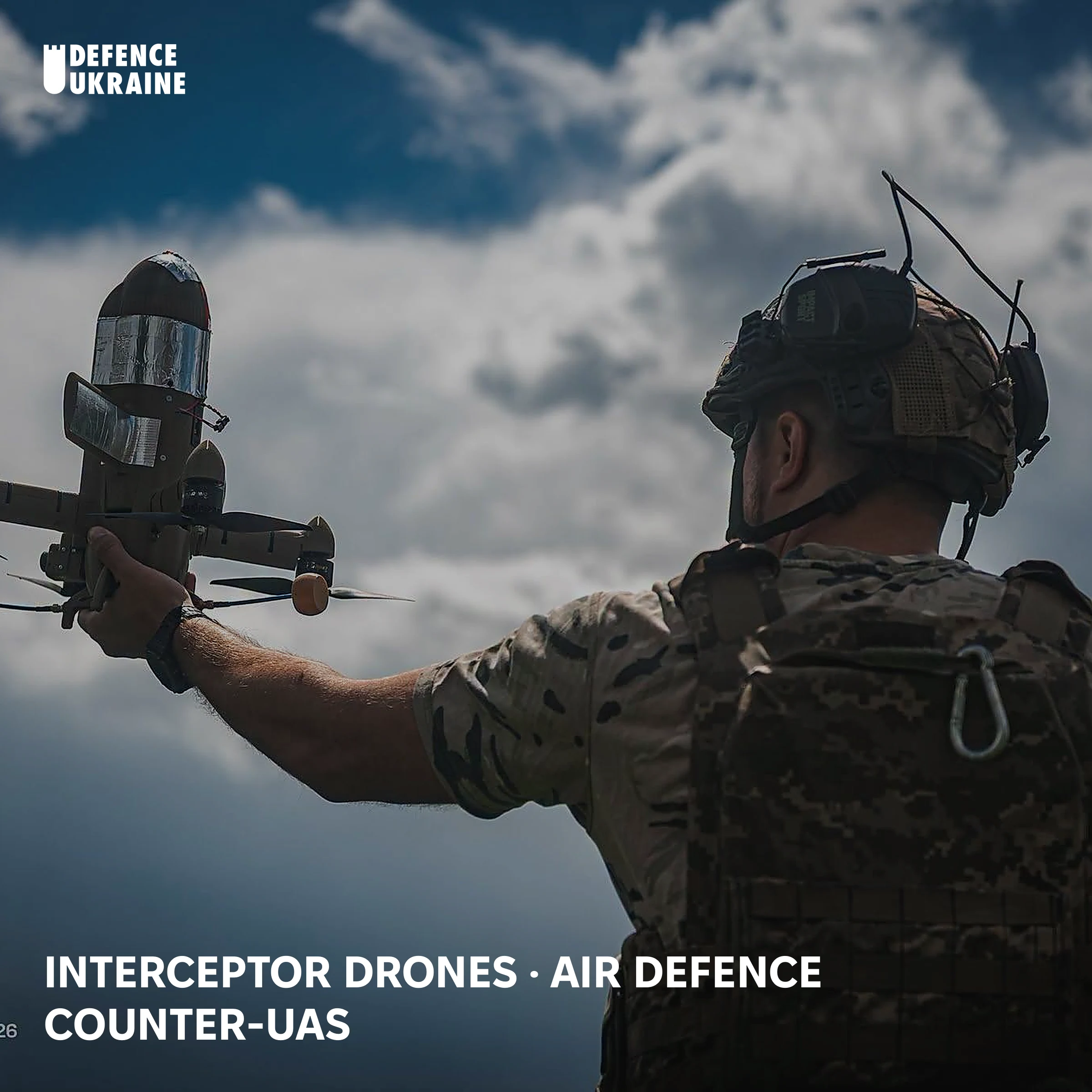
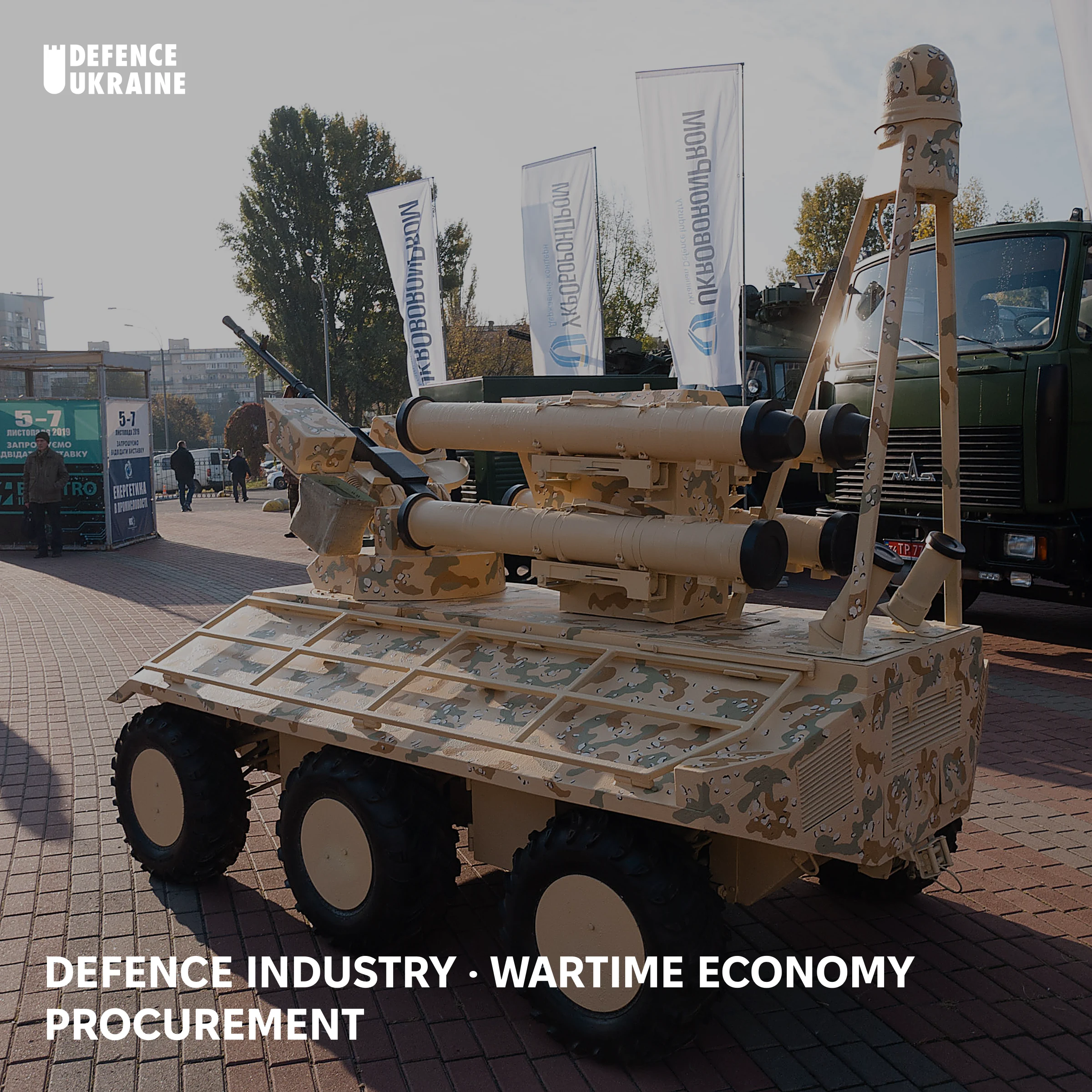
The first export waves are dominated by uncrewed systems. Tactical drones, first-person-view interceptor drones such as the Octopus-100, unmanned ground vehicles including the RATEL and Contra-drone NEO families, and modular electronic-warfare kit all sit on the cleared side, because Ukrainian production of them runs well ahead of what the state funds. Naval surface drones, with their record against the Russian Black Sea Fleet, are treated as highly exportable.
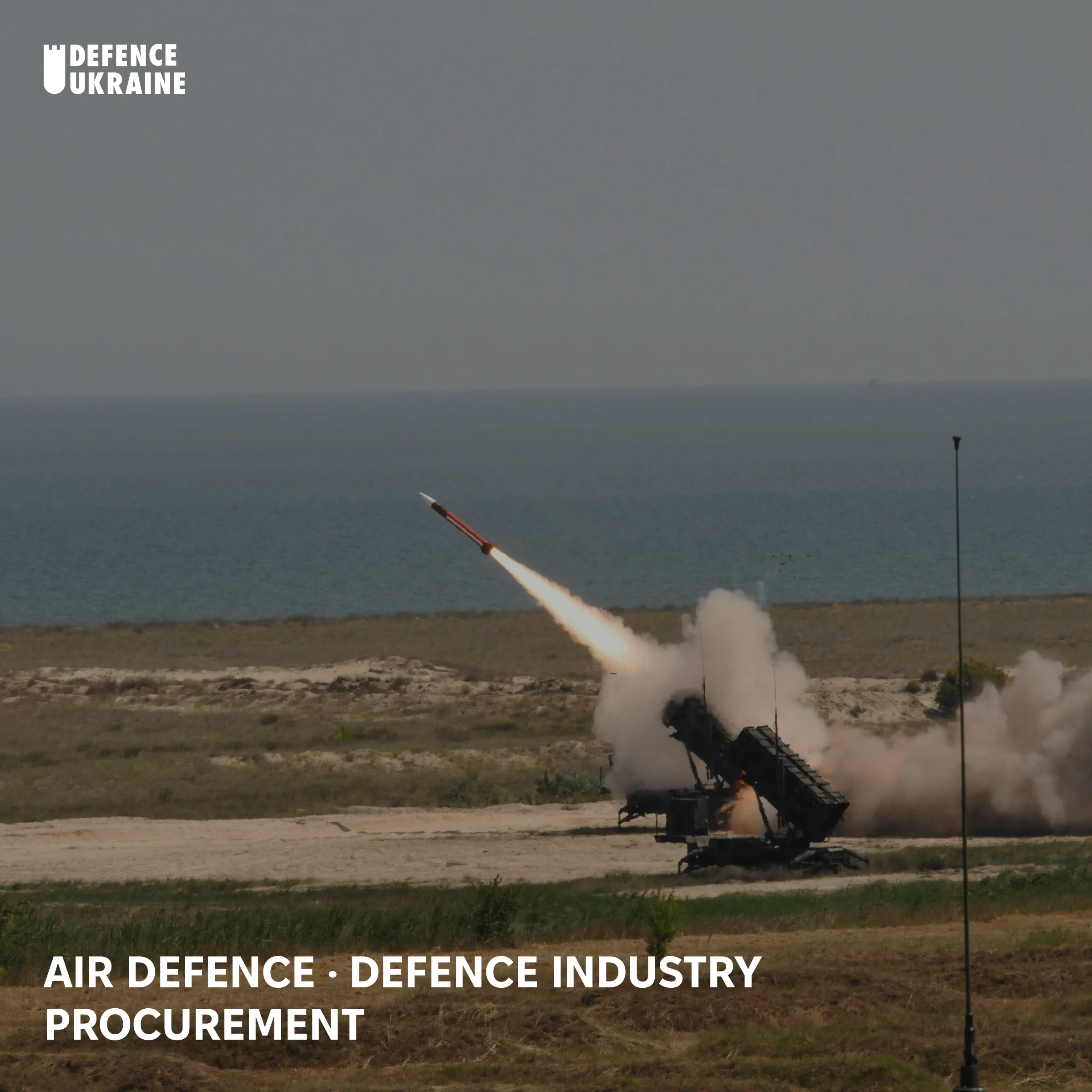
The restricted side is where Ukraine's deterrent lives. The Ministry of Defence maintains a quarterly critical-goods list that bars the export of strategic strike and advanced air-defence systems: the Hrim-2 and Sapsan short-range ballistic missiles, the Neptune-2 and FP-5 Flamingo deep-strike systems, and the Freya FP-7 interceptor. These are held back for reasons that reinforce each other, including frontline scarcity, the sensitivity of the guidance technology, and the strategic value of the ability to strike Russian infrastructure. Defence Ukraine's analysis of the industry behind Ukraine's long-range missiles maps the state and private producers, from Luch and Pivdenmash to Fire Point, whose most advanced output the export regime is built to keep at home. Exports are limited to a white list of states that have signed bilateral security agreements or joined allied procurement schemes, and re-export to a third party without written consent from Kyiv is prohibited.
Producing Abroad: Export Centres and Co-Production
The most durable version of the export model is a licence to build Ukrainian designs inside allied territory, out of range of Russian strikes and inside NATO supply chains, rather than a crate shipped out of Odesa.
On 8 February 2026, Zelensky announced ten weapons export centres across Europe for the year, weighted toward the Nordic and Baltic states that have financed Ukrainian defence technology most aggressively. Umerov and Kamyshin confirmed the first two representative offices for Berlin and Copenhagen. Each centre is planned around three zones: an open area for public demonstrations, a closed area where NATO planners can review classified battle data, and an office area for contract talks. As of mid-August 2026 the centres remain announcements. The political agreements with Denmark and Germany are firm, but no fully staffed, transacting office has been documented.
The co-production lines are further along. In November 2025, Ukraine licensed the Octopus-100 interceptor drone to the UK Ministry of Defence for serial production, the first time a Ukrainian combat drone entered mass production inside a NATO country, with an initial 8,000 units earmarked for the Armed Forces of Ukraine. Denmark's model of routing European money straight into Ukrainian production has scaled to around €1.3 billion in the 2025-26 cycle, and the government-to-government financing that defines the Danish approach is now the template other donors study. Germany's record is more mixed: Rheinmetall's joint ventures to build artillery and munitions plants inside Ukraine have run into regulatory and physical delays. Under Resolution No. 875, technologies licensed abroad move without transfer of ownership, so Ukraine keeps its intellectual property and an end-user veto even when a system is physically produced under German or British export rules.
The Sceptics, the Security Services, and the Trust Deficit
The export regime is unpopular with a large part of Ukraine's own defence community, and the objection is not sentimental. Frontline commanders, some members of parliament, and anti-corruption watchdogs argue that a country whose cities are targeted by hundreds of Russian drones a night has no true surplus, and that selling high-end interceptors abroad while asking Washington and Brussels for air defence is politically corrosive. Proponents, including former defence minister Mykhailo Fedorov, Umerov, and Kamyshin, counter that idle lines create no capability for anyone, and that export income sustains the engineering base Ukraine needs to keep pace with Russian adaptation.
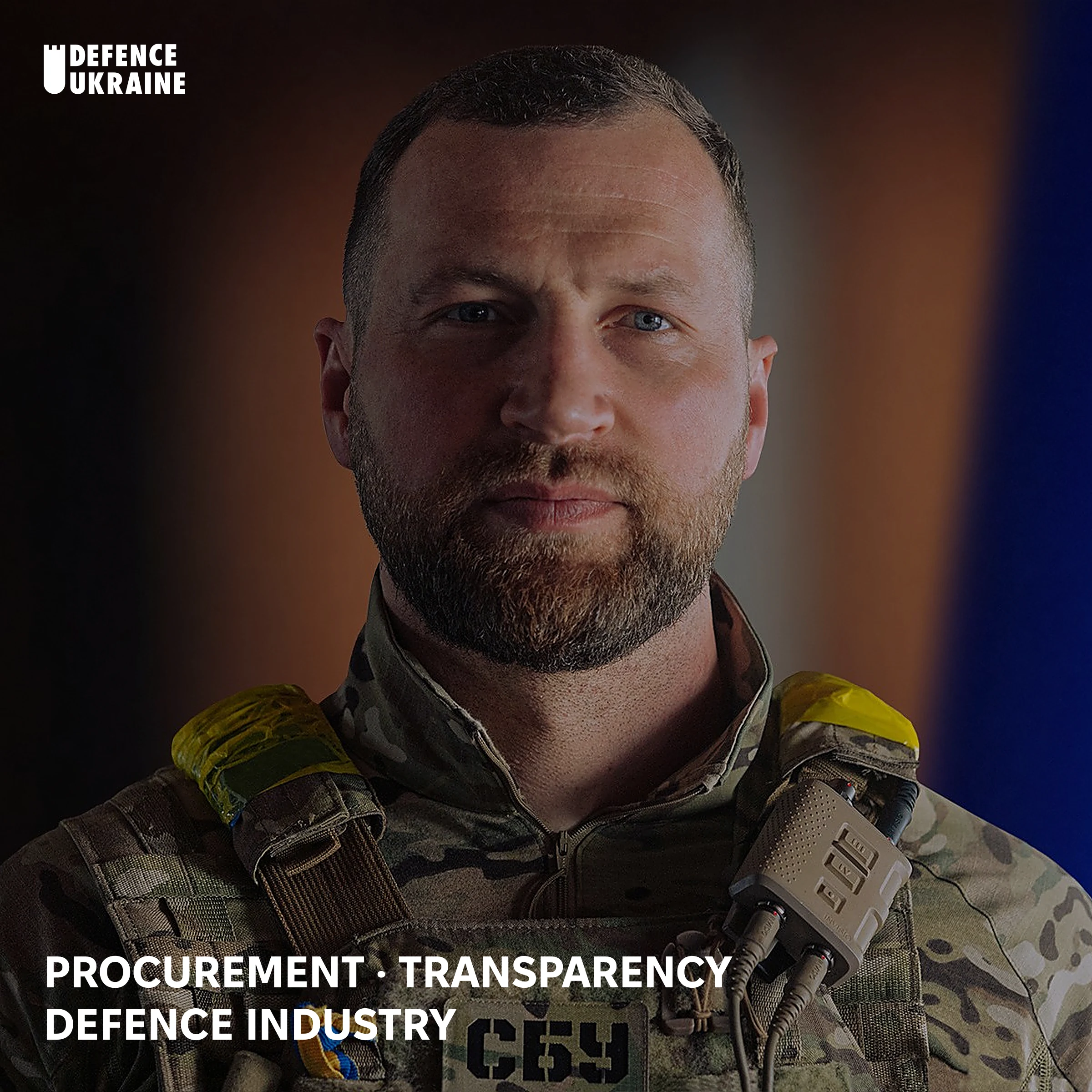
The change of government in mid-2026 sharpened the argument. Fedorov, who built Ukraine's open digital procurement rails, left the Ministry of Defence on 15 July 2026. His successor as acting minister, career SBU major-general Yevhenii Khmara, brought a security-services approach to the ministry that reads the export question through the lens of infiltration risk rather than market speed. On 3 August 2026, Khmara signed a memorandum making business-intelligence screening through the YouControl database mandatory for every defence supplier before a contract is signed. His team argues the vetting keeps shell companies and Russian-linked actors out of state contracts. Defence-technology advocates warn it will slow the Brave1 marketplace and add a discretionary bottleneck to exports.
The trust problem is not abstract. The 2026 Mindich Tapes corruption case implicated the missile producer Fire Point in alleged kickback schemes. Fire Point's chief executive said afterwards that Denmark had frozen a September 2025 agreement to supply the company with solid rocket fuel; Copenhagen's business ministry denied that any suspension took place. The dispute is unresolved, and it shows how quickly a corruption allegation can put a foreign contract at risk. All of this runs on European money: the €90 billion Ukraine Support Loan inside the EU's Security Action for Europe programme ring-fences €60 billion for military procurement, and the SAFE loan's first year of implementation shows how much of Ukraine's industrial base now depends on that flow continuing.
Strategic Implications for Ukraine
The export regime is young enough that its consequences are still forming. Four of them will shape whether it reads as a structural gain or a wartime gamble by the end of 2026.
- The revenue case depends on numbers no one outside government can check. The entire policy rests on a surplus valued at tens of billions of dollars, but the US$55 billion capacity figure, the 40 per cent idle share, and the US$10 billion revenue projection all come from Ukrainian officials. Until a signed foreign contract delivers hard currency into the state budget in a form independent auditors can trace, the economic case is a forecast. The first verified export receipts, whenever they arrive, will matter more than any capacity announcement.
- Co-production abroad protects the industry from its biggest single risk. Ukrainian factories are priority targets for Russian ballistic and cruise strikes, which forces the industry into dispersed micro-sites and underground lines. Licensing designs for production in the United Kingdom, Denmark, or Germany moves output beyond Russian range while keeping the intellectual property in Ukrainian hands. The Octopus-100 line in Britain shows the model can also feed units straight back to the Armed Forces, which blunts the argument that exports drain the front.
- The security-first ministry could throttle the velocity that makes the regime work. The compressed thirty-day licensing window and the fifteen-day silent-consent rule only deliver value if the vetting behind them moves at the same speed. Khmara's mandatory supplier screening is a reasonable answer to genuine infiltration risk, but every discretionary checkpoint added in the name of security is a day a competitor spends closing the contract instead. The regime's throughput, not its statute, will decide whether foreign buyers treat Ukraine as a serious supplier.
- Success would make Ukraine a competitor to the allies now funding it. Ukrainian drones and ground robots are cheaper and iterate faster than comparable NATO prototypes. If they reach European armies at scale, they will undercut established primes, and some EU governments will face pressure to protect domestic industry. The same battlefield credibility that makes Ukrainian systems attractive is what turns Ukraine from a recipient into a rival, and managing that tension is a diplomatic task the export centres cannot solve on their own.
The clearest test is near. Khmara faces a contested confirmation vote in the Verkhovna Rada, and the ministry that has to run the export regime is still led by a caretaker. Resolution No. 875 is in force regardless of who holds the office, but a regime this dependent on administrative speed and political nerve is only as durable as the government executing it. Whether the idle US$45 billion becomes revenue or stays a slide in an investor deck will be answered by contracts, not decrees.