On 1 September 2026 Ukraine's Defence Procurement Agency appointed an acting director. The agency presented the choice as a unanimous ballot of its Supervisory Board, taken with prior consent from the Ministry of Defence as required under its charter. Whether the board held enough sitting members to vote on any measure went unaddressed in the announcement.
Arsen Zhumadilov stepped down the previous day, concluding three years inside Ukrainian military procurement: the State Logistics Operator from August 2023, the Defence Procurement Agency from March 2025, and the consolidated entity from 1 January 2026. That agency was built around a supervisory board and a formal succession policy specifically to avoid relying on a single individual. His departure tests both safeguards under operational load for the first time.
Two Names, One Chair
Reports got the succession wrong before they got it right. On 18 August, ZN.UA identified Artem Romaniukov, then working inside the Ministry of Defence's digitalisation department and close to former minister Mykhailo Fedorov, as the probable acting chairman. Two days later the Kyiv Independent published a conflicting account, reporting that Zhumadilov had selected Oleh Klots, who led Medical Procurement of Ukraine from January 2025 to May 2026 and had joined that organisation in 2021 under Zhumadilov's leadership. Defence Ukraine's analysis of the August drone and ground-robot tenders reported the Klots claim on 28 August based on that reporting. That was wrong.
Romaniukov stepped into the post on 1 September. Both the agency and the ministry confirmed his appointment, and the Kyiv Independent has issued no correction.
His career is rooted in procurement rather than politics. The agency identified him as its Director of Development, crediting him in that post with drafting the mechanism to disburse European Union funds through the agency during 2026 and 2027. He previously served as Deputy Minister of Strategic Industries, led the Procurement Policy Directorate at the Ministry of Defence, and served in the armed forces with the 15th Separate Brigade. He knows Prozorro from the inside.
The institutional framing matters more than the CV. Romaniukov steps up as an internal promotion selected by the agency's own board, not a political appointee parachuted in from the ministry. That distinction is the whole purpose of the supervisory-board model, and the board's present condition throws that distinction into question.
A Board Below Its Own Design
The Supervisory Board has five statutory seats. Three are required for a quorum on decisive matters: appointments and audit. It has carried vacancies for well over a year, including the two independent seats intended to keep ministerial interference at bay.
Public accounts diverge on how many seats are filled today. Defence Ukraine's assessment of the procurement bench Khmara inherited counted three sitting members in late August: state delegates Stanislav Haider and Taras Chmut alongside independent director Lukasz Stolarski. Other accounts of the transition cite only Haider and Stolarski, tracing the vacancy back to January 2025, when then-minister Rustem Umerov stripped two government representatives from the board amid the standoff over Maryna Bezrukova's contract. Ministry statements from that dispute recorded two of five members remaining.
Three sitting members mean a board that can just about function. Two mean a board powerless to make a lawful appointment. The agency has withheld the current roll, and the line between those two figures separates a legitimate transition from an acting director whose signature invites legal challenges.
The exposure is practical, not theoretical. Ukrainian defence tenders operate on Prozorro, and the route a supplier takes into that system also sets out the route back out of it: an unsuccessful bidder can appeal to the Anti-Monopoly Committee, which can freeze a procurement, for a fee of 0.3 per cent of the expected contract value. On a major drone or ground-robot contract, that fee is negligible. A supplier locked out of production volume it had capacity to deliver now holds a second weapon alongside technical arguments: claiming the official who signed was installed by a board that lacked the votes to seat him.
The board is concurrently running the contest for a permanent director. It hired Friisberg & Partners International to source candidates and plans to retain a recruitment firm to handle vetting, aiming for completion before the end of 2026. The board tasked the same firm with finding two independent board members. An understaffed board is recruiting the directors needed to restore its own quorum while simultaneously trying to fill the chief executive's chair, all while the ministry holds the authority over the independent seats that would resolve the first deadlock.
The Specification Fight That Preceded the Exit
The trouble did not start with the resignation. Around 12 June 2026 Ukraine announced a change in how it buys drones and robotic systems, shifting away from named manufacturer models toward competitive bidding against Ministry of Defence technical specifications. The reform struck directly at incumbent suppliers: under the previous system, a vendor that got its platform codified locked down the entire category.
The two bodies traded blame for the next eight weeks. The ministry claimed the agency stalled work and wrecked the contracting window for the second half of 2026. The agency's defence, voiced publicly by Ihor Fedirko, chief executive of the Ukrainian Council of Defence Industry, argued that officials cannot legally run specification-based tenders without approved specifications, and the ministry had failed to deliver them. Fedirko placed standardisation centres at the root of the problem, calling them deficient in staff, managers, and clear remits, and noted that personnel had finished only four technical specifications across six months.
Both claims can stand together, and dates indicate they did. Manufacturers paused factory lines while awaiting contracts. The agency held back tenders while awaiting paperwork.
The deadlock broke during a meeting between the ministry and domestic producers on 14 and 15 August. Negotiators settled most of the missing specifications in those talks. The second decision from that session demands close reading: officials shifted part of the budget designated for competitive tenders into direct contracts to keep deliveries from collapsing. The answer to a bottleneck in competitive procurement was to bypass it.
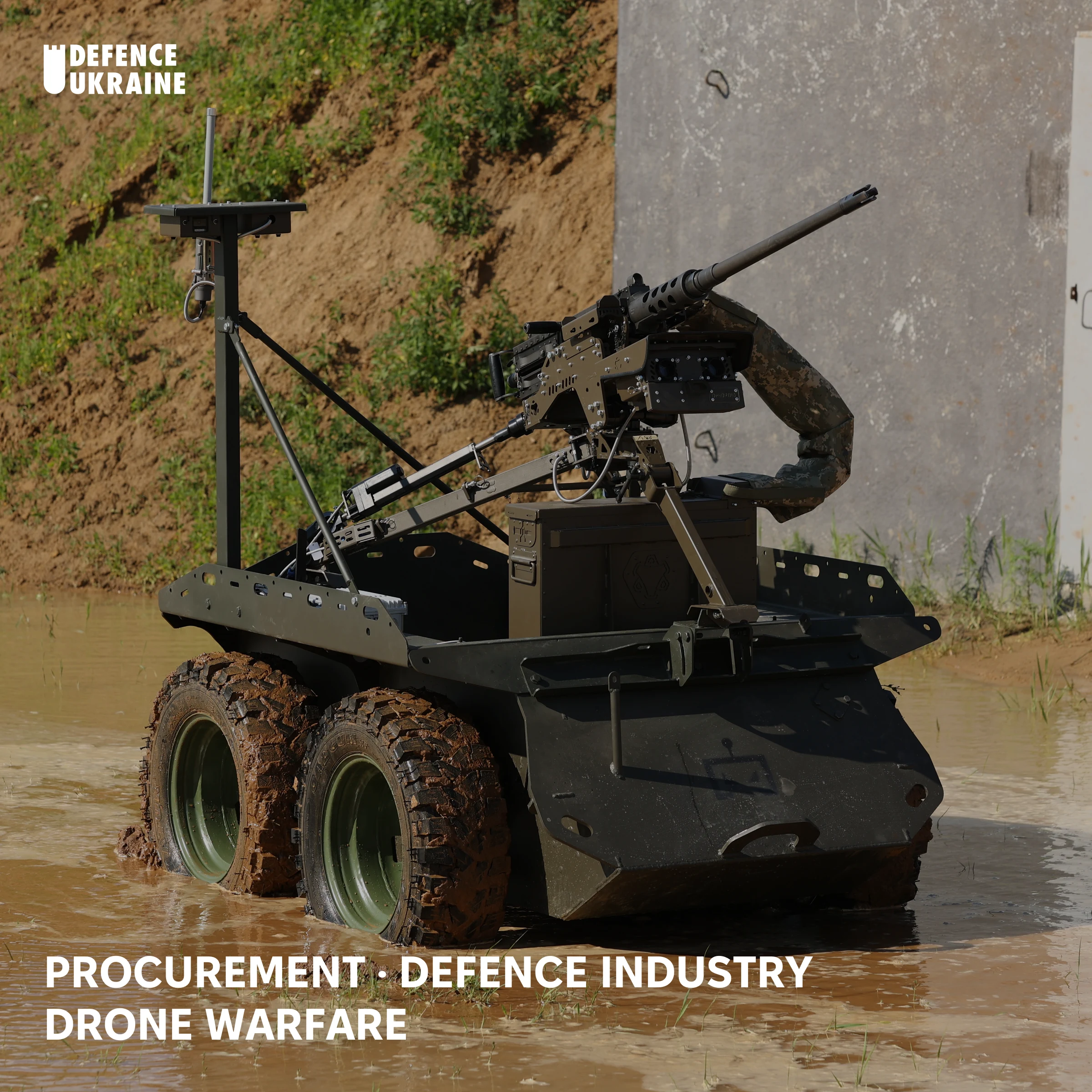
Then the tenders appeared. Between 21 and 25 August the agency published three competitions, covering long-range strike aircraft, fibre-optic FPV drones and ground robotic systems. No tender named a specific manufacturer or model, each bought against ministry specifications, each divided a class into four or five lots, and no supplier was allowed more than half of any class's total volume. Zhumadilov cleared his desk as those notices went out.
The timeline does not back the convenient claim that procurement reforms progressed once leadership settled. Procurement moved because severe shortfalls forced an emergency intervention, and that crisis produced the drive required to clear the paperwork.
Twenty-Five Per Cent of the Factory Floor
The figure beneath the broader confrontation emerged from manufacturers on 14 August, six days before Zhumadilov announced his departure. The Ukrainian Council of Defence Industry reported that only up to 25 per cent of existing production capacity was contracted.
That figure tracks the workshop floor, not budget lines. Ukrainian manufacturers reviewed the state's announced requirements earlier in 2026 and expanded in anticipation, leasing facilities and bringing on engineers for contracts they anticipated. Industrial capacity created without orders does not wait around long. It loses workers, and specialist drone and robotics engineers do not return to the payroll on a month's notice.
The council joined that metric to an appeal for continuity signed by Fedirko that same day, urging that leadership reshuffles and restructuring not disrupt deliveries to the defence forces, and pressing the government to eliminate gaps between active and subsequent orders given extended manufacturing cycles and delivery delays for imported components. Published six days before the exit became official, the document shows how clearly industry understood the coming rupture.
Neither the ministry nor the agency disputed the 25 per cent number. On 1 September the agency pushed back on a more limited point, stating that contracting had not paused and that it was fulfilling commitments on schedule.
Both statements appear accurate, and throughput statistics reconcile them. The DOT-Chain Defence platform delivered over 1.2 million items to 486 units from 252 suppliers by August 2026, averaging roughly nine days. By Zhumadilov's own account, more than 90 per cent of weapons deliveries ran through that infrastructure. State funding for weapons and equipment nearly tripled across the year, while foreign financing expanded sixteenfold. The machinery moving contracted goods operates efficiently. The small portion of domestic capacity under contract remains the true problem, and no delivery statistic cures it.
What Is Codified and What Left With Him
The merger forming the current agency took effect on 1 January 2026, rolling the State Logistics Operator's non-lethal procurement of rations, fuel, and uniforms into the weapons-buying agency. Estimates set the combined yearly procurement volume at nearly 1 trillion hryvnias, roughly $23.7 billion.
The reform proceeded despite objections. NATO advisers and G7 representatives argued throughout 2024 and 2025 to keep the two agencies separate, asserting that their buying mandates differed and that division preserved institutional independence. Daria Kaleniuk of the Anti-Corruption Action Centre warned that placing a trillion hryvnias inside a single body heightened corruption risks in turn. The government built its argument on speed, common standards, and unified operational planning.
What endures after a leadership departure depends on where rules are codified, and the structural foundations are uneven. Cabinet resolutions anchor both the unified agency and the DOT-Chain platform, preventing a defence minister from unwinding them unilaterally. The YouControl supplier vetting arrangement signed by Khmara's team in August exists as a memorandum: lighter legally, but politically hazardous to dismantle during a high-profile anti-corruption drive. Specification-based procurement rests on the flimsiest base: it exists only in tender criteria and agency routine, and the 14 August reallocation showed how swiftly leaders can channel funds around it.
The board's membership is the most vulnerable point of all. Charter revisions enacted under Umerov in December 2024 let the Minister of Defence bypass the board and remove its members by citing national security. The mechanism created to insulate the agency from political pressure can be altered by a minister's own decree.
One line of continuity remains intact. Mstyslav Banik, appointed deputy minister in March 2026 and the leader most tied to the digital procurement systems, stayed on under Yevhenii Khmara in August. Fedorov's six-month push at the ministry built the software; retaining Banik protects the personnel who operate it. Leadership at agency level has proved replaceable across four defence ministers. The digital tools have not.
Zhumadilov's tenure will fuel debate for some time. Agency data shows domestic manufacturers' share of state purchasing climbing from 44 per cent in 2024 to 82 per cent in 2025 and 87 per cent in 2026, while verified suppliers of lethal equipment surpassed 2,000. The Anti-Corruption Action Centre denounced his sacking of deputy director Artem Sytnyk, the former head of the national anti-corruption bureau, characterising it as a scheme with Umerov to install compliant leadership; Zhumadilov blamed the criticism on unfulfilled ambitions within the watchdog. In May 2026 anti-corruption detectives questioned him during the investigation involving businessman Timur Mindich. Questioned as a witness, not a suspect, he confirmed meeting Mindich and Umerov in March 2025 to discuss contracts, and denied any wrongdoing. His legal standing has not changed since.
The more damaging criticism is structural rather than legal. Former staff describe an organisation that advanced by bypassing its own chain of command, using external advisers to clear bureaucratic obstacles while leaving formal procedures unwritten. That approach delivered quick results. It also means the agency's speed relied on one official willing to shoulder the risk of bold action, a personal posture that does not pass on with the title.
Strategic Implications for Ukraine's Procurement Architecture
The agency will keep signing contracts through the autumn. Four questions decide whether this transition period becomes a minor administrative footnote or the moment the 2027 procurement pipeline unravels.
- The vacant board seats bind harder than the vacant director's chair. An acting director can run daily operations. A board below quorum cannot lawfully appoint a permanent director, cannot finish the candidate search it already launched, and cannot provide the ministry's favoured candidate with solid legal footing when the moment arrives. The ministry appoints the independent members. The date it acts offers a truer test of its commitment to agency independence than any official statement on the transition, and that decision has remained pending since well before Khmara took over the portfolio.
- Legal risk is now priced into every award signed during the interregnum. Tender challenges in Ukraine are cheap to lodge and can stall proceedings on Prozorro for weeks. Until the board's composition is published and its quorum is beyond argument, a losing bidder holds a procedural argument that costs almost nothing to run and could hold up a national drone contract. Disclosure and appointments would close it, and both sit within the ministry's gift without any need for legislation.
- The direct-contracting share is the number to watch, not the tender count. Launching three specification-based tenders in the final week of August provided public visibility. Shifting competitive-tender funds into direct contracts on 14 August carried true consequence. If further reallocations continue through the autumn, the specification framework becomes an outward-facing veneer over a procurement system quietly reverting to direct deals, the exact outcome the agency was formed to prevent.
- Donor signing authority sets the real deadline. The European Union approved a €6.1 billion defence window under its Ukraine Support Loan on 24 August, and the EDIP Ukraine Support Instrument adds roughly €300 million more. No EU, NATO or IMF statement has conditioned disbursements on seating a permanent director. But the Danish model routes allied money straight into Ukrainian production lines through the agency, and acting directors typically lack the standing to sign multi-year sovereign agreements. That is where an unresolved succession ceases to be a governance question and begins costing industrial capacity.
The Sixty-Day Test
An institution created to outlast its founder has survived his departure by two days, which proves very little. The mechanism did trigger: a board cast votes, a ministry approved, an internal candidate took the post the day the outgoing director's term concluded, and no minister installed an outsider over the board. Compared with the January 2025 confrontation, when Umerov removed a director the board voted to retain and drew rebukes from G7 ambassadors, that represents concrete progress.
Two dates will settle the rest. The first arrives when the Ministry of Defence appoints the two independent members of the Supervisory Board, transforming the succession policy from a document on paper into a living process. The second is the September award of the tenders published between 21 and 25 August, which will demonstrate whether Romaniukov's signature withstands formal challenge. Neither requires new legislation. Both have been open to the ministry for months.