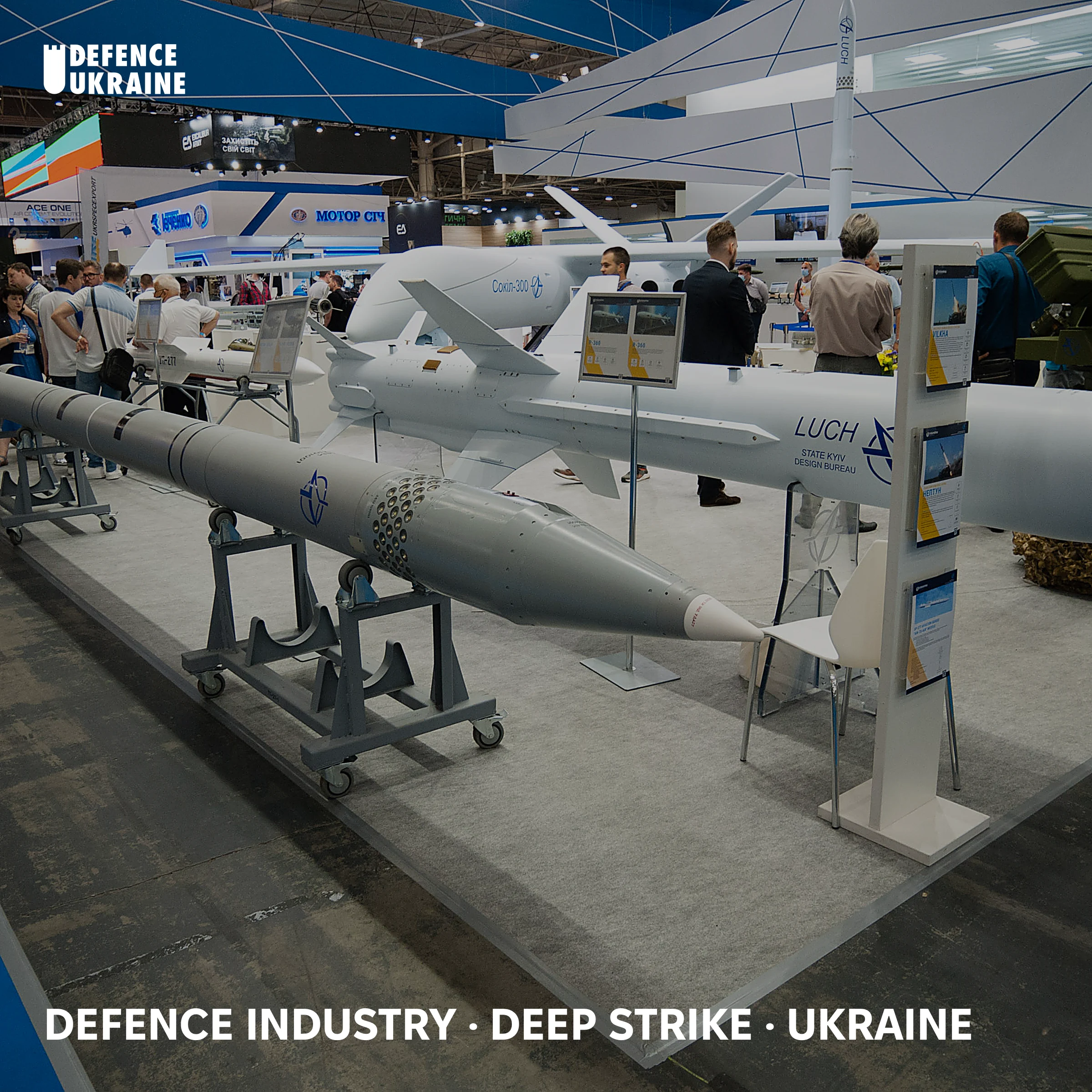
What It Is
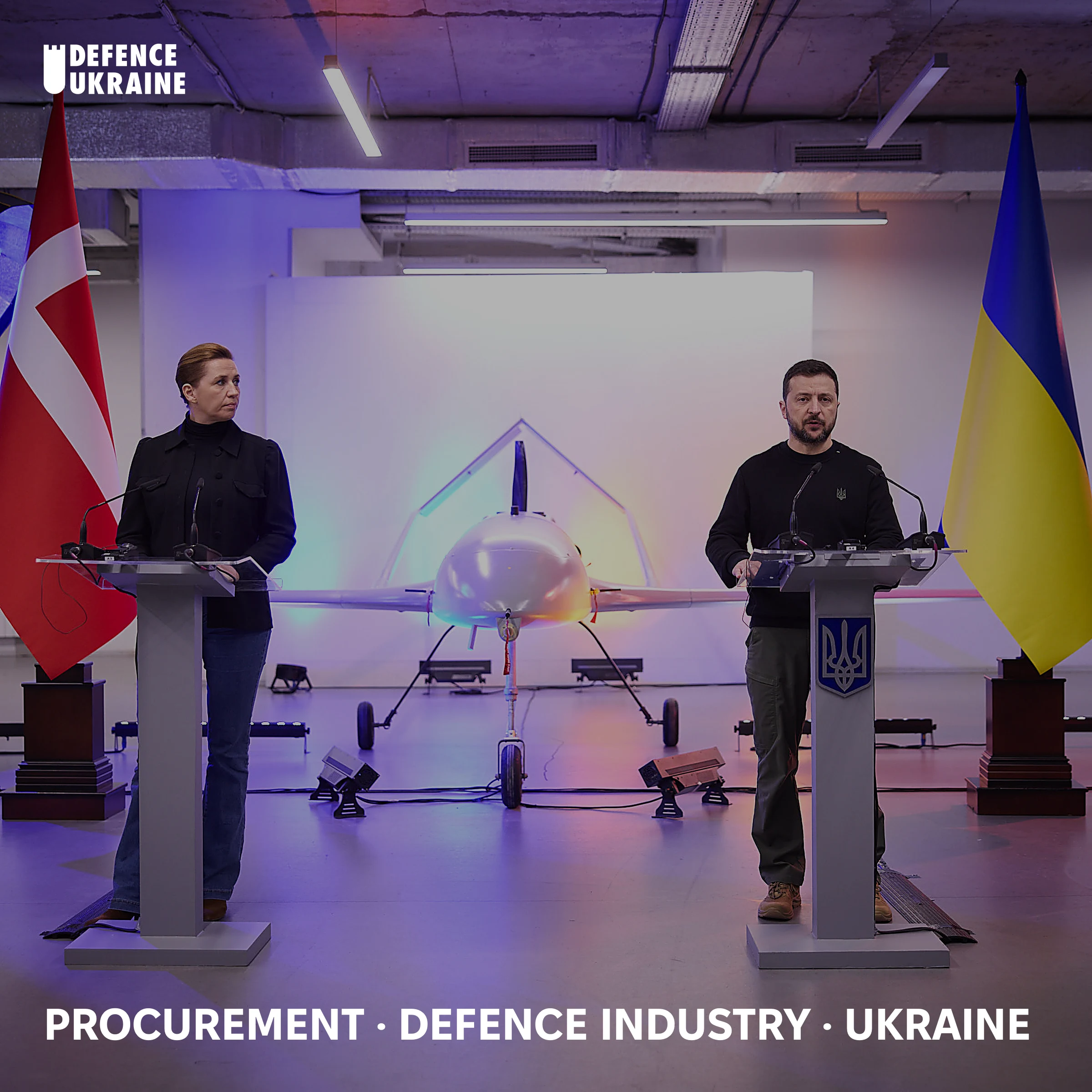
The EU-Ukraine Defence Industrial Partnership is a bilateral framework agreement signed in Kyiv on 15 July 2026 during European Commission President Ursula von der Leyen's eleventh visit to Ukraine. The Ukrainian side was represented by President Volodymyr Zelensky and then-Minister of Defence Mykhailo Fedorov. The partnership commits both sides to accelerated integration of Ukraine's defence industry into the EU internal market. It covers standards alignment, procurement access, joint production, intellectual-property protection, and export cooperation. In parallel, the Commission announced the disbursement of a ring-fenced €1 billion tranche from the €90 billion Ukraine Support Loan to finance drone-capability procurement, and launched the EU-Ukraine Drone Alliance as the partnership's first implementing instrument.
The signing carried unusual political weight. It was Mykhailo Fedorov's final major act as Minister of Defence: he formally departed the ministry the following day, in the mid-July cabinet reset that also elevated Serhii Koretskyi to the premiership (see Fedorov's six months at Ukraine's MoD). That timing gave the partnership its architectural signature, the digital-first, SME-integrated procurement logic Fedorov had spent his six-month tenure institutionalising, while leaving day-to-day implementation to the incoming security-services-led ministry under acting Minister Yevhenii Khmara.
Agreement Content
The partnership text commits both parties to four principal work streams. The first is standards alignment, principally the extension of EU technical standards, quality-assurance regimes, and NATO STANAG interoperability requirements to Ukrainian defence producers, with a phased path toward AQAP certification. The second is procurement access, giving Ukrainian primes and SMEs the legal right to bid for procurement contracts financed through EU instruments, subject to the same origin rules that apply to EU-established firms. The third is joint production, covering both drones and counter-drone systems in the near term and anti-ballistic missile systems by 2028. The fourth is intellectual-property protection, aligning Ukrainian IP frameworks with EU standards to remove one of the primary obstacles to European primes committing to Ukrainian joint ventures.
Von der Leyen framed the partnership as an integration in kind. In her formal remarks she described the arrangement as integrating Ukraine's defence economy the same way the EU integrates its markets, by removing barriers and aligning standards from defence procurement to intellectual-property protection, thereby permitting closer cooperation between defence industries and joint ventures.
The 2028 anti-ballistic mandate is the load-bearing forward commitment. It legally binds signatories to expand the partnership into joint production of anti-ballistic missile interceptors within roughly thirty months, giving European primes the political cover to enter joint ventures with Ukrainian producers on high-tier air-defence effectors. The Fire Point and Diehl Defence Freyja FP-7.x programme is the current lead candidate to anchor that industrial pillar (see Ukraine's missile industry), alongside the Kongsberg-Ukraine NASAMS line and any European PAC-3 arrangement should a US Patriot licence ever be reinstated.
Governance and the Drone Alliance
Institutional governance sits with the European Commission Directorate-General for Defence Industry and Space (DG DEFIS) on the EU side and with the Ukrainian Ministry of Defence and the Ministry of Strategic Industries on the Ukrainian side. The European Defence Agency provides technical support, particularly on standards alignment and on the combat-validation methodology developed under BraveTech EU Phase 2. A joint steering committee is expected to meet quarterly.
The EU-Ukraine Drone Alliance, launched on 17 July 2026 at the third EU-Ukraine Defence Industry Forum in Kyiv, is the partnership's first implementing instrument. The Alliance names eighteen founding companies, nine European and nine Ukrainian.
The nine European founding members are ORQA, Indra Group, Fincantieri, WB Electronics (WB Group), Destinus, Delair, RSI Europe, TERMA, and Quantum Systems. The nine Ukrainian founding members are Skyfall Industries, Greentech Harvest, Tencore, Deviro, Vyriy Industry, Athlon Avia, TAF Industries, UFORCE, and F-Drones. The Alliance mandate covers joint drone and counter-drone production by end-2026, with a specific focus on scaling battle-proven Ukrainian platforms into EU-financed production runs.
Alliance membership is designed to be expandable. The founding cohort is drawn from firms with existing production capacity and combat-validation data. Subsequent expansion rounds are expected to open access to smaller Brave1 SMEs conditional on their achieving Technology Readiness Level 4 and above, mirroring the DefTech Forge selection logic that BraveTech EU Phase 2 codified in Estonia and France in June 2026 (see Ukraine-tested procurement standard).
Financing
The partnership's headline financing is the €1 billion drone-capability tranche disbursed by the Commission on 15 July 2026, drawn from the €60 billion military-procurement portion of the €90 billion Ukraine Support Loan. The tranche is ring-fenced for drone and counter-drone procurement and does not count against the €30 billion Ukraine Support Loan general-budget-support envelope. It is disbursed to Ukrainian and EU producers via the contracting infrastructure of the Danish Model, which the Council designated in April 2026 as the pre-audited legal conduit for Ukraine Support Loan military procurement precisely because DALO auditing satisfies EU governance requirements without forcing the Ukrainian MoD to build a parallel Commission-facing compliance stack.
Beyond the immediate €1 billion, the partnership anchors a longer financing trajectory. The full €28.3 billion 2026 operational tranche of the Ukraine Support Loan flows through the same pre-audited channel; further tranches through 2027 depend on Ukraine Loan Cooperation Mechanism windfall capture and on the successful renewal of the EU sanctions regime that sustains that revenue stream. BraveTech EU Phase 2 supplies the assessment methodology that gates which Ukrainian SMEs qualify for Ukraine Support Loan-financed contracts.
Connection to SAFE and the Danish Model
The partnership resolves the structural tension between the SAFE €150 billion loan instrument's rigid geographic origin cap (35 per cent maximum non-EU content) and the Ukrainian defence industry's status as the largest concentrated pool of combat-validated capacity in Europe. Ukraine's inclusion within the SAFE eligibility perimeter, established by the SAFE regulation adopted on 27 May 2025, gave Ukrainian producers formal access to EU-financed contracts (see SAFE implementation tracker). The partnership operationalises that access, aligning standards, IP protection, and procurement processes to a level that lets European primes commit capital without triggering compliance risk.
The Danish Model supplies the pre-audited contracting layer. Copenhagen's DALO organisation had spent 2024 and 2025 establishing on-site auditing and prepayment discipline sufficient to satisfy both Ukrainian anti-corruption and Danish parliamentary oversight requirements. In April 2026 the Council designated the Danish Model as the reference procurement architecture for Ukraine Support Loan disbursement, effectively subcontracting the compliance function to a proven bilateral mechanism rather than building EU-institutional capacity from scratch. The partnership assumes that architecture as its operational foundation.
The partnership also nests within the €140 billion political envelope framed at the 36th NATO Summit in Ankara on 7 to 8 July 2026. The Ankara envelope aggregates existing commitments, and the €90 billion Ukraine Support Loan constitutes its largest single component. In that sense the partnership signed one week later gives the Ankara aggregation its industrial expression: it is the framework through which the aggregated European capital actually reaches Ukrainian factory lines.
Contested Points and Implementation Status
Three implementation questions dominate current reporting. The first concerns continuity under the Khmara ministry. Acting Minister Yevhenii Khmara's 11 August 2026 memorandum mandating SBU-style YouControl vetting for every supplier sits on top of the DPA and DOT-Chain digital procurement architecture that Fedorov institutionalised. Whether the memorandum stalls the six-to-ten-day supply cycle the digital rails were designed to sustain, or whether the two governance layers are reconciled without cost to throughput, is not yet clear.
The second concerns the 2028 anti-ballistic mandate. Brave1 SMEs face multi-year AQAP certification timelines that would ordinarily preclude anti-ballistic-tier participation by 2028. Whether the partnership's standards-alignment work stream can compress those timelines sufficiently is a live question. The Fire Point solid rocket fuel supply dispute with Denmark, ongoing since the release of the Mindich tapes in early 2026, illustrates how quickly reputational shocks propagate through the propellant supply chain and threaten the interceptor pipeline the mandate was designed to underwrite.
The third concerns UK participation. The UK-EU bilateral defence deal signed on 13 July 2026, two days before the partnership, permits British defence companies to bid for Ukraine Support Loan-financed contracts. Whether that access will translate into UK inclusion in expanded Drone Alliance rounds, or whether the Alliance remains formally an EU-Ukrainian instrument with the UK operating in parallel through bilateral channels, has not been resolved.
What To Watch
The near-term markers are: implementation of the €1 billion drone tranche and the delivery volumes it underwrites through end-2026; the sequence of Drone Alliance expansion rounds and whether Brave1 SMEs from outside the founding cohort clear the standards threshold; the working relationship between DG DEFIS, the Ukrainian Ministry of Defence, and DALO in operationalising the Ukraine Support Loan disbursement pipeline; and the political trajectory of the anti-ballistic 2028 mandate against the constrained propellant, engineering-talent, and IP-protection realities that will shape whether it is met.