A Project 11356 frigate carries eight vertical launch cells for Kalibr cruise missiles. On the night of 12 August 2026, Ukrainian forces wrecked the forward eight-cell module on the Admiral Essen and, imagery analysts assess, torched the launch tubes on the Admiral Makarov. Both vessels sat moored at Novorossiysk in Krasnodar Krai, more than 500 kilometres from Ukrainian-held coastline, in a base President Volodymyr Zelensky called the Black Sea Fleet's last main outpost.
No Western-supplied weapon took part. The strike package brought together Palianytsia jet drones, Neptune cruise missiles and uncrewed surface vessels, all Ukrainian-built, hitting within a single window against a naval base shielded by S-300 batteries, harbour booms and electronic warfare. That synchronised mix, rather than the tonnage on the target list, marks what shifted in August.
What the Imagery Shows and What It Cannot
The General Staff of the Armed Forces of Ukraine reported damage to four warships: the two Project 11356 frigates, a Project 21631 Buyan-M small missile ship, and a Project 22160 patrol ship of the Vasily Bykov class. The Security Service of Ukraine confirmed strikes on three of the four. Ukrainian reporting that day attributed the operation to a joint force drawn from the SBU, the Naval Forces, the Main Directorate of Intelligence and the State Border Guard Service.
The shore target list came with greater detail than the naval tally. The SBU named a 30N6E fire-control radar tied to an S-300 system, a mobile firing group stationed on Pier No. 2, port facilities at Piers 3, 6 and 7, and the tunnel portal connecting the Grushovaya oil depot to the Sheskharis terminal.
Commercial satellite photos collected on 13 August by Vantor, and evaluated by the OSINT groups Absolutely Reliable Source and CyberBoroshno, showed heavy, localised damage across both frigates. On the Admiral Makarov, fleet flagship since the Moskva went down in April 2022, the warhead struck close to the vertical launch cells and reportedly triggered an internal blast that gutted the 3S14 launch tubes. Analysts also recorded hits to the rear superstructure radar fit, electronic warfare suite and communications arrays. On the Admiral Essen, an impact at the bow buckled the deck, smashed an eight-cell 3S14 module and damaged the Trebovanie-M combat information and control system.
A subsequent review by Exilenova+ and CyberBoroshno widened the tally to include a Project 266M minesweeper, the trials vessel Viktor Cherokov, the intelligence ship Priazovye and shore facilities run by the 4th Submarine Brigade. The General Staff has left its initial count of four unchanged.
The boundaries of this visual evidence demand clear statement. Overhead imagery reveals scorch marks, twisted deck plates and ruined launch modules. It cannot reveal whether internal explosions cracked keels or wrecked internal combat systems, and subsequent orbital passes showed no ship ablaze or sinking in the water. Analysts estimate at least a year out of action if the launcher damage holds. That caveat carries real weight.
Moscow's version of events operates on an entirely different plane. The Ministry of Defence admitted zero damage to any naval combatant and claimed its forces shot down 502 drones overnight. Novorossiysk mayor Andrei Kravchenko said the strike killed a child, hit four enterprises and damaged more than two dozen residential buildings. Krasnodar Krai governor Veniamin Kondratyev reported eight wounded across the region, including a child. Between Kyiv's claim of four warships hit and Moscow's denial that any took damage, commercial imagery remains the sole judge, and it can only judge the surface.
The Sovereign Toolkit and the Engine That Caps It
Palianytsia occupies the middle ground between a propeller-driven one-way attack drone and a cruise missile. The Luch Design Bureau designed the weapon, and Ukrainian Defense Industry, the joint-stock firm that succeeded Ukroboronprom, manufactures it under director general Oleh Huliak. Declassified technical data lists an all-up weight of 320 kilograms carrying a payload up to 100 kilograms, an operating range of 650 kilometres, a cruising speed of 900 kilometres per hour, a fuselage length of 3.5 metres and a wingspan of 1.7 metres. A solid-propellant booster launches the airframe, before a turbojet drives it between 15 and 500 metres altitude on satellite and inertial navigation engineered to withstand electronic jamming.
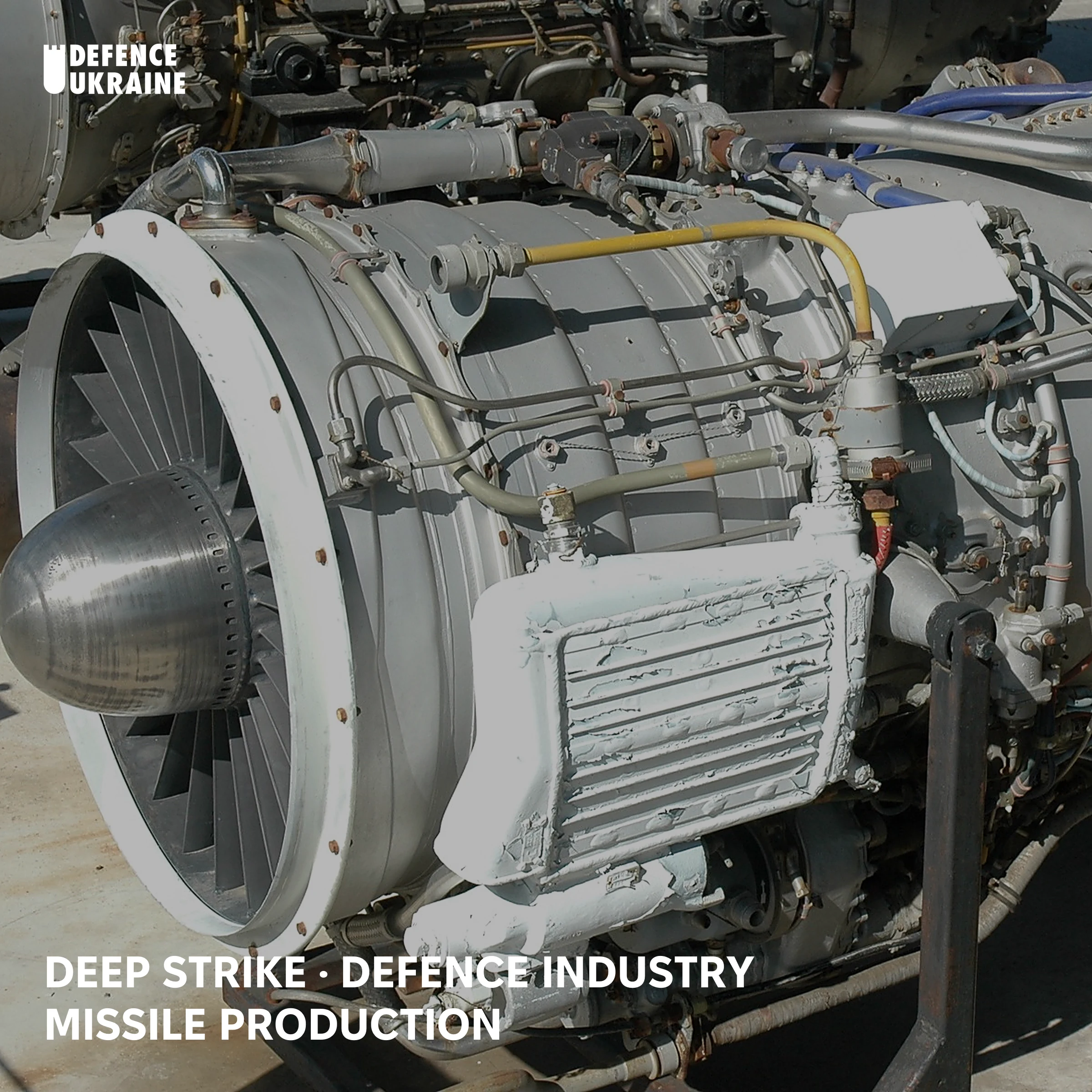
The motor is the AI-PBS-350, designed jointly by Czech manufacturer PBS Velká Bíteš and Ivchenko-Progress under a 2023 memorandum, which weighs 51 kilograms and delivers 3,400 newtons of thrust. It also sets the upper ceiling on the entire programme.
Then defence minister Rustem Umerov declared serial assembly on 4 December 2024, and United24 Media reported 100 airframes built across the subsequent three months. No verified production total has surfaced since, and precision turbine parts imported through a Czech supply chain cannot scale overnight. This mirrors the exact structural barrier Defence Ukraine examined in the engine bottleneck behind Ukraine's Flamingo production ramp: stamping out airframes is the simple half of the job. Unit cost estimates split sharply, with government statements quoting a price tag below $1 million while independent analysts place it between $50,000 and $100,000.
A new variant surfaced in April 2026. The Areion, another Luch development, modifies the Palianytsia design to launch from standard R-360 Neptune mobile launchers and adapted Tatra trucks in service with the Navy. It gives up 50 kilometres of operational reach to pack a 100 to 120 kilogram warhead at a flight altitude of 20 metres, designed to strike coastal infrastructure beneath radar coverage. Launcher commonality and its low-altitude profile make its deployment at Novorossiysk probable. Official Ukrainian releases cited only Palianytsia and Neptune, leaving that deployment unverified.
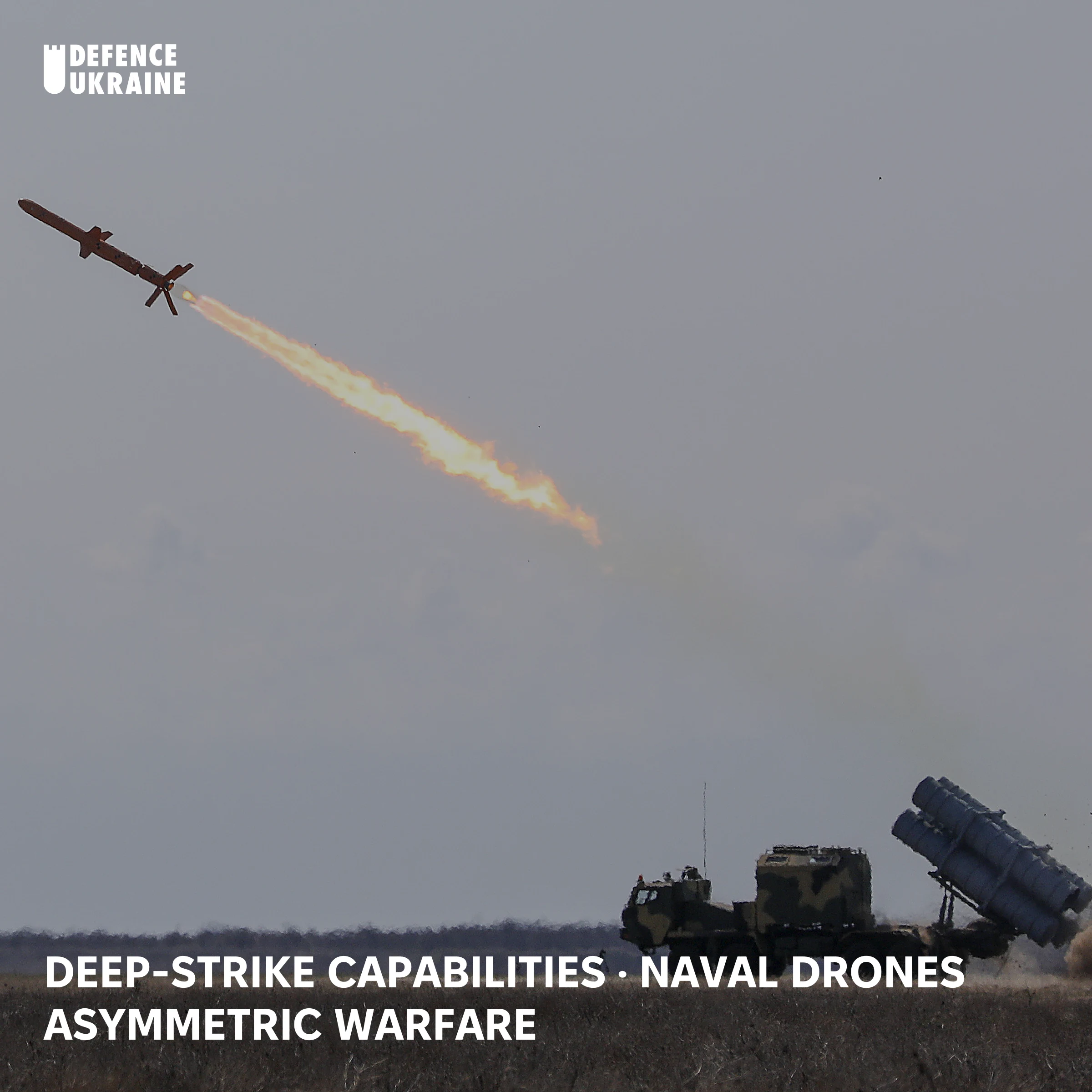
Neptune itself has expanded far past the anti-ship role that established its reputation. The baseline R-360 carries a 150-kilogram warhead out to 280 or 300 kilometres. The extended Long Neptune model, built to give Ukrainian forces deep-strike reach unencumbered by Western conditions on Storm Shadow, reaches past 1,000 kilometres with a 260 to 350 kilogram warhead. Official briefings on 12 August stated only "Neptune missiles". A target list combining berthed combatants, which require active radar seekers, and land infrastructure, which requires satellite and inertial guidance, indicates a mixed volley, though officials have not confirmed the breakdown.
A European partnership linked with this missile family on 16 June 2026, when MBDA signed a memorandum of understanding with Luch at Eurosatory to develop a Neptune-2 deep-strike missile jointly. Europe's top missile manufacturer putting its name to a domestic Ukrainian project matters, but the exact terms require plain accounting: the agreement covers collaborative engineering and design, backed by no procurement contracts, dedicated funding, or production timetable.
Foreign sales remain an entirely separate and currently closed matter. Weapons bound by the Missile Technology Control Regime feed straight to Ukrainian frontline units, placing Neptune and Palianytsia outside the scope of Ukraine's controlled arms-export regime. Defence Ukraine's survey of the Ukrainian missile industrial base shows how narrow the gap between factory output and military consumption sits.
Synchronisation Was the Achievement
Ukrainian uncrewed surface vessels have moved far past single-use explosive boats over four years of development. The Magura V5, run by military intelligence, carries 320 kilograms across 800 kilometres and uses machine learning for terminal homing and pack coordination when satellite links fail. The Sea Baby fleet operated by the SBU mounts FPV drones and light missiles to shoot back at Russian helicopters and patrol craft, turning the drone into a light surface warship rather than a floating bomb. Defence Ukraine has followed how naval drones rewrote the rules of maritime warfare throughout this evolution.
What Novorossiysk introduced was timing.
An air-defence crew tracking Neptune and Palianytsia missiles closing at 900 kilometres per hour and 15 metres altitude cannot simultaneously search for low-profile surface craft breaching the harbour boom. These dual threats operate across distinct sensor domains, attack on different timelines and require separate interceptors. A joint arrival forces defenders to divide their focus, and a mistaken choice costs frigates. Synchronising multi-domain strikes from separate launch points against a single target within one tight window poses a command-and-control challenge before it becomes a hardware problem, and Ukrainian forces had not previously displayed that capability on such a scale. Open-source reporting offers no second-by-second timeline of the raid. The simultaneous strikes across moored combatants and harbour infrastructure prove that the mission coordination worked.
The Last Anchorage and the Port It Cannot Leave
The Black Sea Fleet did not pick Novorossiysk by choice. It fell back to the port after mounting losses made Sevastopol indefensible, concentrating its remaining Kalibr launch tubes aboard Project 11356 frigates and Buyan-M corvettes tied to the piers. Knocking two frigates out of rotation cuts sixteen launch cells from the missile barrage Russia can fire in one night against Ukrainian cities and power grids, shifting the burden onto strategic bombers and land-based Iskander launchers.
Repairs present the harsher operational dilemma. Repeated strikes on the Sevmorzavod dry docks in Sevastopol destroyed the landing ship Minsk and the submarine Rostov-on-Don, leaving Russia without a secure heavy shipyard on the Black Sea to replace modular launch silos and combat management networks. As of 24 August 2026, imagery analysts have spotted no warships departing for Ochamchire in Abkhazia or any alternative port. That static posture is telling. With no other base offering the water depth and shore infrastructure to shelter the ships, the fleet takes its chances in place, beneath an air defence network that lost a fire-control radar on 12 August.
Command fallout has mirrored the reshuffles that followed past disasters. Admiral Sergei Pinchuk assumed leadership of the fleet in April 2024 with orders to prevent these strikes. By early 2026, reports from the ATESH partisan movement and Western intelligence pointed to his pending removal over flawed base defences and failed counter-USV screens, naming his first deputy Vice Admiral Ildar Akhmerov as his expected replacement.
Novorossiysk is also Russia's primary commercial gateway on the Black Sea, packing civilian trade and naval berths onto the same shoreline. The Sheskharis oil terminal pumped about 650,000 barrels daily through the first seven months of 2026 against a rated capacity close to 700,000. Crude loading shut down on 14 August, tank farms reached capacity, pipeline intake stopped, and at least one tanker cast off early instead of waiting. Strikes hit storage silos and conveyor systems at the Novorossiysk Grain Plant. Municipal authorities declared an emergency as damage knocked out local water and electrical grids.
Directly next door lies the Caspian Pipeline Consortium terminal, which exports Kazakhstani crude oil to European markets. That facility explains Washington's direct interest. In late July 2026, US Vice President JD Vance asked Zelensky to spare non-Russian tankers at CPC berths, and Ukraine agreed, provided the ships carried no Russian oil and faced no Ukrainian sanctions.
Diplomatic efforts collapsed far faster than the damaged warships can be repaired. Turkish Foreign Minister Hakan Fidan proposed a mutual halt to commercial shipping attacks on 9 August, prompting Ukraine to route an offer to Moscow via an intermediary. On 14 August, Russian Foreign Ministry spokesperson Maria Zakharova said Moscow had received no formal diplomatic approach and rejected any limited pause as a ploy to buy time for Kyiv.
The Ukrainian response targeted cargo holds. Across 17 and 18 August, Ukrainian drones struck the Suezmax tanker Skiros off the CPC terminal, shortly after the vessel took on Russian crude. Five bulk carriers took hits across Novorossiysk and Tuapse during those 48 hours: the Victoria V, the Fehu, the Elina B, the Necibe and the Anna S, which burst into flames and aborted its passage. Ukraine's naval strike network is an economic weapon, exerting financial leverage on the same strategic logic that drives the deep-strike campaign against Russian refineries and the federal budget.
Paying for the Next Salvo
Estimates place Ukraine's annual defence industrial manufacturing capacity between $35 billion and $55 billion. Domestic state weapons purchases cover only about $10 billion of that total. Zelensky has calculated the total defence funding gap at $27 billion, saying troops require $10 billion of that sum immediately to secure weapons through March 2027. Unfunded factory floors, not technological limits, determine how often Ukrainian forces can launch a strike package like the 12 August raid.
Two financial pipelines bridge the gap. The Danish Model at €1.3 billion channels partner funds directly to Ukrainian arms producers, with the Danish Defence Acquisition and Logistics Organisation auditing plants and signing deals, expanding a €590 million pilot from 2024. Alongside it stands the €90 billion Ukraine Support Loan, with €60 billion dedicated strictly to arms procurement. The EU-Ukraine Defence Industrial Partnership, signed on 15 July 2026, approved the Danish framework to disburse these funds, channelling money straight into Ukrainian factories instead of foreign defence contractors.
Personnel appointments point the same way. Yevhenii Khmara secured the Defence Ministry on 19 August 2026 with 312 parliamentary votes, moving from the SBU and a prior command in the Alpha special operations centre, a background that links him directly with the Sea Baby project and allied robotic naval programmes. He said Ukrainian arms will multiply in volume and hit with greater precision. What a security-services officer at the head of the ministry signals for procurement remains an open debate, but his backing for maritime strike appears firm.
Commander-in-Chief Mykhailo Drapatyi, serving since 21 July 2026, laid out his priorities to the chair of the NATO Military Committee on 21 August, putting long-range strike and robotic systems at the top of his agenda. The committee plans to visit Ukraine in October 2026, marking its first delegation to the country in eight years.
Strategic Implications for Ukraine
The 12 August raid proves a central operational fact: Ukraine can build, coordinate and launch a combined multi-domain strike package against a fortified target 500 kilometres away using entirely domestic weapons. Four strategic consequences follow from this development, pulling in opposing directions.
- The engine is the magazine. Palianytsia production runs up against AI-PBS-350 shipments from Czech assembly lines, a bottleneck no volume of domestic airframe manufacturing can bypass. This identical supply choke points back to the Flamingo programme and every other Ukrainian jet-powered strike platform. Developing and building a domestic turbojet in this thrust bracket requires a five-year industrial push that has yet to begin in earnest, leaving volume purchases and diversified overseas suppliers as the only short-term fixes. Until certified output data appears, statements about overwhelming Russian air defences in a prolonged campaign remain aspirational.
- Sea denial is not sea command. Ukrainian forces drove the Black Sea Fleet from north-western waters and made the north-eastern basin hazardous, a striking feat for a military lacking large surface combatants. That success does not provide the capability to impose a naval blockade, hunt submarines, or clear sea mines along commercial corridors. The trade routes Ukraine safeguarded remain accessible because Russian warships cannot safely contest them, not because Ukrainian vessels can provide escort. That difference becomes vital whenever ceasefire talks demand international guarantees for maritime shipping.
- The dual-use target set buys leverage and spends goodwill. Hitting a grain terminal and an oil berth during the same raid as a warship creates swift economic damage alongside an immediate political cost. Vance's late-July warning confirmed that Washington draws firm boundaries, while mid-August attacks on bulk carriers leave Ukraine disrupting grain shipments bound for Global South nations. Moscow's refusal to accept a shipping truce handed Kyiv a rationale. It did not erase the diplomatic bill.
- The doctrine has become the export. Frontline demands prevent foreign sales of Neptune and Palianytsia for now, but the operational doctrine guiding their use spreads easily. The NATO Military Committee's planned October trip, the Luch memorandum with MBDA, and the scrutiny Indo-Pacific naval planners direct at Black Sea operations highlight that tactical capital. Kyiv's bargaining strength in European defence circles draws on combat experience that no NATO military holds, and that advantage risks fading if the fighting halts before Ukraine turns it into industrial contracts.
Conclusion
The clearest proof of the strike's success lies in what has not happened. Photographers and satellites have caught neither the Admiral Makarov nor the Admiral Essen moving under power, entering dry dock, or shifting from their berths since 13 August, and the rest of the fleet stays equally motionless. Russian silence regarding damaged warships alongside its rigid claim of 502 downed drones paints a picture that concedes no losses and clarifies no facts.
Three indicators will test the impact within 90 days. Whether Ukrainian crews launch Palianytsia and Areion in volume against coastal bases again will test turbine engine stocks rather than airframe engineering. Whether either frigate enters a repair yard or resumes combat patrols will test the initial damage reports. And whether MBDA and Luch turn their June agreement into a funded Neptune-2 production contract will reveal how European deep-strike ambitions hold up against national procurement committees. Ukrainian commanders can directly control only the first of these.