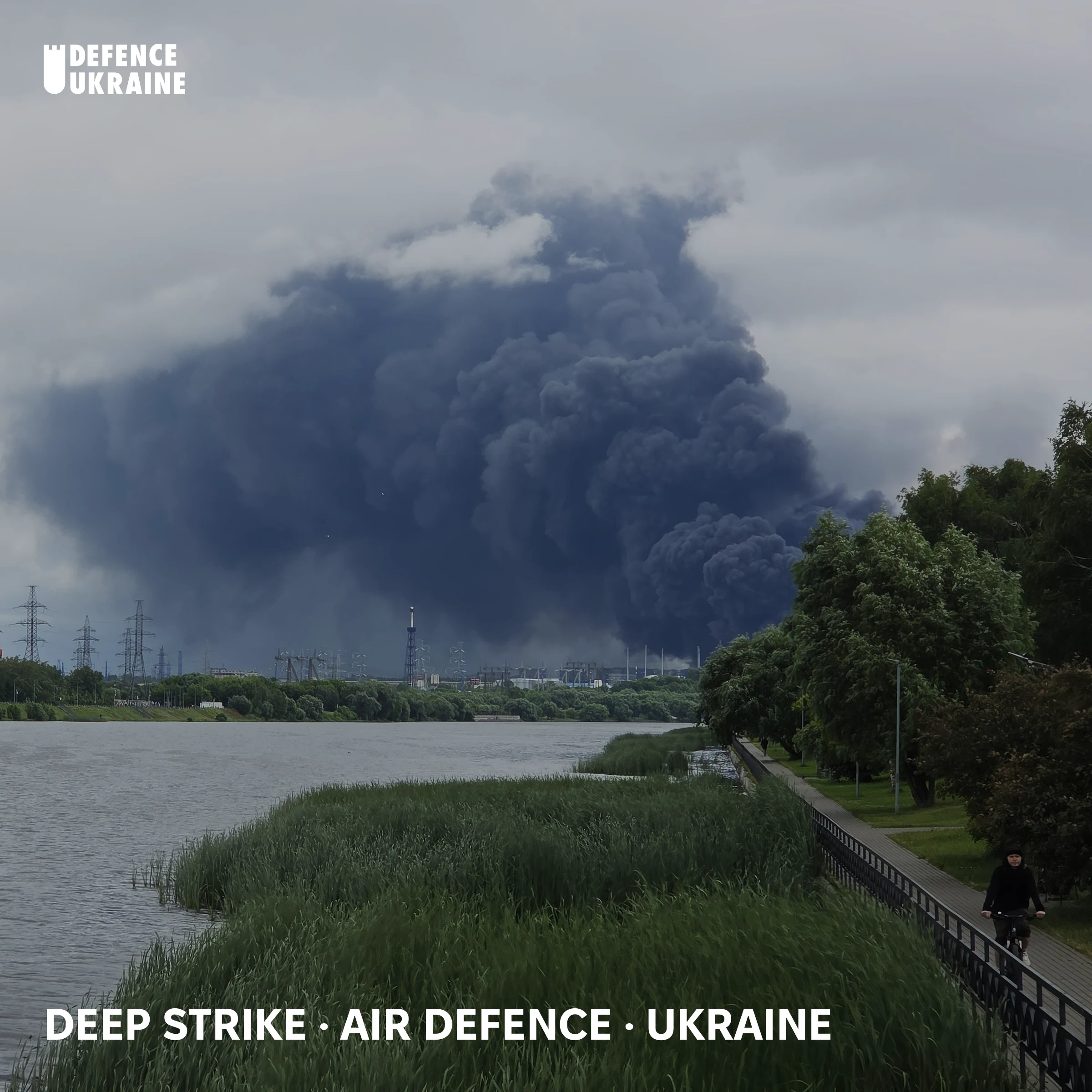
On 4 July 2026, Ukrainian long-range drones and cruise missiles struck the St Petersburg region in one of the largest strategic strike waves ever executed against President Vladimir Putin's home city. Confirmed targets included the Kirovsky district oil terminal, the Baltic port infrastructure at Vysotsk, and a military facility inside the Kronstadt naval base 850 kilometres from Ukrainian territory. President Volodymyr Zelensky publicly framed the operation as part of Ukraine's "long-range sanctions" doctrine, an explicit strategy of annihilating the infrastructure that generates Russian war revenue. Three days earlier, CBS News broke an intelligence assessment that reframed the trajectory of the war. Rob Lee of the Foreign Policy Research Institute, quoted in the CBS reporting, stated that Russia's air-defence missiles "are being used up very rapidly, at a kind of unsustainable rate, because Ukraine can produce more deep-strike drones than Russia can, in some cases, produce air-defence missiles". Neither the strike nor the assessment is remarkable in isolation. Together they define the strategic dynamic Defence Ukraine's analysis of the Ukrainian deep-strike campaign began tracking in June 2026: emerging asymmetric warfare economics between Ukrainian strike platforms costing $4,000 to $1.5 million per unit and Russian air-defence interceptors costing $500,000 to $3.7 million per shot.
The piece traces the empirical scale of the campaign, the exchange-cost mathematics driving its strategic effect, the tactical response Russia has been forced into, and the historical precedents that suggest what the next twelve months answer.
The Campaign's Empirical Scale
Ukrainian Unmanned Systems Forces, coordinated with the Defence Intelligence of Ukraine and the Security Service of Ukraine, achieved a confirmed operational cadence of 15 to 25 strategic deep-strike operations per month by early 2026, frequently involving swarms of 40 to 80 platforms per wave. Since the Unmanned Systems Forces was established as an independent branch in June 2025, empirical battle-damage assessments confirm strikes on 276 integrated air-defence assets, comprising 169 surface-to-air missile systems, 76 early-warning and tracking radar stations, and 31 electronic warfare installations. Cumulative statistics released on 29 June 2026 document 194 strikes on Russian air-defence assets since 1 January 2026, with 31 of those high-value targets destroyed in June alone.
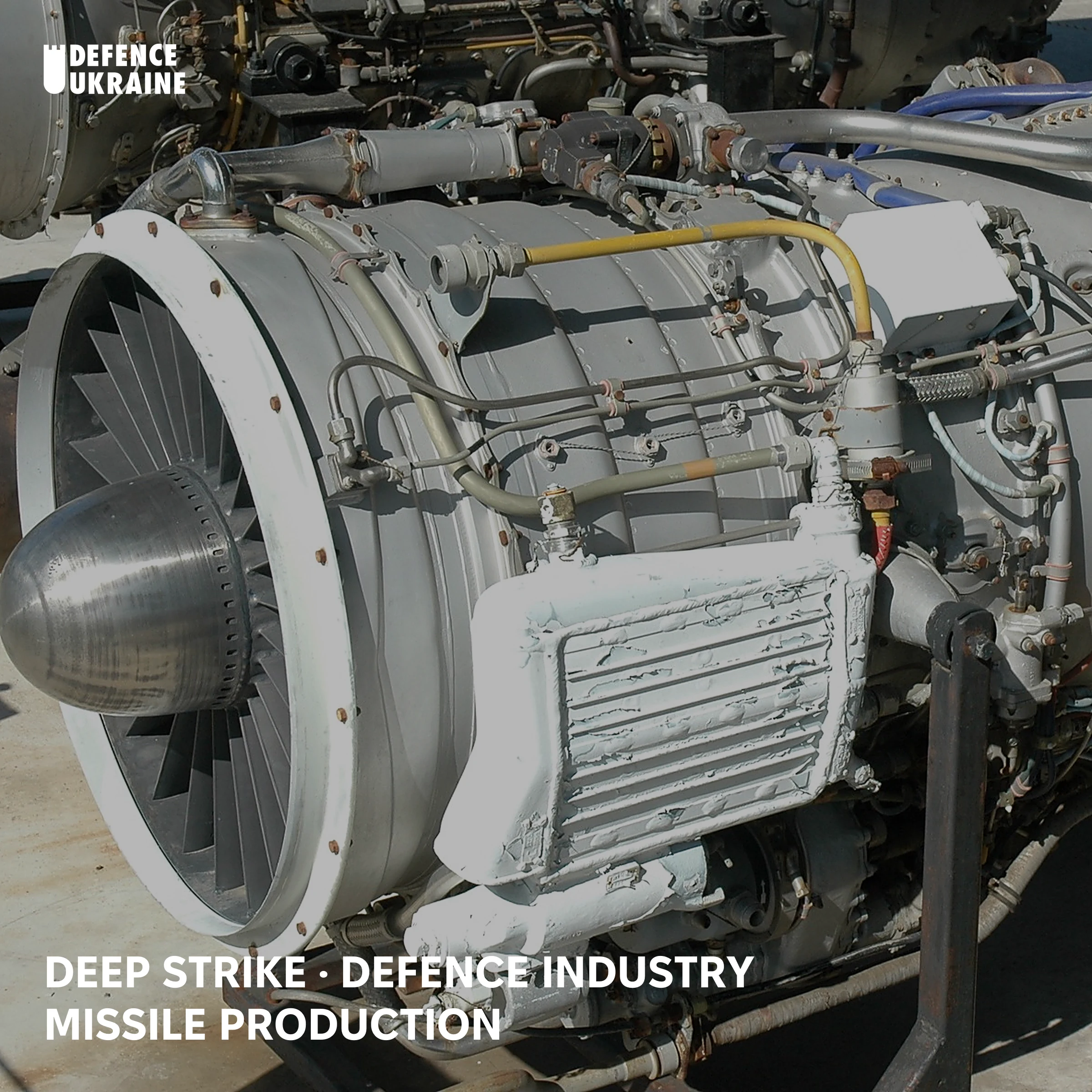
The platform mix is deliberately diversified to defeat Russian radar discrimination and exhaust interceptor magazines. The Antonov AN-196 Liutyi is the workhorse of the campaign at approximately $200,000 per unit, assessed by defence-industry press by late 2025 as responsible for roughly 80 per cent of successful strikes on Russian oil infrastructure. The Fire Point FP-5 Flamingo cruise missile carries 1,150 kilograms of warhead at 3,000 kilometres range for under $1 million per unit and is reserved for hardened military-industrial targets. The Palianytsia jet-powered rocket-drone, the Peklo jet loitering munition, and the Bars hybrid platform fill the middle tiers at $200,000 to $1 million per platform. The PARS Trembita pulsejet is deliberately expendable at approximately $4,000 per unit, designed specifically to trigger Russian air-defence engagements and expend interceptors on decoys. Defence Ukraine's analysis of the Ukrainian missile and long-range strike industry covered the production base behind the campaign.
Strategic targets since May 2026 have concentrated on refining and defence-industrial infrastructure. The 18 June 2026 Moscow Gazprom Neft Kapotnya strike used a mixed swarm of FP-1, Liutyi, and Bober drones to defeat Moscow's layered air defences and severely damaged both the AVT-6 primary crude distillation unit and the Euro+ integrated refining unit, taking 140,000 barrels per day of refining capacity offline. Western financial analysts estimated the structural repair costs at nearly $1 billion, with industry sources projecting the plant will remain offline until 2027. Between 25 and 28 June, Ukrainian forces struck the Slavyansk Oil Refinery in Krasnodar Krai (300 kilometres from the front line and the primary fuel supplier for occupied Crimea) and the Slavneft-YANOS refinery in Yaroslavl (700 kilometres away). The 4 July St Petersburg wave extended the geographic reach to Russia's second city. In June 2026 alone, the Ukrainian Ministry of Defence reported strikes on 11 Russian oil refineries and eight critical defence-industry sites, with the maximum confirmed engagement range exceeding 2,000 kilometres.
The Exchange-Cost Mathematics
The unit-cost data across the major air-defence systems used in the war illustrates the asymmetry that is defining Russian strategic decision-making. Russian S-400 48N6 series interceptor costs are best derived from India's early 2026 procurement of 300 interceptors at $1.12 billion, yielding an export-minimum unit price of approximately $3.73 million per shot; domestic Russian production costs sit in the same multi-million-dollar tier. Legacy S-300 interceptors are estimated at $500,000 to $1.3 million per shot, though replacement is effectively impossible as the older 5V55 variants are no longer in mass production. Pantsir-S1 57E6 point-defence interceptors run in the low hundreds of thousands. Buk-M3 9M317M medium-range interceptors, using active radar homing, are in the multi-million-dollar tier. Western comparators face the same target set at similar or higher cost: Patriot PAC-3 MSE approximately $5.3 million per shot per US Army FY2027 budget projections; SAMP/T NG Aster 30 approximately $2 million to $4 million; NASAMS AIM-9X approximately $1.18 million. The Ukrainian-produced Freya interceptor (Fire Point FP-7.x with a Diehl imaging-infrared seeker) is publicly reported at approximately $700,000 per missile, explicitly designed to undercut Western interceptor costs by an order of magnitude.
The exchange-cost mathematics is straightforward and adverse for Moscow. When Ukraine launches an AN-196 Liutyi at $200,000 and Russia executes standard doctrine of a two-missile S-400 salvo per target to guarantee kill probability, Russia expends approximately $7.5 million to defeat a $200,000 platform. The exchange ratio against Russia is roughly 37:1 on a successful Liutyi engagement, or 18:1 on a single interceptor. Against a Trembita decoy at $4,000, an S-300 5V55 intercept yields a 325:1 exchange ratio in Ukraine's favour; an S-400 intercept yields 900:1. The alternative to intercepting is worse: the Kapotnya strike caused nearly $1 billion in immediate infrastructure damage on components that require Western-sanctioned catalytic technology to repair. Russia is trapped between fiscal exhaustion through interception and infrastructural collapse through abstention.
Russia's Layered-Defence Breakdown
Western satellite intelligence and Ukrainian Defence Intelligence reports have confirmed a large-scale redeployment of Russian air-defence assets. Short and medium-range systems including Pantsir-S1, Pantsir-S2, and Tor-M2 batteries have been visibly relocated from the immediate tactical frontline in the Donbas and lesser-priority Crimea sectors to protect strategic-industrial sites in the deep Russian interior: Moscow oil refineries, defence-electronics factories in Cheboksary, and port infrastructure in Leningrad Oblast. The geographic redistribution has created wide corridors of degraded or absent radar coverage. Ukrainian mission planners actively route deep-strike assets through these corridors, plotting complex low-altitude flight profiles that allow relatively slow platforms like the propeller-driven Liutyi to bypass border defences entirely and reach terminal targets before facing point-defence weapons.
To reliably penetrate terminal defences, Ukraine relies on sophisticated saturation and decoy discrimination. The Trembita pulsejet's rudimentary engine generates a thermal and acoustic signature that closely mimics a larger cruise missile. Russian automated air-defence networks under the cognitive load of a 60-drone swarm automatically prioritise the loudest and hottest targets. Publicly reported operational data indicates that Trembitas successfully draw the initial S-400 and Buk-M3 salvos, emptying launchers minutes before slower, stealthier Liutyi platforms arrive at the actual target and reload cycles complete.
The 18 June 2026 Kapotnya strike showed the layered-defence breakdown at its most acute. Geolocated cellphone footage from the Moscow suburbs recorded Russian military personnel and National Guard units firing shoulder-launched MANPADS and small arms into the night sky. Point-defence weapons over a civilian capital signal that the outer S-400 and middle Buk rings were entirely saturated or depleted. A December 2025 Ukrainian Defence Intelligence assessment attributed to Oleh Chornyi, acting head of the agency, quantified the depletion: Russia's arsenal contained just over 400 RM-48U strike missiles for its S-300PM and S-400 systems, with the domestic manufacturing capacity of the Almaz-Antey conglomerate estimated at slightly more than 100 RM-48U missiles per month. Independent analyses by the Institute for the Study of War and the Royal United Services Institute assess that Russian intercept success rates against massed mixed-swarm attacks have fallen from an estimated 70 to 80 per cent in 2023 to below 40 per cent in contested strategic corridors by mid-2026. Russian Ministry of Defence public claims of 95 to 100 per cent interception rates are contradicted by the empirical evidence of burning refineries in Moscow and St Petersburg.
The Historical Precedents
The strategic pattern echoes several historical asymmetric air campaigns and inverts one. During Operation Linebacker II in 1972, North Vietnam expended thousands of SA-2 surface-to-air missiles to shoot down a small number of B-52 bombers. The economics ran opposite to today: the offensive platform (B-52) was vastly more expensive than the defensive interceptor (SA-2). Ukraine has inverted the historical precedent. For the first time in modern warfare at scale, the strategic strike platform (the $200,000 Liutyi) is the disposable munition and the interceptor ($3.73 million S-400) is the scarce high-value asset.
The Israeli Air Force's Suppression of Enemy Air Defences doctrine, from the 1973 Yom Kippur War through the 1982 destruction of Syrian radar sites in the Bekaa Valley and the US-coalition Wild Weasel operations during the 1991 Gulf War, relied on exquisite manned tactical aviation to physically destroy enemy radar arrays. That doctrine accepted a poor economic exchange in return for air supremacy. Ukraine, lacking a fifth-generation air force, has innovated an attritional SEAD doctrine that achieves comparable operational effect through magazine exhaustion. Instead of physically destroying launchers with jets, Ukraine forces the launchers to empty themselves. Air supremacy over the target set becomes temporarily available through interceptor depletion rather than through infrastructure destruction.
The closest doctrinal precursor is the Houthi campaign against Saudi Arabia between 2015 and 2023, culminating in the devastating September 2019 Abqaiq-Khurais attack that briefly took offline five per cent of global oil production. Over eight years, Houthi forces used Iranian-designed loitering munitions and cruise missiles at approximately $20,000 per platform to bypass billions of dollars of Saudi Patriot and Shahine air-defence investments. Chatham House analysis of that campaign explicitly warned that firing $3 million-plus Patriot interceptors at $20,000 drones was financially unsustainable even for a wealthy petrostate, and Saudi Arabia was eventually forced toward negotiated de-escalation. Ukraine has applied the same attritional model against a sanctioned Russian economy with vastly less fiscal space than Saudi Arabia had.
Where the Asymmetry Could Break for Ukraine
Several publicly identified constraints could fracture Ukraine's asymmetric advantage if not carefully managed. The most acute is engine supply. Ukraine relies heavily on niche European aerospace manufacturers, predominantly Czech Republic's PBS Group (which produces the AI-PBS-350 turbojet used in the Palianytsia and Peklo) and ZofiTech. PBS Group is scaling toward 1,000 turbojet units per year by late 2026, of which approximately 35 per cent are allocated to Ukraine; ZofiTech currently outputs approximately 200 turbojets monthly. This leaves Ukrainian manufacturers structurally starved for propulsion units, particularly as global aerospace giants like Rolls-Royce and General Electric decline to enter the low-cost disposable micro-turbojet market on profitability grounds. Ukrainian state targets of 30,000 long-range drones and 3,000 cruise missiles across 2025-2026 cannot be met without significant engine-supply expansion.
The engine supply chain is itself under active Russian attack. PBS Group reported facing a major sophisticated cyberattack earlier in 2026 that Czech intelligence services assessed as a direct state-sponsored effort by Moscow to destabilise the company's joint ventures with Ukraine and halt the flow of AI-PBS-350 engines. Similar risks apply to solid-fuel rocket motor production. The Pavlohrad Chemical Plant, a primary node for the boosters used in Palianytsia, Peklo, and Bars, sits within reach of Russian strategic bombers and ballistic missiles and has been repeatedly targeted.
The Freya interceptor is entirely reliant on the Diehl Defence imaging-infrared seeker supply from Germany. Delays in German export licensing, political hesitation in Berlin, or production bottlenecks at Diehl could cripple Fire Point's ability to hit the August 2026 mass-production target.
The Russian counter-scenario should not be entirely discounted. Under existential threat, the Kremlin could execute a draconian reallocation of civilian aluminium, semiconductor, and automotive lines to Almaz-Antey for interceptor production. The Kiel Institute's June 2026 assessment notes this pathway would trigger civilian economic collapse and hyperinflation, and Russia's lack of access to Western precision machine tools plus a severely overheated labour market make an exponential production surge highly improbable in the near term. But the option is not zero.
Strategic Implications for Ukraine
The mid-2026 cycle has confirmed the deep-strike campaign's strategic direction. Three implications follow.
- The economic exhaustion assessment is empirically anchored. The Kiel Institute for the World Economy's June 2026 "Endgame" report (co-authored with the Stockholm Institute of Transition Economics) documented the National Wealth Fund's liquid assets falling from 6.5 per cent of GDP pre-war to 1.8 per cent by April 2026, with the federal budget deficit surpassing its annual target within the first quarter. Approximately 33 per cent of Russian oil refining capacity is now offline per Macro-Advisory Ltd, with Russian crude processing throughput falling 25 per cent year-on-year to 3.95 million barrels per day, the lowest operational level recorded in over two decades. Russian oil production has declined for six consecutive months through June 2026, and 56 Russian regions were enforcing fuel restrictions and rationing by late June. In a 28 June televised interview, Putin acknowledged domestic fuel shortages and explicitly ordered the scale-up of air-defence production to cover refineries, an implicit confirmation of the attrition thesis.
- Ukraine's supply-chain vulnerabilities are now the operational bottleneck. The offensive campaign's strategic ceiling is not Russian interceptor recovery. It is engine supply from PBS Group and ZofiTech, seeker supply from Diehl Defence, solid-fuel motor production at Pavlohrad, and skilled-labour scaling for Fire Point, Antonov, and PARS. The June 2026 Russian state-sponsored cyberattack on PBS Group is the visible signal that Russia has identified the same bottleneck and is targeting it directly. Defence Ukraine's analysis of the missile and long-range strike industry covered the industrial base; the industry's protection is now the strategic priority.
- The Russian binary decision approaches. Analysts from the Institute for the Study of War and Bruegel forecast Russian air-defence stockpile depletion will become strategically decisive by late 2026 or early 2027. When interceptor magazine depth drops below the minimum required to protect both Moscow and the primary Urals energy export hubs, the Kremlin faces a binary. Defensive retrenchment concedes strategic freedom of manoeuvre to Ukrainian deep-strike assets against the industrial periphery; abandoning the protection of lesser-tier sites entirely and concentrating remaining S-400 and Pantsir batteries around Moscow, St Petersburg, and critical nuclear command nodes. The alternative is doctrinal escalation, potentially including tactical-nuclear posturing or intensified sabotage of European supply chains (including PBS Group), to coerce Western partners into forcing Ukraine to halt strikes. Defence Ukraine's analysis of the Kyiv saturation salvo of 1-2 June traced Russian saturation-strike behaviour against Ukrainian air-defence stockpiles. The mirror-image dynamic on the Russian side is what the deep-strike campaign has generated.
Conclusion
The mathematics of the current air-defence war does not favour concealment. Russia is committing to defend infrastructure with interceptors that cost 20 to 900 times more per shot than the platforms attacking it, in a fiscal environment where the National Wealth Fund's liquid assets have collapsed to under 2 per cent of GDP and where six consecutive months of oil production decline have forced net fuel imports. The Houthi campaign against Saudi Arabia demonstrated that even a wealthy petrostate cannot indefinitely absorb this exchange ratio. Russia is attempting to absorb it under sanction, industrial degradation, and active cyberattack pressure on the Ukrainian supply chain that Russia now identifies as the operational ceiling of the campaign. The empirical question the next twelve months answer is whether Ukraine can protect its own long-range strike production capacity, and whether the Kremlin's response to interceptor exhaustion escalates doctrinally or retrenches defensively.
Defence Ukraine's analysis of the Ankara NATO Summit outcomes traces how the exchange-cost economics documented here reached Alliance-level procurement: NATO's Drone Edge $40 billion five-year counter-drone commitment, integrating Ukrainian battlefield-derived capabilities via BraveTech EU Phase 2 and the Portugal OPEX campaign through year-end.