On the night of 7 May 2026, two Ukrainian one-way attack drones missed their Russian targets and struck four empty fuel tanks at a storage facility near Rēzekne in eastern Latvia, roughly 50 kilometres from the Russian border. Latvian air defences did not engage. The Latvian Defence Minister, Andris Sprūds, initially stated that civilian safety could not be guaranteed. Under intense political pressure he reversed within days, declaring that "drones must be shot down", and resigned on 11 May. Prime Minister Evika Siliņa followed on 14 May. Latvia went into snap elections. On 20 May, a suspected drone crossing into Lithuania from Belarus triggered a capital-wide airspace closure, train suspensions, and the bunker evacuation of President Gitanas Nausėda, Prime Minister Inga Ruginienė, and Defence Minister Robertas Kaunas: the first time a NATO capital's leadership had sheltered since the start of the full-scale war.
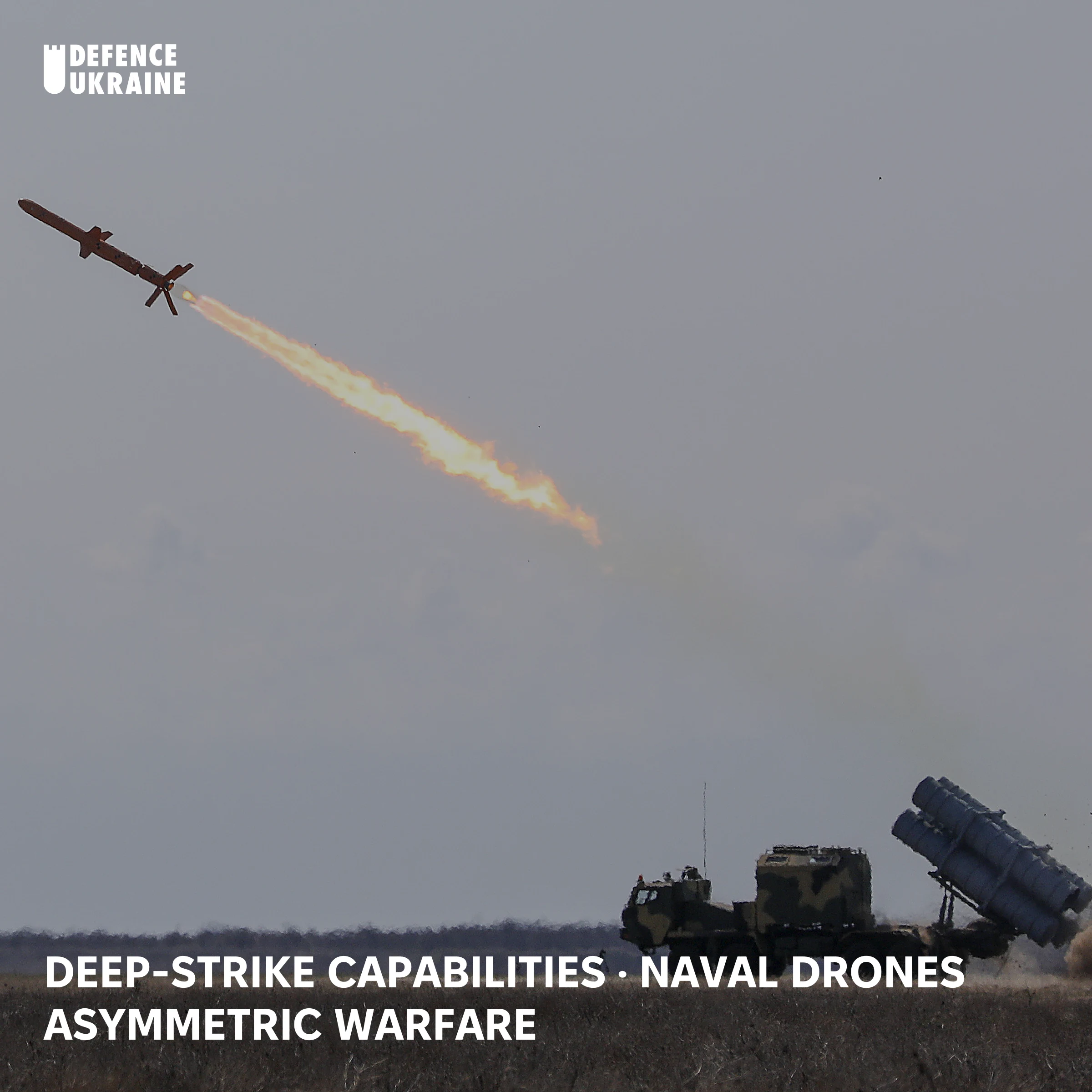
The spring 2026 Baltic drone incursions are not Russian attacks on NATO territory. They are the aerodynamic blowback of Ukraine's expanding deep-strike campaign against the Russian war economy, drifting into NATO airspace after Russian electronic warfare severs satellite navigation links and overwhelms the drones' telemetry. The Ukrainian Ministry of Defence has acknowledged the incidents and issued formal apologies to Finland, Latvia, and Estonia; Foreign Minister Andrii Sybiha has committed Ukrainian technical experts to help Baltic allies build preventative measures. The incidents are unwelcome, the Baltic political response is real, and the underlying physics is unchanged: as the Ukrainian deep-strike envelope expands across the Russian western military district, drift into NATO airspace under current Russian jamming density is mathematically unavoidable. The political shockwave of the May incidents has converted the European Drone Defence Initiative (EDDI), still known colloquially as the Drone Wall, from a 2027 mid-term capability goal into a Q3 2026 procurement sprint anchored on the Ukrainian doctrinal template the European Eastern Flank had previously been slow to adopt.
The Crisis Timeline: March to May 2026
Nine confirmed incursions across nine weeks indicate a compounding rather than episodic problem. On 23 March, a Ukrainian drone crashed near Lake Lavysas in Lithuania's Varėna district after veering off course from an attack on the Russian oil terminal at Primorsk. On 25 March, two stray Ukrainian drones entered Baltic airspace via Russia: one struck a chimney at the Auvere power station in Estonia; the second crashed in Dobročina, Latvia. On 29-30 March, Finnish authorities recovered a Ukrainian AN-196 drone in Kouvola carrying an unexploded warhead, requiring a controlled detonation. Drone debris was also found in Tartu County, Estonia, around 31 March. On 3 May, an unmanned platform was observed leaving Finnish airspace at Virolahti during another Ukrainian attack on Primorsk.
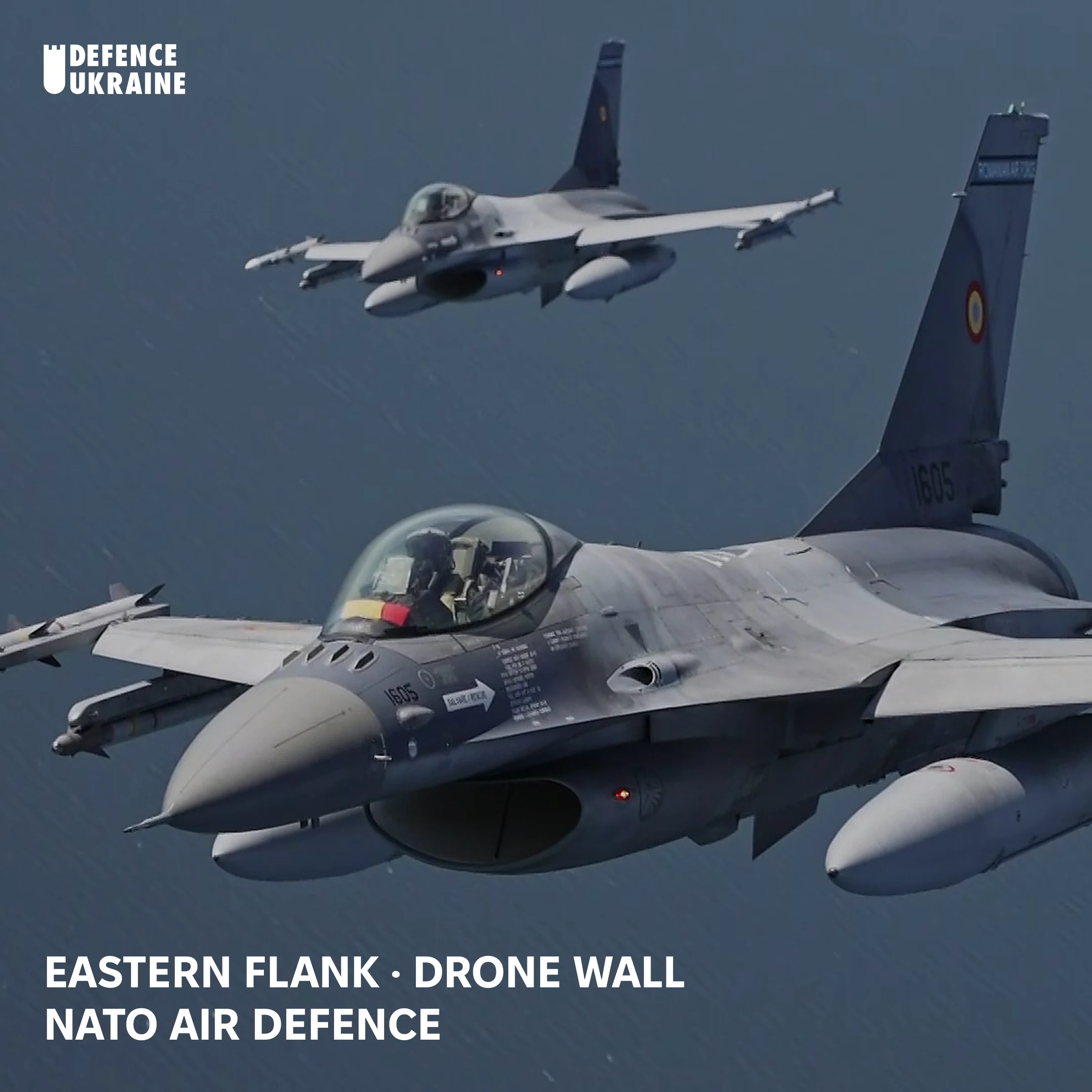
Then came the political-impact incidents. The 7 May Rēzekne strike at the Latgale fuel depot brought down Latvia's government. On 19 May, a Romanian F-16 operating under the NATO Baltic Air Policing mission intercepted and shot down a Ukrainian drone over Lake Võrtsjärv in Estonia, with debris falling near Põltsamaa. On 20 May, the Vilnius incident triggered the bunker evacuation. On 21 May, Latvia's National Armed Forces issued active airspace threat alerts across the Ludza, Krāslava, and Rēzekne municipalities. NATO Air Policing was activated repeatedly during these incidents but fighter jets often failed to locate the low-altitude, low-radar-cross-section targets in time.
The Physics of Spillover
The mechanism by which Ukrainian drones drift into NATO airspace is documented in open-source defence reporting. Russian forces have deployed Shtora-type video jammers and dense Global Navigation Satellite System (GNSS) spoofing networks across the western military district, severing the navigation links Ukrainian platforms depend on. Ukrainian engineers have responded with Ku-band transverters, Wide-Area Real-Time Kinematic (RTK) networking, and Controlled Reception Pattern Antennas (CRPAs) to bypass jamming. The technical countermeasures work most of the time. When the broadband noise overwhelms telemetry, the drones revert to basic inertial navigation and drift along prevailing wind patterns or default flight paths. Defence Ukraine's analysis of Ukraine's counter-drone and electronic warfare innovation covered the EW environment that drives this dynamic.
The Atlantic Council and several defence analysts have argued that the spillover is not merely accidental. Russia has the directional EW assets to channel Ukrainian drones away from their original targets and into NATO airspace deliberately, generating political friction between Kyiv and its allies while remaining technically deniable. Russia's UN representative, Vasily Nebenzya, threatened the Baltic states explicitly: NATO membership would "not protect you from retaliation" if alleged drone launches from their territory continued, a claim Russia's foreign intelligence service has actively manufactured through false reporting that Ukraine operates drone teams from Latvian military bases. The grey-zone strategy is structurally consistent: Russia uses EW to weaponise Ukrainian drones as vectors for political intimidation that does not cross Article 5 thresholds.
The Political Response
The Baltic political reaction has been sharp and unequal. Polish Defence Minister Władysław Kosiniak-Kamysz publicly demanded that "Ukraine must be more precise here, of course, to avoid giving rise to Russian provocations. Our territories should not be violated". Estonian Defence Minister Hanno Pevkur warned that the continuous incursions jeopardise Estonian public support for the Ukrainian war effort. Former Estonian President Toomas Hendrik Ilves cautioned that the repeated drone incidents will erode public opinion. At the supranational level, European Commission President Ursula von der Leyen took the opposite framing on 20 May, attributing direct responsibility to Moscow: "Russia and Belarus bear direct responsibility for drones endangering the lives and security of people on our Eastern flank".
NATO has actively avoided invoking Article 5. Because the drones are Ukrainian-origin platforms deflected by Russian EW, framing them as an armed attack would technically require collective defence against Ukraine, which former Russian President Dmitry Medvedev mockingly suggested would be the consequence of taking the legal framing to its logical conclusion. Poland and Estonia have instead used Article 4 consultations to trigger NATO's Operation Eastern Sentry, reframing the incidents as a matter of border integrity. The Article 4 path preserves political flexibility while accelerating the procurement response. NATO Secretary General Mark Rutte acknowledged the threat publicly but offered limited tactical solutions, noting the Alliance is prepared to act when a drone presents an active threat while struggling to define a uniform threshold for kinetic engagement.
The fall of the Latvian government on 14 May is the sharpest political signal. Within ten days of the Rēzekne incident, a sitting NATO member's defence minister and prime minister had resigned over the failure of national airspace integrity, triggering snap elections that will be fought, in part, on the question of which European architecture replaces the broken status quo. The political space for theoretical debate about the Drone Wall has closed. The space for cheque-signing has opened.
The Drone Wall: From Concept to Procurement Sprint
The European Drone Defence Initiative was formally launched under the EU's Defence Readiness Roadmap 2030. Preliminary procurement estimates for the wall covering Poland, Lithuania, Latvia, and Estonia run at approximately €1 billion. The originally proposed timeline was Initial Operating Capability by the end of 2026 and Full Operating Capability by the end of 2027. The May 2026 incidents have not changed those end-state targets, but they have changed the political will to fund and execute the procurement decisions that the targets require. Defence Ukraine's earlier analysis of the NATO Drone Wall programme covered the architecture's design phase; this piece is the post-political-shockwave update on what the procurement looks like after the Baltic governments forced the question.
The Baltic states have already begun cross-border procurement. In October 2025, Estonian firm DefSecIntel Solutions and Latvian firm Origin Robotics signed a memorandum of understanding to provide the foundational technology stack. The architecture pairs DefSecIntel's EIRSHIELD platform (an AI-assisted modular counter-unmanned-aerial-system that integrates long-range radar, sensor fusion, and electronic warfare, with capability refined through deployments in Ukraine) with Origin Robotics' BLAZE interceptor (an autonomous man-portable drone interceptor using onboard computer vision, designed to be immune to standard radio-frequency jamming). The choice of an indigenous Baltic detection-plus-interceptor stack rather than imported US or Israeli platforms reflects the timeline pressure: the May 2026 deadline for SAFE Phase 1 contract signature has forced procurement to favour vendors who can deliver in 2026, not 2030.
Poland sits inside the Drone Wall architecture but maintains a parallel national capability stack. Warsaw is advancing its Wisła Patriot batteries integrated with the US Integrated Air and Missile Defence Battle Command System, its Narew CAMM-effector medium-tier deployment, and its Pilica+ short-range systems with MBDA delivering the first CAMM missiles and launchers in late 2025. Romania and Finland are integrating their borders into the broader network, with Finland co-leading the Eastern Flank Watch framework following the December 2025 Helsinki summit and Romania integrating its F-16 patrols and Patriot batteries into the regional data-sharing matrix. Defence Ukraine's first-year tracker of SAFE and the Ukraine Support Loan implementation covered the procurement framework that funds these decisions; the May 2026 incidents have moved the Drone Wall from a SAFE Phase 2 line item to a Phase 1 priority.
The Ukrainian Template the Drone Wall Is Adopting
The structural design choice the Drone Wall is converging on is the layered, cost-stratified Ukrainian mosaic stack rather than the legacy NATO model of premium platforms covering all altitudes. Defence Ukraine's analysis of Ukraine's air-defence pivot to Europe covered the stratification in detail. The high-altitude tier rests on the Franco-Italian SAMP/T NG (eight systems committed by France to Ukraine for combat testing under the November 2025 Macron-Zelensky bilateral defence agreement) and the remaining Patriot inventory rationed for anti-ballistic engagements. The medium-altitude tier is dominated by Diehl Defence's IRIS-T SLM/SLS and the NASAMS family, with Diehl investing €1.5 billion toward sixteen batteries per year by 2028. The low-altitude tier has been transformed: Ukraine produced approximately 100,000 interceptor drones in 2025, and those unmanned effectors account for over 60 per cent of all drone-on-drone neutralisations at unit costs under $15,000.
The Baltic states are absorbing this stratification because the arithmetic compels it. Firing a €3 million IRIS-T at a $20,000 Shahed loitering munition is mathematically unsustainable; firing a $15,000 BLAZE interceptor at the same target preserves the medium-altitude SAM stocks for the threats those layers were actually designed to defeat. Defence Ukraine's August 2025 analysis of interceptor drone development traced the early phase of this lower-tier transformation. The May 2026 Drone Wall procurement decisions show the doctrinal absorption happening across NATO's Eastern Flank in real time. The structural shift the Baltic states are making is the one Ukrainian operators have been pushing European force planners toward since 2022.
The industrial-base mechanism that allows this absorption to scale is bilateral co-production. Quantum Frontline Industries, the December 2025 joint venture between Germany's Quantum Systems and Ukraine's Frontline Robotics, has built Europe's first fully automated drone production line, manufacturing the battlefield-proven Linza strike drone and Zoom surveillance platform inside Germany with 100 per cent of current output flowing back to Ukraine. The European Commission and European Defence Agency launched BraveTech EU Phase 2 on 29 April 2026 with a €35 million contribution agreement and €45 million in matching Ukrainian funds, explicitly designed to cut the EU procurement cycle from three to four years down to eighteen months by routing Ukrainian Brave1-accelerator technologies through DefTech Forge vetting and EDA certification into licensed mass production in spare European facilities across Poland, Slovakia, and Spain. In February 2026, France, Germany, Italy, Poland, and the United Kingdom launched the Low-Cost Effectors and Autonomous Platforms (LEAP) initiative to jointly manufacture low-cost air-defence systems using Ukrainian expertise.
Strategic Implications for Ukraine
- The Baltic political response is unequal but the structural direction is European industrial mobilisation. Polish, Estonian, and Latvian defence ministers have warned Kyiv directly about operational precision; Ukrainian Defence Ministry apologies and the offer of Ukrainian technical experts to Baltic allies are appropriate diplomatic responses but do not change the underlying physics. The fall of the Latvian government and the Vilnius bunker evacuation have generated a political mandate for European procurement that years of Ukrainian diplomatic effort and analytical argument did not produce. Ukrainian planners should treat the diplomatic friction as real but recoverable, and the procurement acceleration as the more consequential signal.
- The Drone Wall's procurement decisions in Q3 2026 will determine whether the Ukrainian doctrinal template is absorbed at scale or only partially. The DefSecIntel EIRSHIELD plus Origin Robotics BLAZE stack adopted by Latvia and Estonia is the Ukrainian model translated to Baltic industry. Whether Poland, Romania, and Finland follow the same architectural choice, or revert to premium platforms supplied by Western European primes, is the open question. Western European industrial bases (France, Germany, Italy, Greece) have publicly questioned the costs and feasibility of the Drone Wall and remain heavily tilted toward exquisite-platform production. The Baltic states are using the May 2026 incidents specifically to override that hesitancy. The next twelve months are the test.
- The bilateral industrial-integration model has become the export pathway for Ukrainian interceptor-drone production. The Quantum Frontline Industries precedent, the BraveTech EU Phase 2 mechanism, the LEAP initiative, and the Kongsberg-Ukraine NASAMS co-production established in 2025 collectively constitute the route by which Ukrainian air-defence technology can be licensed, certified, and mass-produced for the Drone Wall and broader Eastern Flank Watch. The economic prize is substantial: an EU C-UAS market accelerating toward multi-billion-euro procurement cycles, with EU rules favouring 50 per cent intra-union spend by 2030. The combination of EU domestic-content rules and Ukrainian battlefield-proven technology creates a structural opening for Ukrainian primes that no other supplier base can fill.
- The Russian grey-zone strategy is the operational reality the Drone Wall is being built to defeat. Russia's directional electronic warfare to channel Ukrainian drones into NATO airspace, Vasily Nebenzya's UN threats to the Baltics, and the false-flag SVR reporting about Ukrainian drone teams on Latvian bases are all components of the same hybrid campaign. The Drone Wall is the kinetic answer. By deploying thousands of cheap, networked interceptor drones across the Eastern Flank's low-altitude airspace, NATO neutralises Russia's mass-saturation strategy and denies Moscow the ability to financially exhaust NATO interceptor stocks. The wall's success or failure will be measured not in any single intercept but in whether it removes the political utility Russia currently derives from each Baltic airspace incident.
Conclusion
The Rēzekne fuel depot strike, the Vilnius bunker evacuation, and the fall of the Latvian government were a diplomatic shock for Kyiv. They were also the political event that achieved what years of Ukrainian lobbying, deployment data from interceptor-drone operators, and analytical argument from Defence Ukraine and adjacent publications had not. NATO's Eastern Flank has abandoned the assumption that exquisite, multi-million-euro platforms can provide blanket territorial coverage and is now financially prioritising the layered, AI-enabled, low-cost interceptor architecture that Ukrainian doctrine has championed since 2022. The Drone Wall's Q3 2026 procurement decisions, the BraveTech EU Phase 2 pipeline, and the bilateral co-production model exemplified by Quantum Frontline Industries are now the live test of whether European air defence can absorb the Ukrainian template at the velocity the contracts imply. The next twelve months settle whether the wall holds the Eastern Flank or remains a strategy document with insufficient hardware behind it.
Defence Ukraine's analysis of the 1-2 June 2026 saturation salvo against Kyiv covers the operational threat profile the Drone Wall is being built to defeat: 729 munitions in a single night, a 26.8 per cent high-tier intercept rate, and thirty ballistic effectors penetrating. The wall is not yet operational.