What It Is
Brave1 is Ukraine’s defence-tech coordination cluster, launched in April 2023 by the Ministry of Digital Transformation and the Ministry of Defence to route certification, grants, and procurement to Ukrainian defence-technology companies. The Brave1 Marketplace, added in mid-2025, is the ordering surface: a digital catalogue of certified systems that Ukrainian combat units can order directly from manufacturers.
The Marketplace is paired with an e-Points system, a battlefield-earned digital currency accrued through the Army of Drones Bonus programme. Units earn points for verified enemy destruction, reconnaissance, logistics, and evacuation missions, and redeem those points against catalogue items. Combat performance therefore drives what a unit can order and how much of it.
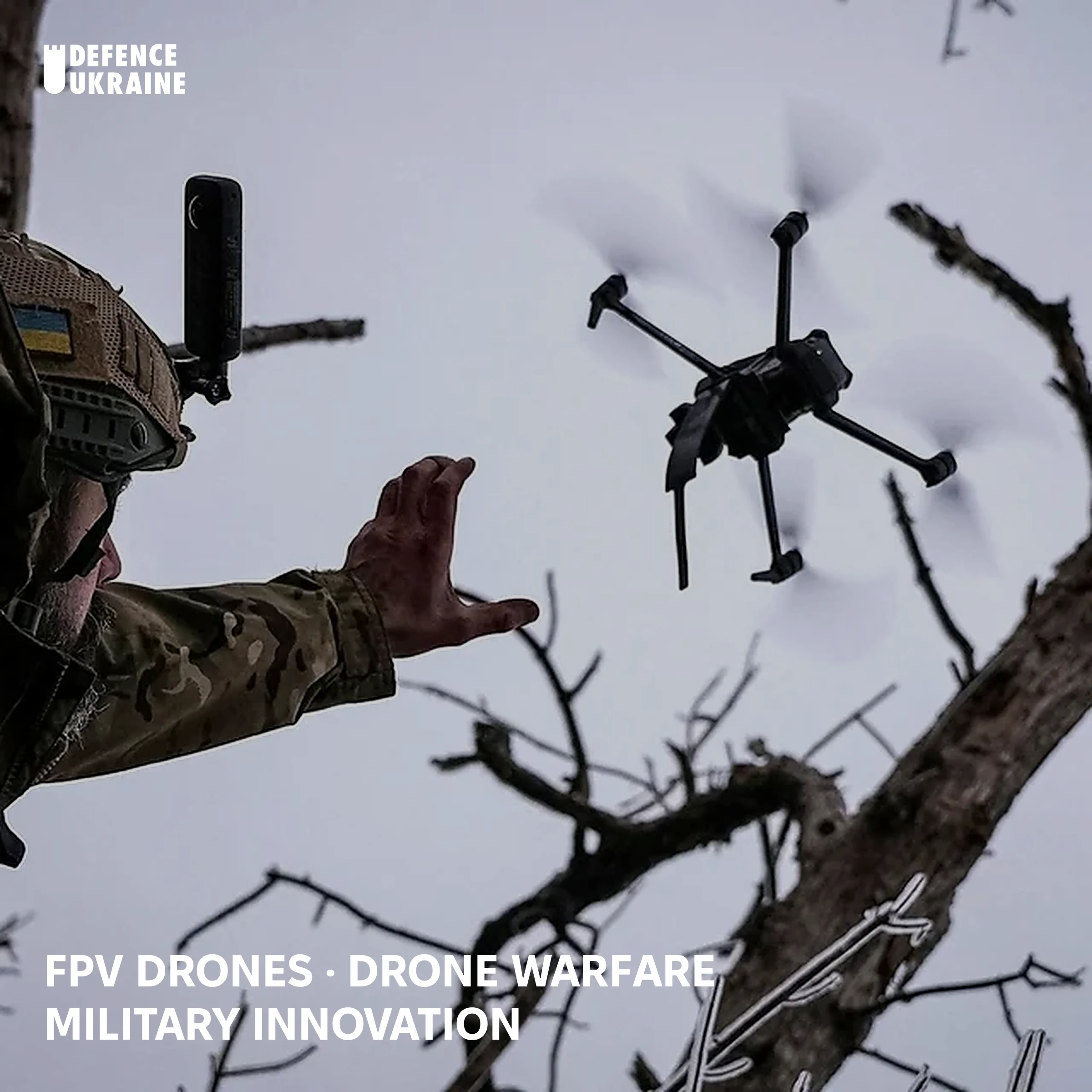
By August 2026 the Ukrainian Ministry of Defence reports that the Marketplace hosts over 800 certified systems and serves more than 400 combat units. Servicemen have ordered more than 500,000 drones through the e-Points channel, according to Ministry figures reported by Interfax-Ukraine and Ukrinform. Brave1 is now the primary procurement route for tactical drones, ground robotics, electronic-warfare systems, and unit-level components inside the Ukrainian Armed Forces.
The platform is best understood against the procurement architecture it was built to bypass. Before Brave1, tactical acquisition ran through central Ministry of Defence tenders and intermediary trading companies. In 2023 the share of Ukrainian defence procurement transacted through intermediaries stood at 81 per cent. By 2024 the reformed Defence Procurement Agency under Arsen Zhumadilov had pushed that share down to 12 per cent through direct contracting via the ProZorro transparency platform, as documented in the Defence Ukraine procurement guide. Brave1 sits at the tactical end of that reform: for a brigade commander who needs 400 FPV airframes in a week, the central procurement system remained too slow. The Marketplace was designed for exactly that decision.
How It Works
The system has two components: a certified catalogue, and a redemption currency mapped to state expenditure.
On the catalogue side, Brave1 certifies defence-technology systems that have passed structured technical and operational testing. Certification decisions draw on Brave1’s testing infrastructure, front-line evaluation, and, from April 2026 onward, EU procurement standards developed under the European Defence Agency’s BraveTech EU Phase 2. Certified systems become orderable through the Marketplace.
On the e-Points side, units accrue points through the Army of Drones Bonus programme. Verified enemy destruction generates the largest point awards; reconnaissance, logistics, and casualty evacuation missions generate smaller ones. Verification runs through General Staff channels, using drone footage and reconnaissance reports to confirm claims.
The ordering flow is direct: a brigade commander selects a certified system in the Marketplace, redeems accrued e-Points against it, and the order flows through DOT-Chain Defence, the logistical backend, to the manufacturer. DOT-Chain issues prepayments of up to 70 per cent to the manufacturer on order acceptance. Under Minister Mykhailo Fedorov the standard delivery cycle for tactical systems compressed to six to ten days.
The mechanism is designed to bypass central Ministry of Defence bureaucracy at the unit-order level. Central procurement continues to negotiate framework contracts and finance the supply base; Brave1 decides which specific system, in what quantity, reaches which brigade this week.
DOT-Chain Defence is the logistical and financial backend that makes the compressed cycle work. Built as a distributed accounting layer, it holds the digital ledger of orders, prepayments, deliveries, and confirmations, and issues manufacturer prepayments of up to 70 per cent on order acceptance. That injection of working capital is what lets Ukrainian producers, most of which do not have deep balance sheets, scale output on a weekly basis rather than a quarterly one. By April 2026 the Ministry of Defence reported that 95 per cent of drones procured through the state channel were domestically sourced, a figure that reflects both Brave1’s catalogue reach and DOT-Chain’s prepayment mechanics.
Governance
Brave1 formally involves six Ukrainian state bodies: the Ministry of Digital Transformation, the Ministry of Defence, the General Staff, the National Security and Defence Council, the Ministry of Economy, and the Ministry of Strategic Industries. Operational responsibility for the Marketplace and e-Points has sat with the Ministry of Digital Transformation since inception.
Mykhailo Fedorov, then Minister of Digital Transformation, was the founding face of the platform. He took the Ministry of Defence portfolio in January 2026 and institutionalised the Marketplace and DOT-Chain during his 182-day tenure, as documented in Defence Ukraine’s six-month review. Following his dismissal on 15 July 2026, and after Interior Minister Ihor Klymenko declined the portfolio, Major-General Yevhenii Khmara assumed acting duties on 20 July 2026.
Financing sits across three envelopes: the Ukrainian state weapons-procurement budget, running at roughly USD 10 billion in 2026; the Danish Model and other pre-audited bilateral channels; and, since 15 July 2026, a €1 billion drone-capability tranche of the EU’s Ukraine Support Loan unlocked under the EU-Ukraine Defence Industrial Partnership. e-Points redeemed by units convert to actual state expenditure at the manufacturer end, drawing from whichever envelope carries the underlying contract.
Certification sits inside the Brave1 cluster itself. The cluster’s testing infrastructure evaluates candidate systems against technical criteria and operational scenarios drawn from the Ukrainian theatre. The evaluation record travels with the certification, which is what lets DALO and other allied auditors clear Brave1-certified suppliers faster than an unknown vendor. In effect, Brave1 does the qualification work that a Western procurement office would otherwise duplicate, and hands that work forward to any donor that wants to use it.
Metrics
The publicly reported operating metrics for Brave1 and e-Points, as of August 2026, come primarily from Ukrainian state sources. They should be read as institutional claims rather than as neutral open-source data.
- Certified systems catalogued: 800+ (Ukrainian Ministry of Defence, August 2026).
- Combat units with direct ordering access: 400+ (Cabinet of Ministers of Ukraine).
- Drones ordered via e-Points: 240,000 by mid-2025, rising to more than 500,000 by 2026 (Fedorov statement, Interfax-Ukraine and Ukrinform reporting).
- Standard delivery cycle: six to ten days for certified tactical systems (Ministry of Defence, under Fedorov).
- Domestic sourcing share for state-procured drones: approximately 95 per cent by April 2026 (Ministry of Defence).
- Manufacturer prepayment: up to 70 per cent on order acceptance, via DOT-Chain Defence.
These numbers describe throughput. They do not by themselves show that battlefield effectiveness or unit-level satisfaction have improved in proportion, which is a distinct empirical question that domestic and allied analysts are still working through.
Contested Points And Open Questions
Acting Minister Khmara issued a memorandum on 11 August 2026 mandating strict SBU-style YouControl vetting for every supplier operating through Brave1 and DOT-Chain. The memorandum imposes deeper background checks and additional intellectual-property controls. It has not cancelled the Marketplace or e-Points, but it materially threatens the six-to-ten-day supply cycle that Fedorov established. Defence Ukraine’s coverage of Khmara’s appointment flagged this as the central operational risk to the platform.
Strike verification for e-Points sits with the General Staff. Some brigade commanders have publicly criticised the verification process for delay and inconsistency, arguing that credit for confirmed strikes reaches unit accounts too slowly to reshape ordering behaviour in real time. The verification workflow has not been publicly redesigned in response.
Continuous state funding is a systemic dependency. The e-Points-to-cash conversion at the manufacturer end assumes an uninterrupted budget flow. A mid-year appropriations gap in the state weapons budget, or a delay in an allied disbursement, could freeze physical deliveries even where units hold unspent points.
Foreign integration is a slower question. Brave1-certified small and medium enterprises still face separate AQAP certification before they can supply into full NATO-standard procurement. BraveTech EU Phase 2 is designed to bridge that gap, but as of August 2026 the pathway has not yet cleared a meaningful volume of Ukrainian producers into EU procurement pipelines.
Data sovereignty is politically contested. The Marketplace generates rich battlefield-performance data on every certified system: hit rates, failure modes, EW resilience, operator feedback. Access to that data, and the terms under which allied partners or European primes might use it, is not fully resolved in the public record.
Concentration of ordering authority raises a separate question. Devolving procurement to unit level accelerates the tactical cycle, but it also lets combat units concentrate orders on a small number of catalogue winners. Producers outside that winner set find it hard to break in through the Marketplace even when their systems are technically competitive. Whether Brave1 develops secondary tendering rules to broaden the supplier pool, or accepts the concentration as a feature, has not been settled.
What To Watch
Whether Khmara’s vetting regime materially slows procurement throughput in the September to December 2026 window will be the near-term measure. A meaningful slowdown would reopen the political argument about whether the Fedorov-era operating model can be preserved under security-services oversight.
Whether the new Ministry of Digital Transformation leadership, in place since Fedorov’s July 2026 move to Defence and subsequent dismissal, continues the platform’s current operating model will decide the Marketplace’s institutional home over the medium term.
Whether the €1 billion drone-capability tranche unlocked on 15 July 2026 under the EU-Ukraine Defence Industrial Partnership flows through Brave1 mechanics, or via a parallel Commission-run channel, will indicate how much of the European procurement stream is willing to trust the Ukrainian domestic ordering surface.
Whether e-Points accrual rules face revision after front-line complaints will show whether the General Staff treats the verification workflow as a fixed feature or as a live operational variable.
Whether Brave1-certified systems clear European AQAP thresholds in significant volume by end-2027 will decide whether the platform’s export potential, repeatedly advertised by Kyiv, translates into contracted deliveries into NATO stockpiles.