What It Is
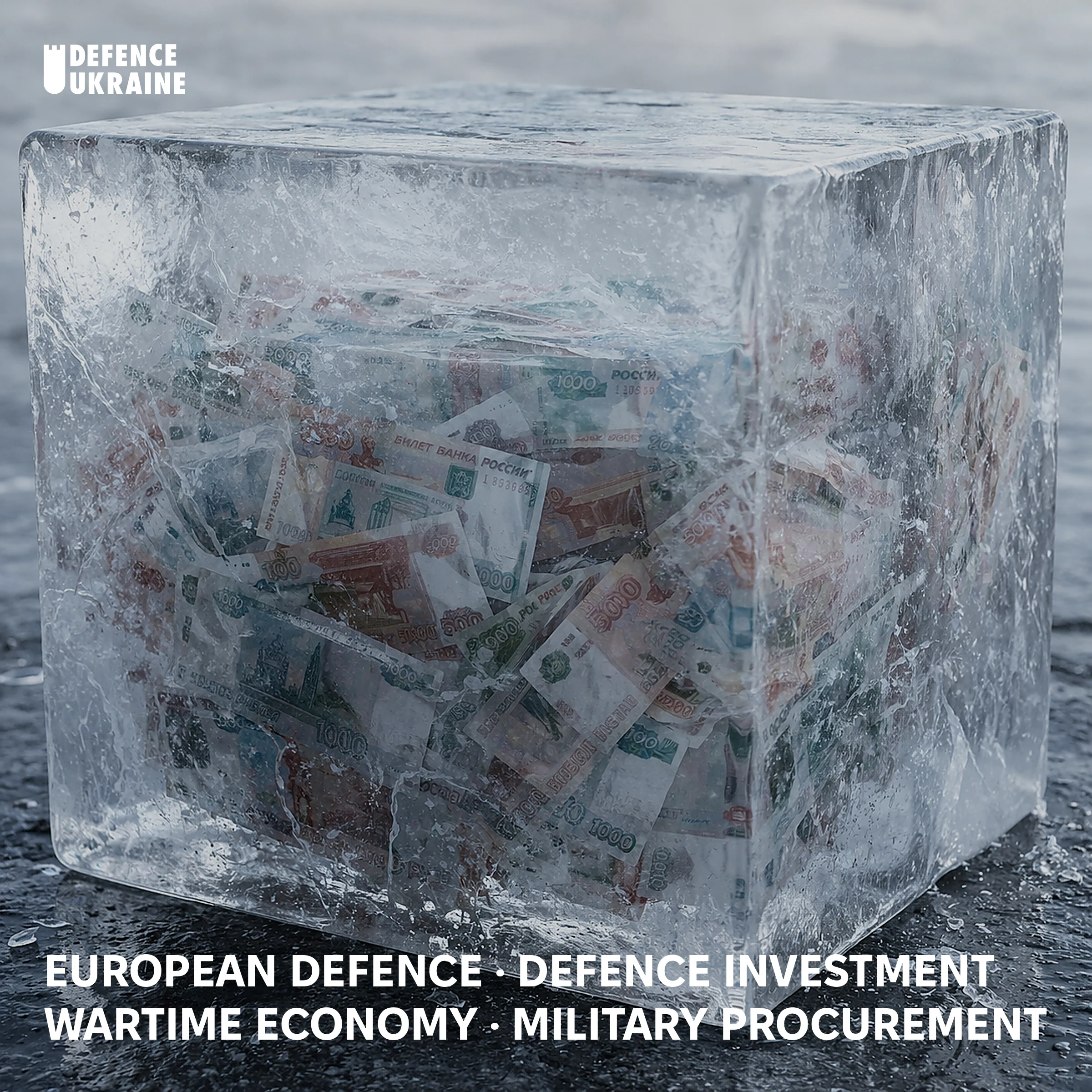
The Ukraine Loan Cooperation Mechanism, or ULCM, is a European Union financial-coordination instrument that captures windfall profits generated by interest on cash balances originating from immobilised Russian Central Bank assets held in EU Central Securities Depositories, and uses those proceeds to service allied loans to Ukraine. The mechanism was established by Regulation (EU) 2024/2773, which entered into force on 29 October 2024, and it forms the collateralisation architecture that makes the G7 Extraordinary Revenue Acceleration (ERA) initiative operationally viable.
The ULCM does not lend money to Ukraine directly. It provides non-repayable financial support that Ukraine uses to repay other loans, including the EU's exceptional macro-financial assistance of up to €35 billion and the €45 billion G7 ERA loans agreed at the Apulia Summit in June 2024. Without the ULCM, individual creditor governments would carry the credit risk of Ukrainian sovereign debt secured against contested Russian assets; with it, that risk is pooled and serviced from a predictable EU-managed revenue stream.
In 2026, the ULCM's remit expanded to include servicing of the €90 billion Ukraine Support Loan (USL) unlocked by the Council on 23 April 2026. The USL relies on the ULCM's collateralisation architecture to amortise its debt across 2027 and 2028, which anchors the ULCM at the centre of Europe's post-2026 Ukraine financing stack.
How It Works
EU Central Securities Depositories holding more than €1 million in immobilised Russian Central Bank assets are required, under Council Decision (CFSP) 2024/577, to separately account for the extraordinary cash balances generated by those assets. The overwhelming majority of the relevant balances sit at Euroclear in Belgium, which manages roughly €210 billion of Russian sovereign holdings. Council Decision (CFSP) 2024/1470 and Regulation (EU) 2024/1469 together authorise the appropriation of 99.7 per cent of net windfall profits generated by those balances.
Of the appropriated profits, 95 per cent is currently channelled through the ULCM and 5 per cent through the European Peace Facility (EPF). The ULCM allocation is transferred in periodic tranches, on a semi-annual cycle aligned with the accrual of interest at the depositories. Windfall tranches began in early 2025 and increased in size through the year. A third tranche of €1.6 billion cleared in August 2025, covering H1 2025 revenues. A fourth tranche of €1.4 billion cleared in March 2026, covering H2 2025 revenues. The fifth tranche, also worth €1.4 billion, cleared on 3 August 2026 and covered H1 2026 revenues. Cumulative windfall proceeds captured since asset immobilisation stood at €8 billion as of August 2026.
Ukraine uses the ULCM disbursements primarily to service interest and principal on the EU macro-financial assistance loan and on the G7 ERA loans provided by the United States, United Kingdom, Canada, and Japan. The G7 ERA framework has an aggregate value of €45 billion (approximately $50 billion), and each G7 lender receives its ULCM-serviced share on the schedule negotiated bilaterally with Ukraine. The EU's own MFA loan carries a maximum duration of 45 years, which sets the outer horizon of the ULCM's service obligation.
Governance And Financing
The European Commission's Directorate-General for Economic and Financial Affairs (DG ECFIN) administers the ULCM operationally. The Council of the European Union authorises each tranche transfer. The Council also holds the political authority to extend or terminate the Russian asset immobilisation regime, on which the ULCM depends: without ongoing immobilisation, the underlying windfall stream would cease to accrue.
Immobilisation itself sits under the EU sanctions regime imposed after Russia's February 2022 full-scale invasion. The sanctions require unanimous Council extension every six months. That unanimity requirement is the single largest political dependency in the ULCM's architecture: any Member State can, in principle, refuse to renew the immobilisation regime, which would collapse the ULCM's revenue base. Hungary and Slovakia have periodically threatened such refusal, though neither has followed through as of August 2026.
The EU's 21st sanctions package, adopted on 23 July 2026, extended the Russian oil price cap regime and paused its automatic adjustment mechanism until 15 July 2027. That pause was designed to stabilise Russian export revenue at a level compatible with continued yield on the immobilised assets, protecting the ULCM's revenue base against shadow-fleet-driven price volatility.
Load-Bearing Outputs
Between early 2025 and August 2026, the ULCM disbursed the bulk of the €8 billion in captured windfall proceeds to Ukraine across five tranches, with a further tranche expected in early 2027 covering H2 2026 revenues. The disbursement pace has held stable at roughly €1.4 to €1.6 billion per semi-annual cycle, and the mechanism has met every scheduled tranche since its first payment.
The direct beneficiaries of ULCM disbursement are the EU and G7 creditor governments whose loans are being serviced, and by extension the Ukrainian state, which retains fiscal space that would otherwise be consumed by debt-service obligations. In practical terms, that fiscal space has funded portions of the Ukrainian state weapons procurement budget, the Defence Procurement Agency's contracting pipeline, and the wartime social spending required to sustain the Ukrainian economy.
The largest single deployment of ULCM-serviced capital to date is the €90 billion USL, of which €45 billion is scheduled to become accessible in 2026 (€8.35 billion in macro-financial assistance, €8.35 billion through the Ukraine Facility, and €28.3 billion for Ukraine's defence-industrial capacities). The Commission disbursed the first €3.2 billion instalment of the USL on 25 June 2026, and Defence Ukraine's SAFE and USL implementation tracker monitors the subsequent disbursement pace against contracted allocations.
Contested Points And Open Questions
The ULCM's core legal architecture avoided the more politically contentious question of whether the €210 billion in immobilised Russian principal assets themselves should be seized and transferred to Ukraine. Under current EU legal analysis, seizure of the principal would violate customary international law protections of sovereign immunity. The windfall-profit approach was designed as a legally defensible alternative that generates ongoing cash flow without touching the underlying capital.
That workaround is contested. Belgian officials, including senior figures at Euroclear and at the Belgian federal government, have publicly argued that any escalation from windfall to principal seizure would require unified G7 legal cover to protect Euroclear from downstream investor claims and possible Russian counter-litigation. Belgium's exposure is disproportionate because Euroclear holds the majority of the affected balances, and Belgium therefore functions as a de facto veto point on any shift from windfall to principal.
The 21st sanctions package's pause of the oil-price cap adjustment reflects a related anxiety. If the Russian shadow fleet succeeds in circumventing the cap, oil revenues to the Kremlin rise and pressure on the frozen assets' yield could compound over time. Reuters and Bloomberg have both reported that Russian oil export volumes routed through shadow tankers rose across the first half of 2026, though the direct impact on the ULCM revenue base has not been publicly quantified.
A further contested point concerns Hungary's and Slovakia's willingness to sustain the sanctions regime that keeps the ULCM alive. The EU bypassed earlier obstruction to the €90 billion USL via the enhanced-cooperation procedure under Articles 20 TEU and 332 TFEU, which does not require unanimity. That procedure is not available for renewing the immobilisation regime, which remains subject to standard Common Foreign and Security Policy unanimity. The April 2026 Hungarian parliamentary election did not fundamentally alter Budapest's veto posture.
What To Watch
Three questions will define the ULCM's trajectory over 2026 and 2027. First, whether the EU can maintain unanimity on the six-monthly renewal of Russian asset immobilisation. A single blocked renewal would suspend the windfall stream immediately and require either an enhanced-cooperation workaround, which is legally untested for sanctions, or a coalition-of-the-willing substitute mechanism.
Second, whether the 21st sanctions package's pause of the oil-price cap adjustment holds. If Russian oil revenues rise faster than European inflation adjusts the cap, and the pause expires on 15 July 2027 without renewal, the effective ceiling on Russian revenue could rise materially. The knock-on effect on frozen-asset yield is second-order but non-trivial across a multi-year loan-service horizon.
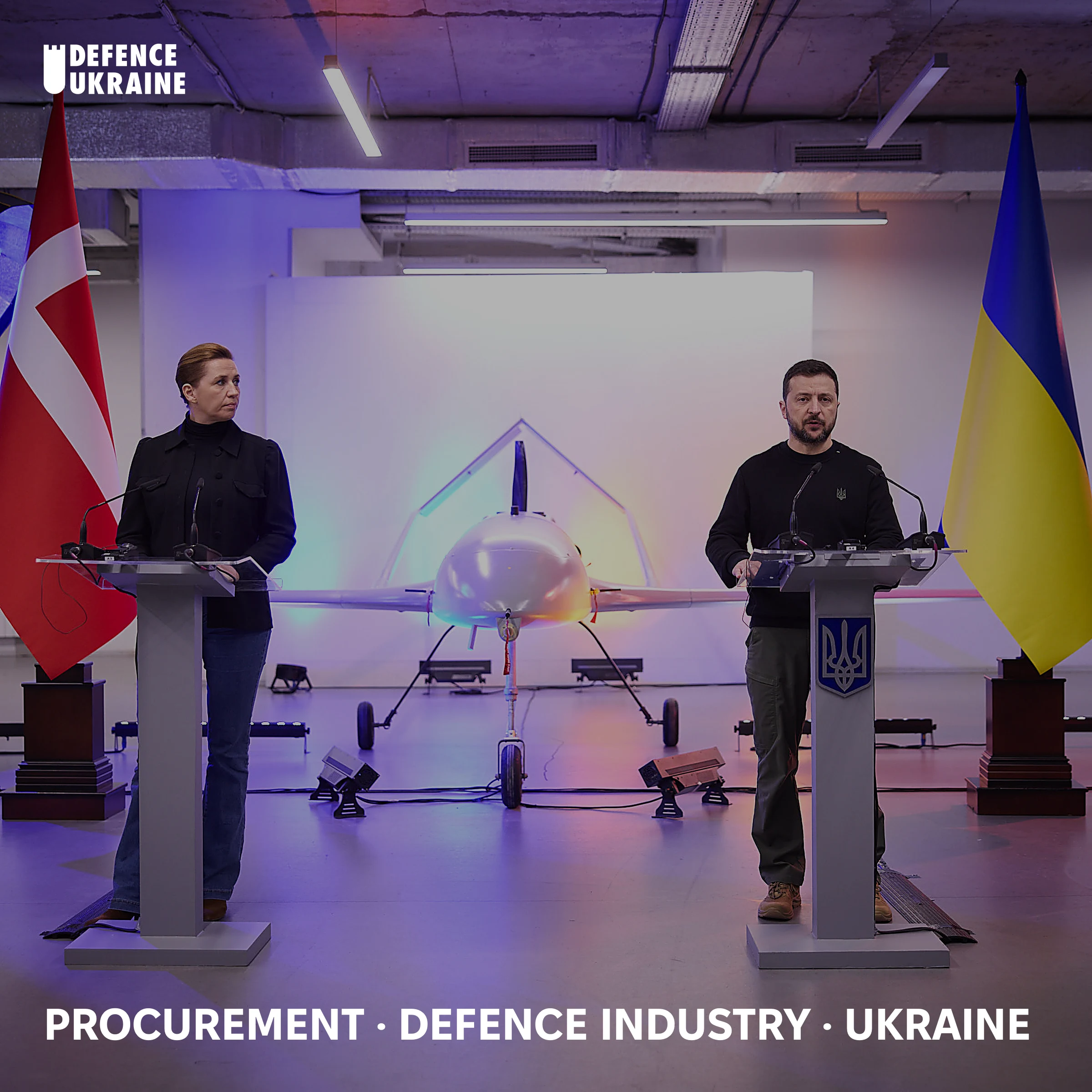
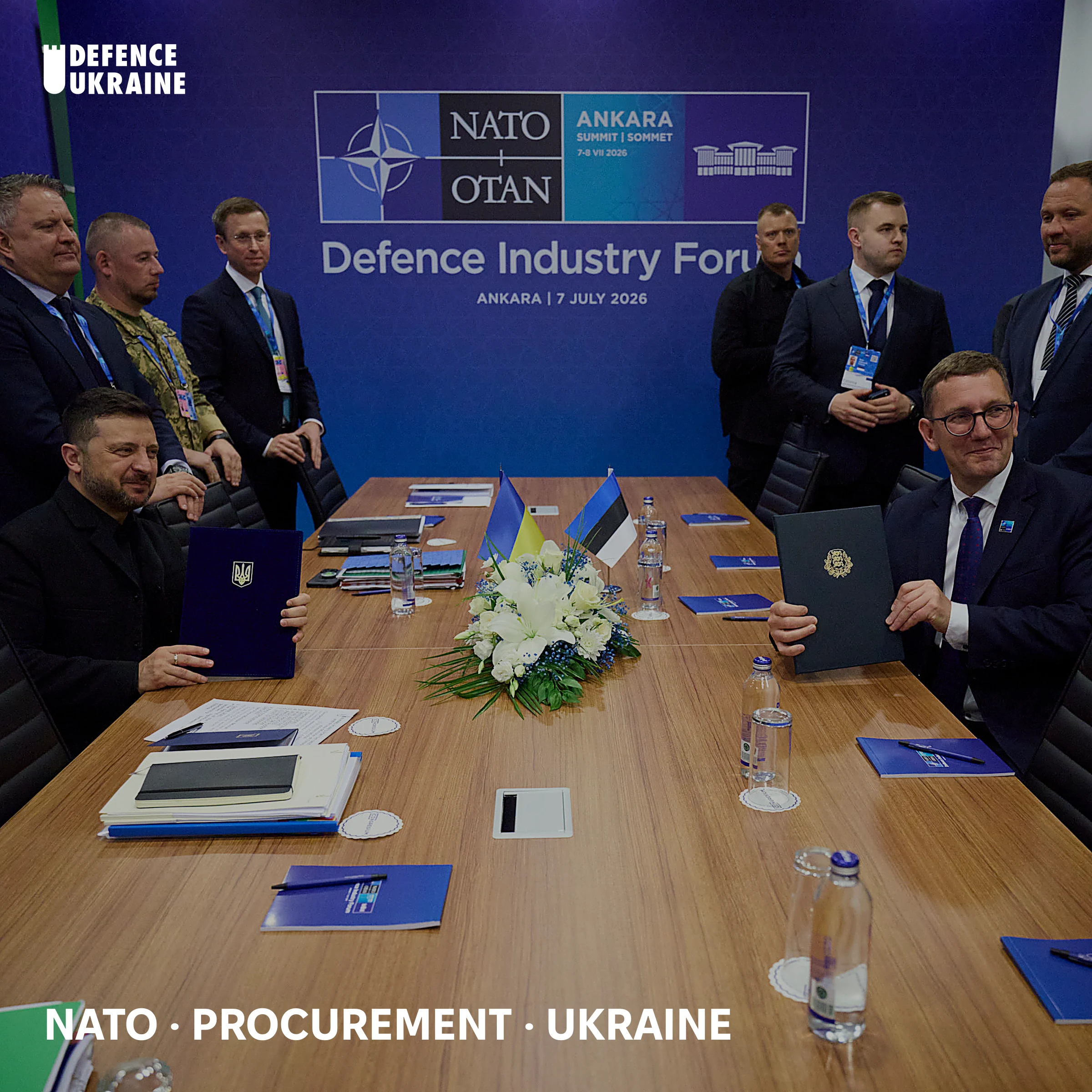
Third, whether the political consensus around windfall-only appropriation holds or shifts toward full principal seizure. The Ankara Summit's €140 billion envelope for 2026 to 2027 relies on the ULCM to service the USL portion; any shift to principal seizure would restructure that architecture and expose Euroclear, and by extension Belgium, to significant legal risk. Belgian resistance to any such shift remains the primary constraint on the debate, and the Danish Model at €1.3 billion illustrates the alternative route (bilateral direct financing) that would grow in importance if the ULCM's revenue base were destabilised.