What It Is
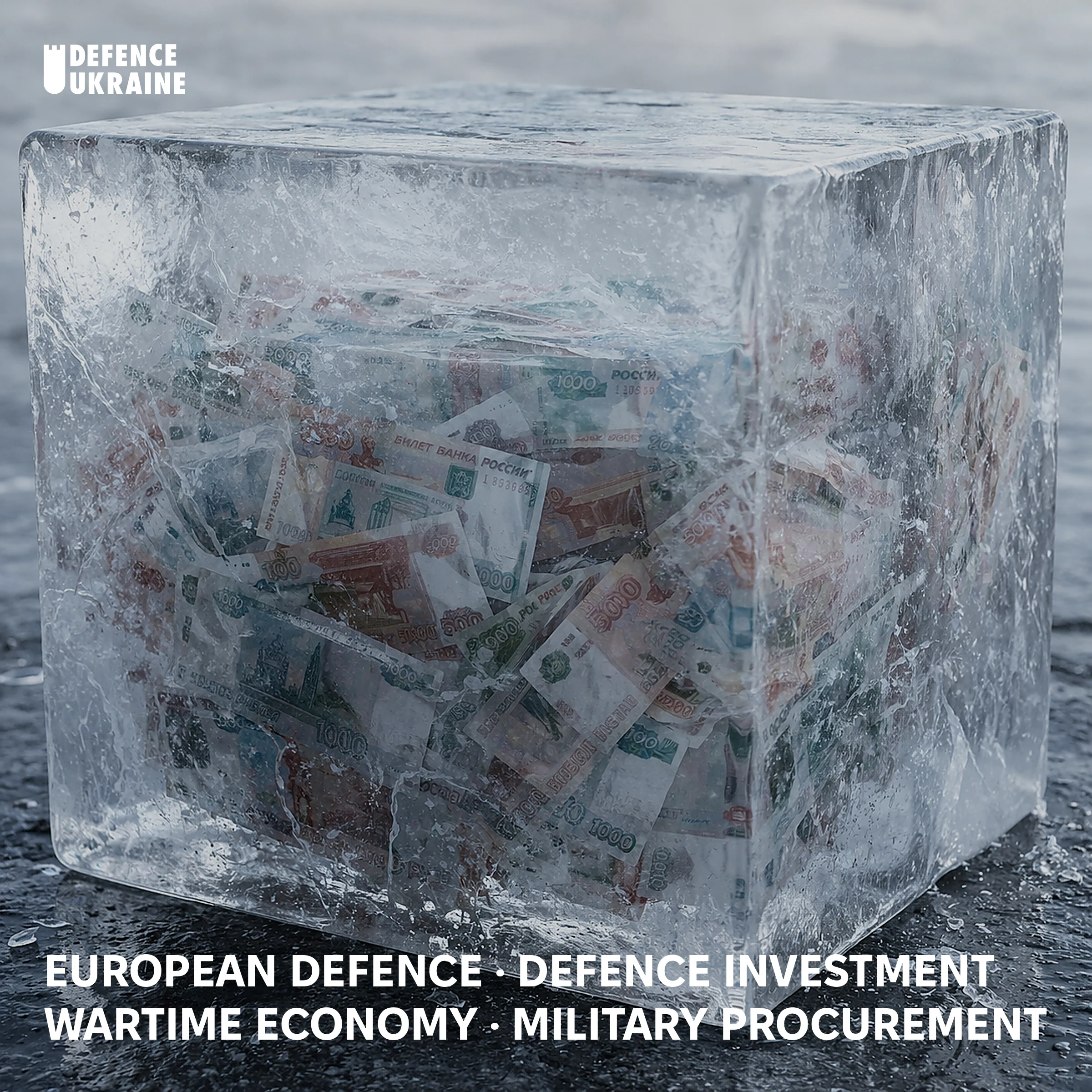
The G7 Extraordinary Revenue Acceleration loan, commonly rendered as the ERA loan, is a $50 billion multilateral financing facility agreed by G7 heads of state on 25 October 2024. The mechanism provides Ukraine with immediate upfront capital, disbursed in tranches across 2024, 2025, and 2026, while the debt-servicing obligation is met from a specific and novel revenue stream: the windfall profits generated on the estimated $280 billion in Russian sovereign assets immobilised across G7 and allied jurisdictions since February 2022. The facility does not touch the principal of those frozen reserves. Instead, it monetises the interest and dividend flows that accumulate on the immobilised balances, ring-fencing those flows to service ERA repayments over an approximately thirty-year horizon.
The design solves a specific political and legal problem. Direct confiscation of the Russian principal would have required a legislative and jurisprudential lift that G7 partners judged unavailable, particularly in continental European jurisdictions where Belgian, French, and German legal doctrine treats sovereign immunity as a hard constraint. Windfall proceeds, by contrast, sit outside the sovereign-immunity doctrine because they arise after immobilisation. The ERA structure captures those proceeds without prejudicing the underlying legal question of what happens to the principal itself.
Legal Architecture
The Council of the European Union codified the windfall-capture regime through three primary instruments. Council Decision (CFSP) 2024/577 requires EU Central Securities Depositories holding more than €1 million in immobilised Russian Central Bank assets to account separately for extraordinary cash balances. Council Decision (CFSP) 2024/1470 and Regulation (EU) 2024/1469 together authorise the appropriation of 99.7 per cent of net windfall profits generated on those balances, with a small residual retained by the depository to cover administration and legal-defence reserves.
The Euroclear central securities depository in Belgium holds the majority of the immobilised European reserves, approximately €190 billion in Russian Central Bank assets. That concentration makes Belgium the principal legal and administrative venue for the windfall-capture regime and gave Brussels effective veto authority during the ERA negotiations. Belgian consent was secured through a combination of legal indemnities and a commitment that windfall capture would proceed in coordinated fashion across G7 jurisdictions, rather than exposing Euroclear to unilateral Belgian liability.
Under the initial G7 allocation formula, 90 per cent of captured EU windfall proceeds are routed through the European Peace Facility to fund direct military procurement contracts inside Ukraine. The remaining 10 per cent flows into the Ukraine Facility to underwrite macroeconomic stability. From 2026, the Ukraine Loan Cooperation Mechanism captures 95 per cent of forward windfall proceeds to service the €90 billion Ukraine Support Loan, with the residual sustaining European Peace Facility operations.
Participants and Contribution Shares
The $50 billion facility is not equally shared. The United States committed $20 billion, funded in full on 10 December 2024 under US Treasury authority granted by the Biden administration in the final weeks of its term. The European Union committed €18.1 billion (approximately $20.4 billion), disbursed by the European Commission in tranches through 2025 and 2026. The United Kingdom pledged £2.26 billion, with the first £752 million tranche released on 18 June 2026 alongside the announcement that the tranche would finance 150,000 Ukrainian-produced drones. Canada committed CAD 5 billion, of which CAD 2.5 billion (approximately $1.7 billion) transferred on 13 March 2026. Japan committed approximately $3 billion, disbursed in stages through the Japan International Cooperation Agency.
The country-specific structuring reflects each participant's legal architecture. The US disbursement was routed through a single Treasury operation and effectively front-loaded before the January 2025 administration change, insulating the commitment from executive-branch reversal. European disbursements sit within the Commission's own borrowing programme and are tied to Ukraine Facility rule-of-law benchmarks. The UK and Canadian disbursements operate as bilateral loans backed by each country's Treasury guarantee, with repayment expected from the international windfall pool.
Disbursement Timeline
United States: $20 billion, funded 10 December 2024. European Union: €18.1 billion, disbursed in tranches (first €3 billion cleared on 10 January 2025; additional €1 billion in March 2025; further €1 billion tranches through 2025 and into 2026, with cumulative EU disbursements exceeding €12 billion by mid-2026). Canada: CAD 5 billion pledged; CAD 2.5 billion first tranche received 13 March 2026. United Kingdom: £2.26 billion pledged; first £752 million tranche released 18 June 2026 with a ring-fenced procurement mandate for Ukrainian-produced drones. Japan: approximately $3 billion, staged disbursement through 2025 and 2026 via the Japan International Cooperation Agency.
Cumulative ERA disbursements had reached approximately €30.9 billion by mid-2026. The remainder is scheduled for release through late 2026 and into 2027, subject to continued windfall-proceeds servicing capacity and to each contributing government's parliamentary appropriation cycle.
Connection to the Ukraine Support Loan
The ERA loan and the €90 billion EU Ukraine Support Loan share a common collateralisation logic but operate as legally distinct instruments. The ERA is a one-off G7 facility drawing on windfall proceeds accumulated up to 2027. The Ukraine Support Loan, unblocked by the Council on 23 April 2026 through the Article 20 TEU enhanced-cooperation procedure that bypassed Hungarian and Slovak veto threats (see Hungary election context), is a larger and longer-dated EU-only facility whose amortisation depends on future windfall proceeds captured through 2028 and beyond. The Ukraine Loan Cooperation Mechanism codifies this forward-capture arrangement.
The €18.1 billion EU ERA share and the €90 billion Ukraine Support Loan are complementary rather than duplicative. The ERA provides working capital that Ukraine can deploy across the full spectrum of state functions, including but not limited to defence procurement. The Ukraine Support Loan is more tightly ring-fenced, with €60 billion reserved specifically for military procurement and €30 billion for general budget support, and its origin requirements are considerably stricter than SAFE. Ukrainian and EU authorities regard the combined ERA-plus-USL envelope as the load-bearing financial architecture through 2028, with sanctions integrity, principally the durability of the Russian oil price cap regime under the EU's 21st sanctions package, treated as the critical enabling condition.
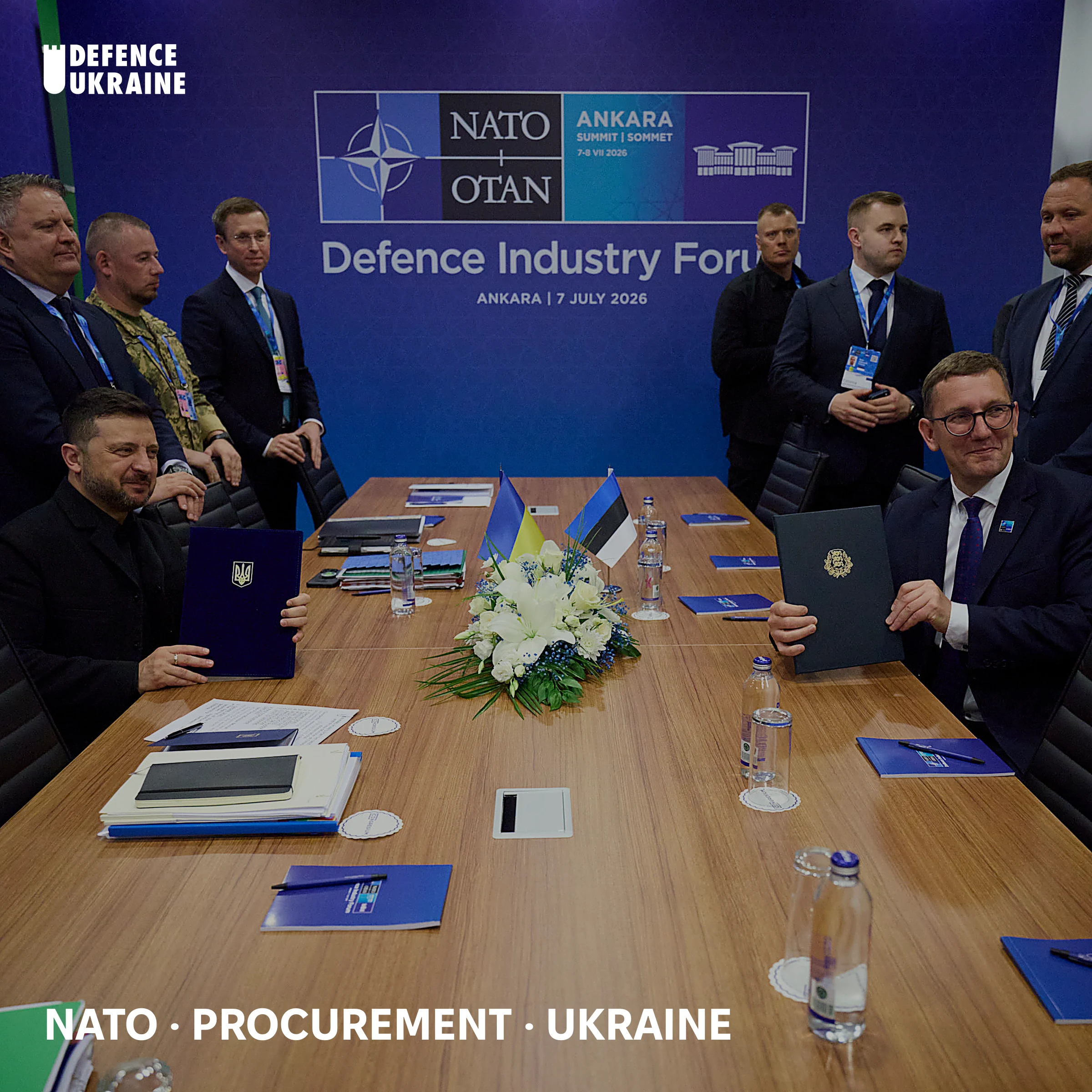
Disbursement into Ukrainian factory lines is executed through the pre-audited contracting infrastructure of the Danish Model, which the Council designated in April 2026 as the reference procurement architecture for Ukraine Support Loan military disbursement. The Ankara Summit envelope agreed on 7 to 8 July 2026 aggregates the ERA, the Ukraine Support Loan, and bilateral roll-forwards into a headline €140 billion figure (see Ankara outcomes).
Contested Points and Open Questions
Three structural questions attach to the ERA facility. The first concerns Russian counter-litigation. Moscow has pursued mirror-image claims against Western sovereign assets held in Russian jurisdiction and has warned that windfall capture may trigger retaliation against European corporate assets still trapped inside Russia. The scale of that retaliatory risk is contested.
The second concerns the sustainability of the windfall revenue stream. Yields on immobilised Russian Central Bank reserves depend on prevailing interest rates and on the composition of the underlying portfolio. A sustained rate-cutting cycle in the euro area or in the United States would compress future windfall generation. The 21st EU sanctions package's July 2026 decision to pause the automatic adjustment of the Russian oil price cap through July 2027 reflects deep concern that shadow-fleet circumvention could degrade the broader sanctions revenue stream and, by extension, the visible signal on which windfall projections depend.
The third concerns the political question of principal seizure. G7 finance ministries have accelerated internal work on whether the underlying Russian principal could ultimately be transferred to Ukraine, either directly or as reparations collateral. The ERA structure was designed to avoid prejudicing that question. Any move toward principal confiscation would reset the legal architecture of the entire windfall regime and likely trigger a period of legal instability that would complicate ERA-linked debt servicing.
What To Watch
The near-term markers are the disbursement of the remaining UK, Canadian, and Japanese tranches through late 2026; the arithmetic of windfall yields under a lower-rate scenario; the durability of the oil price cap mechanism against shadow-fleet erosion; and the position of the Trump administration on whether the already-funded US $20 billion tranche will be joined by further US contributions. On the last of these, Washington has signalled no appetite for additional exposure, and the burden of expanding the windfall envelope beyond 2027 will fall on the EU, the UK, Canada, and Japan.